 Ava Miller
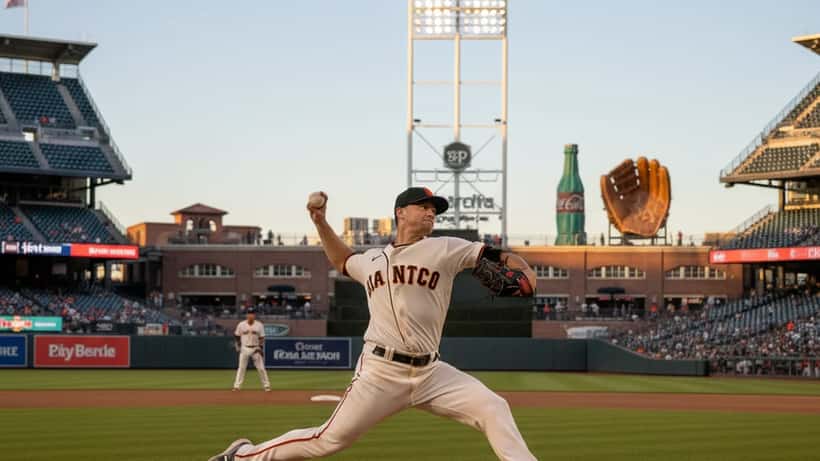
Robbie Ray, left-handed starting pitcher for the San Francisco Giants, has become one of 2026's most compelling baseball stories — not just for his performance, but for what he went through to get back on the mound. In his first start of the 2023 season, Ray tore his ulnar collateral ligament (UCL) and underwent Tommy John surgery in May 2023. He missed nearly two full years. In 2025, he made 32 starts, posted a 3.65 ERA, and earned his second All-Star selection. Now, in 2026, he is one of the most durable starters in the league.
His story isn't just sports news. It's a clinic in what arm injuries actually mean — and what amateur athletes should know about them before it's too late.
What Tommy John Surgery Actually Is
The UCL is a small but critical ligament on the inner side of the elbow. In throwing athletes — pitchers especially — it absorbs enormous stress with every delivery. When it tears, the result is typically immediate: pain, instability, and lost velocity. Surgery involves replacing the torn ligament with a tendon graft, usually harvested from elsewhere in the patient's own body.
According to the American Academy of Orthopaedic Surgeons (AAOS), recovery from Tommy John surgery takes a minimum of 12 to 18 months for a return to competitive throwing — and up to two full years before a pitcher regains peak performance. Ray's timeline fits this exactly: surgery in May 2023, limited returns in 2024, full comeback in 2025.
His case was complicated by a dual procedure: UCL reconstruction plus a flexor tendon repair. That extended his timeline even further. Yet in 2026, he pitched a complete game against the Mets — seven innings, three walks, nineteen swings-and-misses.
Why This Matters Beyond Professional Baseball
UCL injuries are no longer a professional athlete problem. Youth and recreational baseball participation has grown substantially in the U.S., and with it, elbow injuries among young pitchers have risen sharply. The pressure to pitch more — longer seasons, year-round training, multiple leagues — is creating a generation of overtaxed throwing arms.
Sports medicine research is clear on one point: overuse is the primary driver of UCL injuries in throwing athletes. Not bad mechanics alone, not bad luck — accumulated load on a ligament that has a finite tolerance.
Pitch count limitations in youth baseball exist because of exactly this evidence. They are not overcaution — they are the result of years of injury data showing that exceeding recommended counts dramatically increases injury risk.
Five Signs You Shouldn't Ignore
For anyone who throws — pitcher, quarterback, racquet player, or anyone who loads the arm repetitively — the following warning signs warrant medical attention, not a heating pad:
1. Medial elbow pain that persists after rest. Inner-elbow discomfort that doesn't resolve with a few days off is not "just soreness." It is a signal that the UCL or surrounding structures may be under stress.
2. Loss of velocity or accuracy without apparent reason. The arm protects itself before it fails. Diminished performance that isn't explained by fatigue often has a structural cause.
3. A "pop" during a throw, followed by sharp pain. This is a classic UCL rupture presentation. It requires immediate evaluation — not a wait-and-see approach.
4. Tingling or numbness into the ring or pinky finger. The ulnar nerve runs close to the UCL. Nerve involvement can accompany UCL stress and complicates recovery if ignored.
5. Pain that returns to the same spot repeatedly. One flare-up might be inflammation. Three flare-ups in the same location is a pattern that needs imaging.
What Proper Care Looks Like
Ray's recovery included surgery performed by Dr. Keith Meister at TMI Sports Medicine in Arlington, Texas — one of the leading sports orthopedic surgeons in the country. He then underwent a structured rehabilitation protocol that took nearly two years to complete fully.
For non-professional athletes, the standard of care is the same in principle, even if the resources differ:
- Early diagnosis via MRI or ultrasound — UCL injuries are not always complete tears; partial tears can sometimes be managed non-surgically with physical therapy and platelet-rich plasma (PRP) injections
- Structured return-to-throw protocols — Rushing back increases re-injury risk significantly
- Holistic conditioning — Ray also suffered a hamstring strain in 2024, illustrating that arm recovery alone is insufficient; full-body conditioning prevents secondary injuries
When to See a Sports Medicine Specialist
A primary care physician can assess general pain, but UCL injuries in throwing athletes require a specialist — ideally a sports medicine doctor or orthopedic surgeon with experience in overhead athletes. ExpertZoom connects patients in the United States with qualified sports medicine specialists who can evaluate throwing arm injuries, recommend imaging, and outline treatment options before a small problem becomes a surgical one.
Robbie Ray spent two years working his way back from a preventable escalation. The UCL tear happened in one start. The better outcome — for professional pitchers and weekend softball players alike — is catching it earlier.
YMYL disclaimer: This article provides general information only and does not constitute medical advice. For arm pain or injury, consult a licensed sports medicine physician or orthopedic surgeon for professional evaluation and treatment guidance.
