 Odette Caplan
Nine months after ICE agent Jonathan Ross shot and killed 37-year-old Renee Good in the driver's seat of her red SUV on a Minneapolis street, her family filed two sweeping federal civil lawsuits on October 1, 2026. One complaint names the United States government under the Federal Tort Claims Act. A second names Officer Ross and six senior Trump administration officials for civil rights conspiracy. Together, the filings mark one of the most significant wrongful death cases arising from federal immigration enforcement in recent US history — and a high-stakes test of whether ordinary Americans can achieve accountability when federal agents cause harm.
What Happened on January 7, 2026
Renee Good had just dropped her 6-year-old son off at school on the morning of January 7. She was driving home through a Minneapolis neighborhood where Immigration and Customs Enforcement agents were conducting "Operation Metro Surge" — a large-scale enforcement sweep targeting the city's Somali and Hispanic communities.
As her SUV slowed near a cluster of agents making arrests in the street, ICE officer Jonathan Ross fired through her vehicle window. Good was struck and killed while still in the driver's seat. She was not a target of the operation. She had no immigration enforcement history. By federal investigators' own account, her car had simply stopped near agents mid-operation.
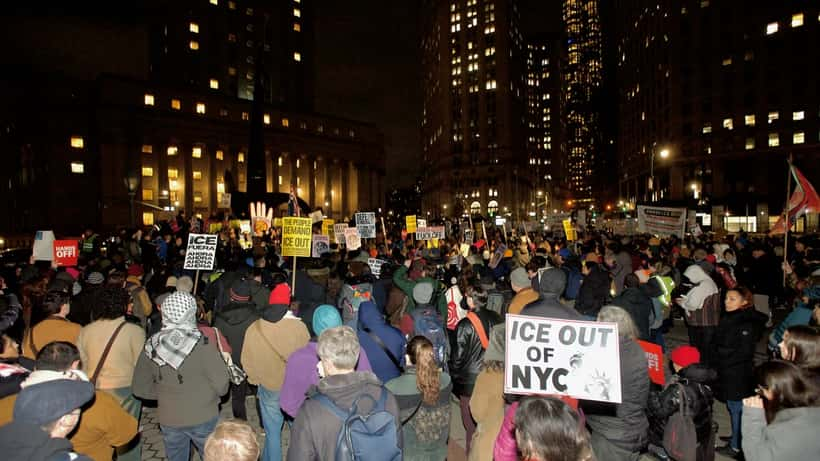
Her death set off protests across Minneapolis and became a national flashpoint in debates about federal immigration enforcement and the accountability of officers who use lethal force. At the 2026 Golden Globes, actors including Mark Ruffalo wore pins reading "Be Good" in her memory. Her mother told Congress at a September 2026 hearing that she had voted for the administration to fight "terrorists" — not to "take precious lives."
On October 1, 2026 — nine months after the shooting — her partner Becca Good and brother Brent Ganger filed the lawsuits in federal court.
Two Lawsuits, Two Distinct Legal Theories
Civil rights attorneys immediately flagged the filings as strategically sophisticated because they pursue two legal theories in parallel, each targeting a different layer of accountability.
The Federal Tort Claims Act lawsuit names the United States as defendant. It alleges wrongful death, battery, assault, false imprisonment, intentional infliction of emotional distress, and negligence. The FTCA — enacted in 1946 — represents Congress's decision to allow private citizens to sue the federal government when its employees cause injury through negligent or wrongful acts, a limited but important waiver of sovereign immunity.
The civil rights conspiracy lawsuit names ICE agent Jonathan Ross and six senior federal officials individually: former Homeland Security Secretary Kristi Noem, White House deputy chief of staff Stephen Miller, border czar Thomas Homan, and three other named officials. The complaint alleges a conspiracy under 42 U.S.C. § 1985 to target Minneapolis's Somali and Hispanic communities with racially and ethnically discriminatory enforcement, violating their constitutional rights.
"Filing both tracks simultaneously is a deliberate strategy," said a civil rights litigator familiar with federal wrongful death cases. "The FTCA path goes after the institution. The § 1985 path goes after the individuals who designed and ordered the operation. The two theories reinforce each other, and each fills gaps the other leaves open."
This dual-track approach matters because federal agents operate behind layers of legal protection that private parties do not have. Overcoming those protections requires legal strategy that most families — understandably — don't know exists until they need it.
The FTCA Roadmap: What Happens When Federal Agents Cause Harm
The Federal Tort Claims Act is the legal mechanism most Americans never think about until they are directly affected by a federal agent's actions. Understanding how it works — and what its limits are — is essential for any family in this situation.
According to the U.S. Department of Justice Civil Division Torts Branch, the FTCA applies when federal employees cause injury "by reason of negligent or wrongful act or omission" — but it explicitly excludes acts "based upon the exercise or performance of a discretionary function." Distinguishing between a discretionary policy choice (excluded) and negligent operational conduct (covered) is often the central legal dispute — and exactly what the Good family's first lawsuit will need to resolve.
What the FTCA does allow, when claims succeed: compensatory damages including medical expenses, lost wages, pain and suffering, and wrongful death damages. What it does not allow: punitive damages against the government. That limitation is one reason the second lawsuit — targeting individual officials — matters.
The FTCA Timeline: A Scenario That Shows the Stakes
Consider a scenario that mirrors the circumstances giving rise to the Good lawsuits. A 44-year-old Minneapolis nurse — a US citizen — is driving her children home from school when a federal immigration vehicle, operating without lights or siren during an enforcement operation, strikes her car at an intersection. She survives but sustains a severe spinal injury requiring $310,000 in surgery and rehabilitation. She cannot return to work for 22 months, costing her approximately $148,500 in lost wages at her $81,000 annual salary.
Under the FTCA, her path to compensation follows a specific, mandatory sequence:
Step 1 — Administrative claim, within 2 years. Before she can file in federal court, she must file an administrative tort claim with the relevant federal agency — here, the Department of Homeland Security. This filing must occur within 2 years of the date of injury. Missing this deadline, even by a single day, permanently bars the federal lawsuit regardless of the strength of the underlying claim. Many valid FTCA cases are lost not on their merits but because this deadline was overlooked.
Step 2 — Agency review, up to 6 months. The agency has 6 months to investigate and respond. If it denies the claim, or if 6 months pass with no response, she may then file suit in federal district court.
Step 3 — Federal litigation. In our nurse's case, a successful FTCA claim could recover $310,000 in medical costs, $148,500 in lost wages, plus pain and suffering — a total potentially exceeding $550,000. Under the FTCA, that recovery comes from the US Treasury, not from the individual officer.
What the FTCA doesn't cover: If the nurse and her family want to pursue the officers and officials who designed the operation — not just the government as an employer — they need a separate civil rights claim, exactly as the Good family filed in its second complaint. Only that second track allows punitive damages, which can exceed compensatory awards when courts find reckless disregard for constitutional rights.
For families in this situation: the 2-year administrative clock starts on the day of injury. It does not pause while you grieve, recover, or gather information.
What Civil Rights Attorneys Do That General Lawyers Cannot
The Good family's attorneys reportedly spent nine months building the evidentiary foundation before filing — reviewing the chain of command for Operation Metro Surge, identifying the six named officials' individual decision-making roles, and assembling the evidence required to survive early dismissal motions that federal defendants will certainly file.
Federal civil rights cases against government officials involve defenses that general personal injury attorneys rarely encounter. Qualified immunity shields individual officers and officials from personal liability unless their conduct violated "clearly established" constitutional law at the time of the incident — a high legal bar that has defeated many otherwise compelling civil rights claims. The § 1985 conspiracy theory requires showing coordinated intent to deprive a group of their constitutional rights, which is distinct from proving that individual officers acted recklessly.
Navigating the interaction between sovereign immunity (waived partially by the FTCA), qualified immunity (available to individual defendants), and constitutional conspiracy claims under § 1985 requires attorneys with specific federal civil rights experience. A standard personal injury firm with no federal practice is not equipped to manage these defenses.
Practical steps for any family following a federal agent incident:
- Document everything within hours: agent names and badge numbers if visible, witness contact information, photographs of the scene, descriptions of vehicles
- Preserve employment and medical records immediately: these establish the economic damages that drive compensation calculations
- Do not sign releases or accept any agency settlement without independent legal review: federal agencies sometimes approach victims or families before they have counsel secured
- Consult a civil rights attorney as soon as possible: the 2-year FTCA administrative deadline is absolute, and building a strong administrative claim requires investigation that takes months
The injury attorney consultation guide available on Expert Zoom explains the general threshold for when attorney involvement is warranted in serious injury cases. Federal agent cases cross that threshold immediately — the legal complexity and the immunity defenses involved make professional representation not optional but essential.
Renee Good's story — and the lawsuits her family filed today — is a reminder of how high the legal barriers are when citizens seek accountability from federal agencies. They are not insurmountable. But they require knowing the rules, meeting the deadlines, and finding attorneys who practice in this specific area.
ExpertZoom connects you with experienced civil rights and wrongful death attorneys who understand FTCA timelines, qualified immunity defenses, and § 1985 conspiracy claims. The window to act is measured in months — not years.
This article is for informational purposes only and does not constitute legal advice. If you or a family member has been harmed by a federal agent, consult a licensed civil rights attorney to understand your specific rights and deadlines.
