 Charles Jackson
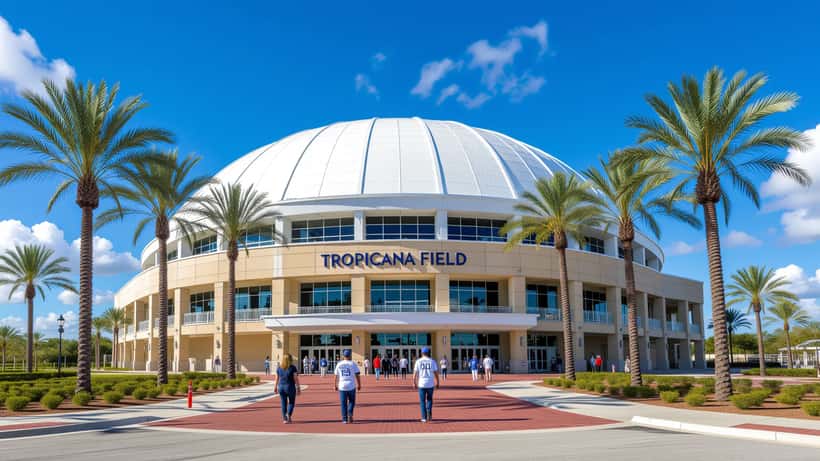
When the Tampa Bay Rays shut out the Miami Marlins 6-0 in Miami on June 5, 2026, with Drew Rasmussen carving up the Marlins lineup over seven innings, the box score told only half the story. The bigger headline for Rays fans this season is geographic, not athletic: the team is finally back at Tropicana Field in St. Petersburg after spending all of 2025 displaced to George M. Steinbrenner Field, the New York Yankees' Tampa spring-training home, while crews repaired hurricane damage to the dome.
That displacement, triggered when Hurricane Milton ripped the fiberglass roof off Tropicana Field in October 2024, is one of the largest stadium-insurance events in recent Major League Baseball history. And it has quietly turned into a primer for every Florida homeowner, condo association, and small-business owner staring down the 2026 Atlantic hurricane season that began on June 1.
What actually happened to the stadium
Hurricane Milton made landfall as a Category 3 storm on October 9, 2024, and the dome's tensioned-fabric roof shredded under sustained winds. The City of St. Petersburg owns the building and carries the master property policy; the Rays, as the long-term tenant, carry separate business-interruption and contents coverage. The 2025 season was played 30 miles north in Tampa while the roof, seating bowl, and interior systems were rebuilt. The Rays returned to a refurbished Tropicana Field for the start of the 2026 home schedule, with the June 5 trip to LoanDepot Park one of the team's first long road series since coming home.
The expert angle: insurance claims do not pay themselves
For ordinary Floridians, the Tropicana Field saga is a slow-motion case study in how property-insurance claims really work after a major named storm. Roof, contents, and lost-revenue claims are evaluated under different policy sections, on different timelines, and often by different adjusters. A homeowner facing storm damage in the 2026 season should expect a similar three-track process.
A property-insurance attorney can help in three specific situations that come up over and over after Florida hurricanes:
- Coverage disputes — the carrier accepts the claim but offers far less than the cost to repair, or argues the damage is "wear and tear" rather than wind. Florida's statutory bad-faith framework, codified at Florida Statutes Chapter 624, gives policyholders specific tools when an insurer fails to act in good faith.
- Outright denials — the carrier denies the loss entirely, often citing a pre-existing condition or a flood-vs-wind dispute (flood damage is generally excluded from a standard homeowners policy and must be claimed against NFIP).
- Delays past the statutory clock — Florida law sets deadlines for an insurer to acknowledge a claim, begin investigation, and pay or deny. Missing those windows can create separate causes of action.
Why this matters in June 2026
NOAA's 2026 Atlantic Hurricane Outlook projects another above-average season, with the peak window running from August through October. The Tropicana Field repair clock, from the October 2024 landfall to the spring 2026 reopening, was roughly 17 months — and that was a single, well-insured, professionally managed building owned by a city. A typical homeowner facing a total roof loss should not assume the rebuild will be faster.
Three things every Florida homeowner should do before the next named storm watch:
- Photograph the property now. Date-stamped photos of the roof, exterior, interior rooms, and major appliances are the single most valuable piece of evidence in a future dispute. Carriers cannot credibly argue "pre-existing damage" against a clean baseline.
- Read the declarations page. Hurricane deductibles in Florida are commonly 2% to 5% of the dwelling's insured value — a separate, much larger deductible than the all-perils one. On a $400,000 home, that is $8,000 to $20,000 out of pocket before the policy responds.
- Keep every receipt after a loss. Hotel bills, tarp materials, generator fuel, board-up labor — much of this is reimbursable under "loss of use" or "additional living expense" coverage, but only if you can document it.
When to call an attorney, not just an adjuster
The public adjuster handles the claim valuation; a property-insurance attorney handles the legal dispute when valuation breaks down. The honest test is simple: if the carrier's offer is so far below the contractor estimates that you can't actually rebuild, or if the claim has been "under review" for months past the statutory deadline, the dispute has moved past the adjuster's authority. Florida policyholders generally have five years from the date of loss to file a breach-of-contract suit against their insurer, but the practical window for preserving evidence is much shorter.
For Rays fans, the team's return to Tropicana Field is a relief. For everyone else along the Gulf Coast, it is a reminder that even institutional players with deep insurance towers needed nearly a year and a half to get whole. A homeowner without legal guidance can easily take longer — or settle for less than they were owed.
If you are still in dispute over a 2024 Milton claim, or preparing for the 2026 season, a Florida-licensed property-insurance attorney can review your policy and the carrier's correspondence before the next windstorm warning goes out.
