 Louis Reynolds
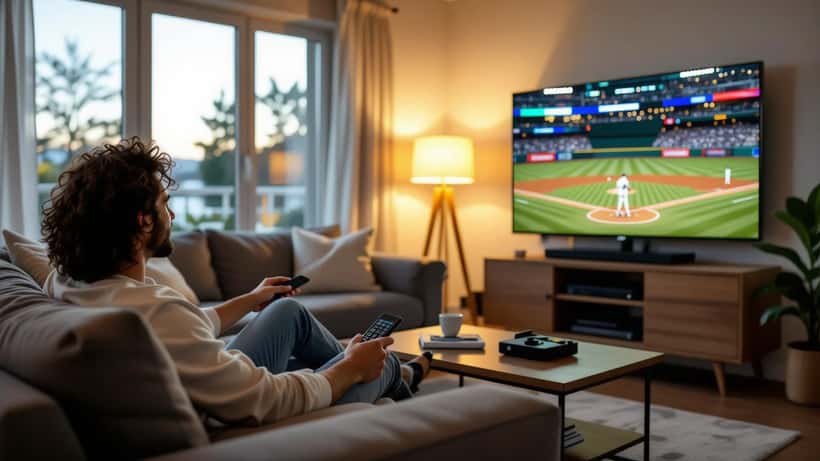
When the Pittsburgh Pirates face the Cleveland Guardians this week, thousands of fans across Ohio and Pennsylvania will settle onto the couch, open a streaming app, and see the two words that have defined baseball viewing in 2026: "Not available in your region." The Pirates–Guardians matchup is one of the most-searched games of the week, and a large share of that traffic is people simply trying to figure out how to watch it legally without paying for three services at once.
The confusion is not your fault. The collapse of the old regional sports network model has scattered local baseball broadcasts across cable channels, direct-to-consumer apps, and free over-the-air signals — and the rules change depending on which side of the state line you sit on. Here is how a home-electronics setup actually solves the problem, and where the hidden pitfalls are.
Why your streaming app keeps blacking out the game
Blackouts exist because two different companies own the local broadcast rights to the Pirates and the Guardians. When you buy a league-wide streaming package, that package deliberately blocks the game happening in your own backyard so it does not undercut the local rights holder. According to MLB's published blackout policy, your blackout zone is determined by your billing ZIP code and device location, not by which team you support — so a Pirates fan visiting Cleveland can get blacked out of the Pirates game.
This catches people every season. You pay for the national package, the one game you actually want is your home team, and that is precisely the game you cannot see. The fix is rarely "buy more subscriptions." More often it is understanding which signal is available to you for free.
The antenna nobody remembers they can use
Local Pirates and Guardians broadcasts are frequently carried on an over-the-air affiliate, which means a one-time hardware purchase can replace a monthly fee. A modern indoor HDTV antenna costs less than a single month of most sports packages and pulls in the local channel in full 1080i or better — often a sharper picture than a compressed stream.
Before you buy, check what you can actually receive. The Federal Communications Commission maintains a free reception tool that shows which broadcast towers reach your address and how strong each signal is; you can look up your location on the FCC's consumer antenna guide at fcc.gov before spending a cent. If the local affiliate carrying the game shows a strong signal, a flat panel antenna taped to a window is all you need.
Placement matters more than price. An antenna mounted high, near a window, and facing the transmitter will outperform an expensive model shoved behind the TV. If your first scan misses a channel, rotate the antenna 45 degrees and rescan — broadcast reception is directional, and small moves change everything.
Getting the picture right so a fast game looks fast
Baseball is deceptively hard on a television. A pitch leaves the hand at nearly 100 miles per hour, and cheap motion settings smear it into a blur. If you are investing in the game, spend ten minutes on the settings.
Turn off "motion smoothing" — the feature marketed as smooth motion or de-judder that makes everything look like a daytime soap. It introduces artifacts on fast pans across the outfield. Set your picture mode to "Sport" or a calibrated "Cinema" mode, and if your set supports it, enable a game or low-latency mode when watching a live stream to reduce the delay between the live broadcast and your screen. On an OLED or QLED panel, lower the sharpness setting; factory sharpness is cranked up for showroom floors and adds a halo around the ball.
For streamed feeds specifically, a wired Ethernet connection to your streaming box beats Wi-Fi for stability. Buffering during a two-out rally is the difference between seeing the play and reading about it.
What to actually check before first pitch
Fans searching for this game tend to make the same three mistakes. First, they wait until game time to discover a blackout, when a quick check of the streaming service's blackout notice earlier in the day would have flagged it. Second, they assume a national package includes their local team, when the opposite is usually true. Third, they overpay, stacking two or three subscriptions when a fifteen-dollar antenna would have carried the local feed for free.
A consumer-electronics specialist can save you real money here, because the right answer depends on your exact address, your existing hardware, and which channel carries the broadcast in your market. The setup that works for a Guardians fan in Cleveland may be entirely different from what a Pirates fan in Pittsburgh needs — and neither may match what works two counties over. If you are unsure whether an antenna, a streaming app, or your existing cable plan is the cheapest legal route to the game, it is worth asking an expert before you buy anything.
The Pirates–Guardians game will be watchable, cleanly and legally, for far less than most fans assume. The trick is not another subscription — it is knowing which signal already belongs to you.
If you want a setup tailored to your address and your television, a home-electronics expert can map your options in a few minutes and tell you exactly what to buy, what to skip, and how to dial in the picture before the first pitch.
