 Cora Nelson
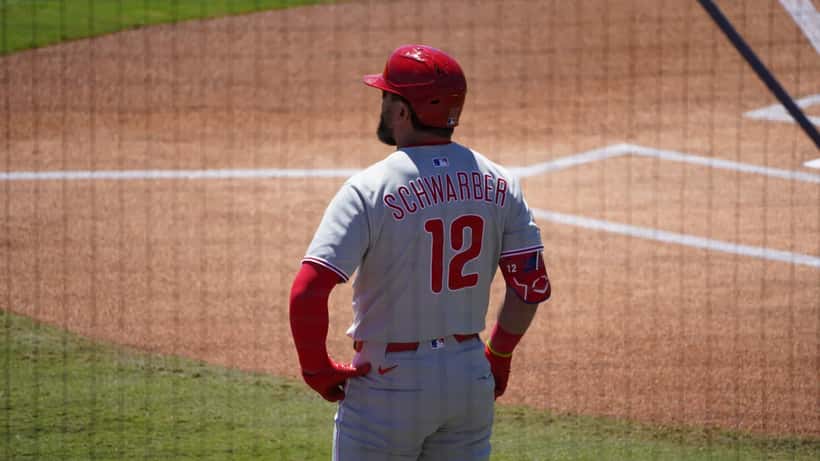
Kyle Schwarber struck out three times on Saturday night in Miami, giving the Phillies designated hitter a record he didn't want: eight consecutive strikeouts across plate appearances — a streak that has become the unlikely focal point of an otherwise solid Philadelphia start to 2026. The Marlins shut out the Phillies 4-0 on May 2 behind a one-hit gem from Max Meyer, snapping a four-game winning streak and handing interim manager Don Mattingly his first loss.
Schwarber's streak is an outlier in a season where the Phillies are otherwise playing well. But it has a psychological dimension that extends far beyond baseball — because the experience of a performance slump, and the mental spiral that can accompany it, is one of the most universal challenges in competitive sports and high-stakes professional environments alike.
What Eight Consecutive Strikeouts Tells Us
At the elite level, prolonged slumps like Schwarber's rarely have a single mechanical explanation. MLB pitchers are exceptional at identifying and exploiting patterns in individual hitters' approaches — and once they identify one, information travels quickly. It's possible that opposing pitching staffs have found a sequence or pitch location that Schwarber is struggling to adjust to.
But baseball analysts who study performance data consistently find that extended cold streaks in elite hitters often reflect a feedback loop with a cognitive component: the hitter becomes increasingly aware of the streak, which generates anticipatory anxiety, which disrupts the automatic processes that make elite hitting possible.
This is not unique to baseball. The phenomenon is well-documented across sports — in the "yips" that afflict golfers and throwers, in the missed free throws of basketball players during high-pressure moments, in the service double-faults of tennis players facing match point. It is also well-documented in non-sports performance contexts: musicians who freeze in auditions, surgeons who report "choking" under observation, professionals whose presentation skills collapse under anxiety.
The Psychology Behind Performance Slumps
According to the National Institute of Mental Health, anxiety disorders are among the most common mental health conditions in the United States — but performance anxiety, while related, is a distinct phenomenon that affects high-functioning individuals across all fields. Understanding the mechanism helps athletes and performers address it more effectively.
Attentional narrowing: Under pressure or during a slump, athletes often shift from external focus (reacting to the ball, the game, the specific pitch) to internal focus (monitoring their own movements, thoughts about the streak, concern about what others are thinking). This attentional shift interferes with the automatic motor programs that produce skilled performance.
Overthinking the automatic: Elite batting is largely an automatic process — a product of tens of thousands of repetitions that have built highly efficient neural pathways. When a hitter begins consciously monitoring swing mechanics during live at-bats, they interfere with those pathways. The phenomenon is sometimes called "paralysis by analysis."
Heightened arousal dysregulation: Moderate arousal enhances athletic performance; excessive arousal degrades it. This is described in sports psychology literature as the Yerkes-Dodson inverted-U curve. When a slump generates anxiety that pushes arousal beyond an athlete's optimal zone, mechanical and decision-making quality both deteriorate.
Confirmation bias in a streak: Once a pattern is established — whether it's strikeouts or missed shots or errors — the brain becomes primed to perceive the next failure as confirmation of the pattern. This cognitive bias can become a self-reinforcing cycle without deliberate intervention.
What Elite Athletes Do About It
Sports psychologists who work with professional athletes use a range of evidence-based approaches to address performance slumps:
Attention control training: Deliberately shifting focus from internal monitoring to specific external cues — the pitcher's release point, the spin of the ball — redirects attentional resources to the information that actually matters for the skill.
Acceptance-based approaches: Rather than trying to suppress anxiety or thoughts about the streak, acceptance-based interventions (drawn from acceptance and commitment therapy) teach athletes to acknowledge the thoughts without allowing them to capture attentional resources. "Yes, I've struck out eight times — and now I'm watching the pitcher's hand."
Routine and process focus: Pre-pitch routines provide a structure that re-anchors attention to the present moment rather than the streak. They also serve a regulatory function by creating predictability in an inherently unpredictable environment.
Reduced consequence framing: Working with athletes to reframe individual at-bats, shots, or performances as part of a longer sample — rather than as events with heightened personal significance — reduces the arousal spike that accompanies high-stakes individual moments.
When Athletes and Performers Should Seek Professional Help
Performance slumps are a normal part of competitive sport and professional life. Most resolve naturally as opponents' adjustments are countered or as mechanical corrections take effect. But there are circumstances where consulting a sports psychologist or mental performance consultant is the appropriate step:
- A slump that persists beyond what can be explained by mechanical or tactical factors
- Significant anxiety, avoidance, or dread associated with competition that extends beyond normal pre-performance nerves
- Intrusive thoughts about the streak or failure that interfere with sleep, preparation, or enjoyment of the sport
- Loss of confidence that begins to generalize beyond the specific skill to the athlete's broader sense of competence
Note: The information in this article is for general educational purposes and does not substitute for advice from a qualified mental health professional. If performance anxiety is significantly affecting your quality of life, consult a licensed psychologist or mental health provider.
Sports psychologists and mental performance coaches work with athletes at all levels — from youth competitors to professional players to adult recreational competitors dealing with the same fundamental challenges that Schwarber is navigating right now. ExpertZoom connects individuals with verified mental health and performance psychology professionals who provide confidential, personalized guidance for performance-related challenges.
Schwarber has struck out eight times. He will likely have more at-bats against Meyer's successors this week. What happens next depends partly on adjustments the Phillies' staff will identify — and partly on how effectively he manages the mental noise that comes with being the center of an unwanted statistical conversation. The tools to navigate that noise exist, and they're accessible to any athlete willing to use them.
