 Evan Cole
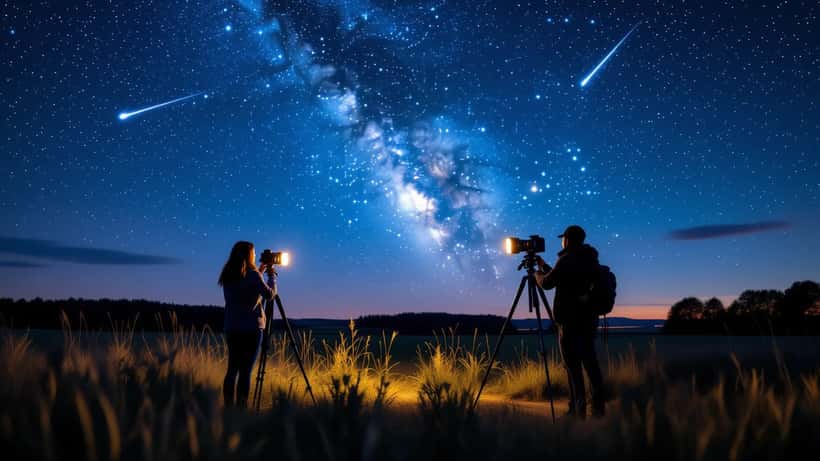
The 2026 Perseid meteor shower is shaping up to be the best in years, and this time the challenge is not just seeing the shooting stars but capturing them. The shower peaks overnight on August 12 into the morning of August 13, 2026, and it arrives during a new moon, meaning skies will be genuinely dark for the first time in several seasons. Under those conditions, observers frequently report 90 meteors or more per hour, according to EarthSky. That combination of a dark sky and a rich, bright shower has already sent camera sales and search queries climbing as people plan to photograph it.
Why 2026 Is a Standout Year
The Perseids run every summer from mid-July to early September, but the peak night is what draws the crowds. NASA attributes the shower to debris left behind by comet Swift-Tuttle, which Earth plows through each August. Most years, a bright moon washes out the fainter streaks. Not in 2026: the new moon falls at 17:37 UTC on August 12, hours before the peak, leaving a moonless sky through the pre-dawn hours when Perseid rates are highest.
For photographers, that timing is the whole story. A dark sky lets a camera sensor collect faint meteor trails without competing glow from the moon. The best window runs from roughly midnight to dawn on August 12 and 13, when the radiant point in the constellation Perseus climbs high in the northeast.
Your Phone Will Struggle — Here's Why
The most common mistake is assuming a modern smartphone can simply point and shoot the night sky. It can photograph the stars in "night mode," but meteors are a different problem. A Perseid streak lasts a fraction of a second and is unpredictable in location. To catch one, a camera has to hold its shutter open for 15 to 30 seconds and hope a meteor crosses the frame during that window.
Most phones do not expose that long-exposure control cleanly, and their small sensors add digital noise that can bury a faint trail. Newer flagship phones with a manual or "pro" mode can be coaxed into 10 to 30 second exposures, but you will need a way to keep the phone perfectly still and a way to trigger it without touching the screen. This is exactly where a quick consultation with an electronics or camera specialist pays off before the peak night, rather than discovering the limits of your gear at 2 a.m. in a field.
The Gear That Actually Works
You do not need an observatory. The proven setup for meteor photography is modest and mostly about stability and control:
- A stable tripod. Any exposure longer than a couple of seconds will blur without one. This is the single most important purchase, and the cheapest.
- A camera with manual exposure. A DSLR, mirrorless camera, or a phone with a true pro mode all work. Set a wide aperture, a high ISO in the 1600 to 3200 range, and a 15 to 25 second shutter.
- A wide-angle lens. Meteors appear all over the sky, so a wide field of view improves your odds of catching one.
- A remote shutter or intervalometer. Touching the camera to press the button introduces shake. A remote, a self-timer, or an app-based trigger avoids it, and an intervalometer can fire hundreds of frames automatically while you simply watch.
- Spare batteries. Cold night air and long exposures drain batteries fast, and lithium cells lose capacity in the cold.
An electronics technician can help you confirm whether your existing camera or phone supports manual exposure and long shutter times, match a compatible remote trigger or intervalometer, and check that your storage card is fast enough to write large night-sky files without stalling between shots. These are small compatibility questions that are frustrating to solve on the night itself.
Protect Your Gear and Your Eyes
Two practical warnings matter for anyone heading out. First, condensation: as temperatures drop overnight, moisture forms on cold lenses and sensors, fogging images and, over time, risking damage. A lens hood, a few silica packets in your bag, and letting equipment acclimate to outdoor temperature all help.
Second, resist the urge to check bright phone screens between shots. Your eyes need 20 to 30 minutes to fully adjust to the dark, and a single glance at a full-brightness display resets that adaptation. Dim your screens to the minimum, or use a red-light mode, and you will see far more meteors with the naked eye between exposures.
When to Call in an Expert
For a casual look at the sky, no equipment is needed at all — just a reclining chair, a dark spot away from city lights, and patience. But if you want to come home with a keepable photograph of a 2026 Perseid, the difference between success and a folder of black frames usually comes down to a handful of settings and compatibility choices made in advance.
A short session with a consumer electronics or camera specialist can settle the questions that matter: does your specific camera or phone model support the exposure length you need, which affordable accessories are compatible with it, and how to configure the whole chain before you drive out to a dark site. Given that the next Perseid peak this favorable — a rich shower under a new moon — will not repeat for years, an hour of preparation is a reasonable investment.
The peak is set for the pre-dawn hours of August 12 and 13, 2026. For the underlying science and updated viewing guidance, NASA maintains a public overview of the Perseids and meteor showers on its science portal. Everything else is a matter of a tripod, the right settings, and a clear patch of sky.
