 Ava Miller
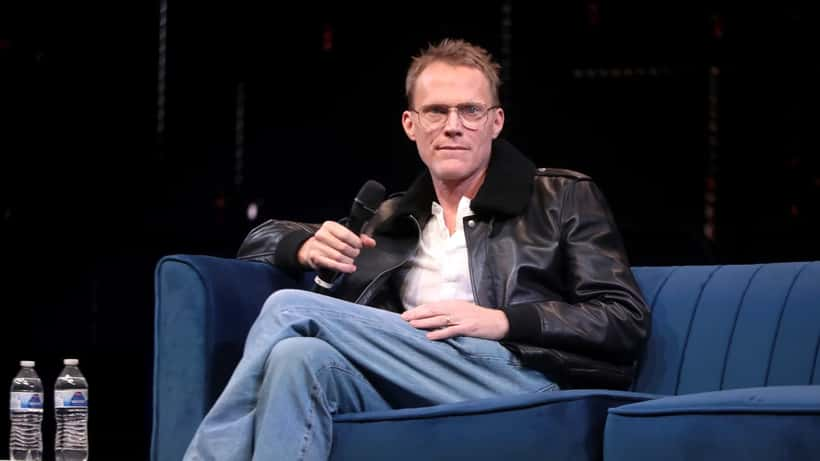
On October 8, 2026, Paul Bettany sat down on The View to talk about VisionQuest, Marvel's new Disney+ series in which he reprises his role as Vision — the synthetic android who lost his memories, his sense of self, and the woman he loved. "He's been through so much," Bettany told the hosts, explaining how Vision's quest to piece himself back together after complete psychological obliteration forms the emotional spine of the show. Early reactions have already called VisionQuest the most psychologically resonant Marvel project in years.
But beneath the superhero spectacle is a story that grief counselors and mental health professionals across the United States recognize immediately: what happens when you lose not just someone you love, but the version of yourself that existed because of them?
The Grief Marvel Finally Got Right
When WandaVision aired in 2021, it became an unexpected cultural touchstone — not because of its comic-book plotting, but because it depicted grief with a rawness rarely seen in mainstream entertainment. Vision, stripped of continuous memory and reassembled from fragments, mirrored something true about how loss works on human psychology. Viewers, many of them raw from pandemic-era losses, responded with deep recognition. Fan forums filled with posts from people saying the show had helped them name something they could not previously articulate.
VisionQuest picks up that thread in 2026. Vision is now actively rebuilding his identity: recovering what was taken from him, reintegrating fragmented memories, and grappling with who he is when the relational context that gave him meaning has been destroyed. Bettany has described this as the "most psychologically interior" work he has done in the Marvel Cinematic Universe over his nearly 15-year run in the franchise.
The show's timing is not accidental. Mental health researchers at the National Institute of Mental Health note that approximately 21 percent of American adults — around 57 million people — experience a diagnosable mental illness in any given year. Grief-related disorders represent a significant and chronically underdiagnosed subset of that number. What WandaVision dramatized, and what VisionQuest now continues, is a clinical phenomenon called Prolonged Grief Disorder: a state in which the normal process of adaptation after loss stalls, leaving a person suspended between who they were and who they need to become.
What Grief Counselors See in Vision's Story
Mental health professionals draw a distinction that popular culture rarely makes: there is grief as an emotion, and there is grief as an identity crisis. These are not the same thing, and conflating them is one reason so many Americans delay seeking help.
Losing a spouse, a parent, a child, or even a long-held career does not merely produce sadness — it dismantles the relational scaffolding that held a person's sense of self together. People describe this as suddenly not knowing who they are. Their reference points for meaning, purpose, and continuity of self have been removed. In clinical terms, this is identity disruption, and it is a recognized feature of Prolonged Grief Disorder.
Vision's situation is an extreme metaphor for this experience. He literally lacks access to the memories and relational bonds that constituted who he was. He must reconstruct identity from external evidence rather than felt continuity. This is, in less dramatic form, what grief does to millions of people.
According to the American Psychological Association, Prolonged Grief Disorder — formally classified in the DSM-5-TR — affects approximately 7 to 10 percent of bereaved individuals overall. For those who have lost a spouse or life partner, that figure rises to 10 to 15 percent. The disorder is characterized by intense persistent yearning, difficulty accepting the reality of the loss, and a disrupted sense of personal identity that extends well beyond the typical period of acute grief.
Critically, Prolonged Grief Disorder is highly treatable — but significantly more difficult and expensive to treat the longer it goes unaddressed. Clinical research consistently shows that early intervention with a qualified grief therapist produces meaningful symptom relief within 12 to 16 sessions. Waiting 12 months or longer before seeking support correlates with deeper identity disruption, higher rates of comorbid depression and anxiety, and substantially longer overall treatment courses. According to a 2024 systematic review published by the American Journal of Psychiatry, delayed treatment onset is the single strongest predictor of extended treatment duration in complicated grief cases.
When Vision's Story Hits Too Close to Home
Consider this scenario: Sarah, 47, from Phoenix, Arizona, lost her husband of 19 years to a sudden cardiac event in March 2025. In the months that followed, she described feeling like she was watching her own life from a distance — going through the motions of work, parenting, and daily routines, but without a felt sense of being herself. Her children noticed she seemed present but absent. She watched WandaVision during her husband's final illness and returned to it twice in the year after he died. "I didn't understand why I kept watching it," she told her sister. "It just felt like it was describing something I couldn't explain."
By October 2026 — 19 months after her husband's death — Sarah had not sought professional support. She had assumed her grief was "normal" and that she was managing adequately. But she was experiencing hallmark indicators of Prolonged Grief Disorder: persistent yearning, difficulty imagining a meaningful future, avoidance of reminders, and a profound fracture in her sense of identity.
If Sarah had sought grief counseling within the first six months of her loss: she would have been looking at approximately 12 sessions of Complicated Grief Treatment (CGT), the evidence-based protocol developed at Columbia University and validated in multiple large-scale trials. At the average Phoenix out-of-pocket rate of $150 to $250 per session, that is $1,800 to $3,000 total. Under the Mental Health Parity and Addiction Equity Act, employer-sponsored health plans are required to cover mental health treatment on the same terms as physical health treatment, meaning a significant portion of that cost is typically reimbursable.
Because Sarah waited 19 months: her treatment course extended to 28 to 36 sessions, at an estimated out-of-pocket cost of $4,200 to $9,000. The underlying identity disruption had deepened and required additional cognitive work beyond core grief processing. Functional impairment over those 19 months had also cost her a promotion opportunity and required separate family therapy sessions to repair strain in her relationships with her two teenage children — adding approximately $1,500 to $2,500 to her total treatment expenditure.
The direct logic here: if you recognize Vision's experience of fragmented, uncertain identity in your own life, and if you have been grieving without professional support for more than six months, the clinical evidence is unambiguous. Getting help now costs substantially less in time, money, and quality of life than waiting another six months to see if it resolves on its own.
Taking the First Step Before the Story Gets Longer
Recognizing that you are experiencing prolonged grief is not a character failure — it is the identification of a documented clinical condition with established, effective treatments. Prolonged Grief Disorder responds well to Complicated Grief Treatment, Cognitive Behavioral Therapy adapted for bereavement, and in some cases brief pharmacological support for co-occurring depression or anxiety.
Finding the right professional matters. A general practitioner can provide a referral, but the fastest route is to seek a mental health professional with specific training in grief and bereavement. Licensed clinical social workers, psychologists, and licensed professional counselors with grief specialization are all equipped to provide evidence-based care. The National Institute of Mental Health provides guidance on finding qualified providers and understanding what evidence-based grief treatment actually looks like.
You do not need a formal diagnosis to benefit from a consultation. A single session with a qualified grief therapist can help you understand where you are in the process, whether your symptoms warrant structured treatment, and what your realistic options are given your specific circumstances, insurance coverage, and timeline. That initial conversation is often the most significant step — because it transforms a private experience of confusion and pain into something a professional can help you map and move through.
On Expert Zoom, you can connect directly with licensed mental health professionals who specialize in grief, bereavement, and identity reconstruction. Rather than navigating a lengthy referral chain, you ask your specific questions and receive answers from someone with the training to help you understand your situation.
Paul Bettany has spent nearly 15 years giving Vision's story the gravity it deserves. VisionQuest is the latest chapter in a narrative that, beneath the Marvel machinery, has always been about what it means to lose yourself and the difficult, gradual, ultimately achievable work of finding who you are again. If that story resonates more personally than you expected — if watching an android reassemble a sense of self feels less like entertainment and more like a mirror — that recognition is worth taking seriously.
This article contains general health information for educational purposes only and does not constitute medical or psychological advice. If you are experiencing symptoms of grief, depression, or mental illness, please consult a qualified healthcare provider.
