 Odette Caplan
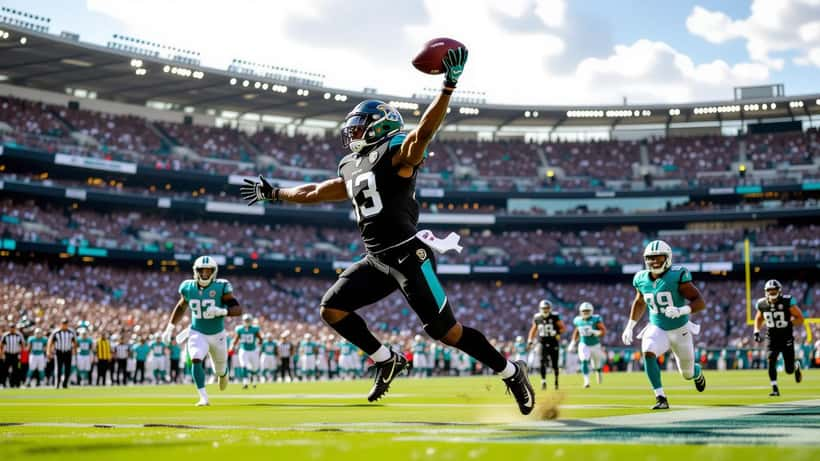
Jacksonville Jaguars receiver Parker Washington caught six passes for 124 yards and two touchdowns in a 19-17 win over the Philadelphia Eagles in London on October 11, 2026, a performance that arrives while he is still playing without a long-term extension. According to Roundtable's game coverage, Cam Little's walk-off 57-yard field goal finished the job, but Washington's one-handed fourth-down touchdown catch put Jacksonville ahead 16-14 with 3:20 left.
What happened and why the contract matters
Washington has been one of the league's stories of the early season. Reports from Newsweek and ClutchPoints describe a receiver who went from a fun depth story to the focal point of the Jaguars' passing game, with praise from Tom Brady and a Steve Smith comparison from analyst Marcus Spears. Coach Liam Coen has also compared his lower-body strength to that of Ja'Marr Chase.
The business side is less settled. FantasyNerds reported in September that the two sides were far apart on extension talks ahead of the 2026 season, and later coverage says they were unable to agree on a long-term deal before the opener. None of the coverage we reviewed reports a completed extension as of mid-October.
That gap is the real story. A player outperforming the deal he signed is in a stronger bargaining position, yet he is still bound by the paper he already signed. Columnists have argued that one game like this adds millions to his next contract. Whether that is true will be decided in a negotiation, not on the field.
Most workers will never negotiate with an NFL front office. But the same dynamic plays out in ordinary jobs every year: you deliver far more than your pay reflects, and you have to decide how to turn that into a written raise, title, bonus or equity grant.
The expert angle: performance is leverage, not a contract
Employment and contract lawyers see the same pattern repeatedly. Employees assume a strong year will be rewarded automatically, then discover that verbal promises, informal praise and "we'll revisit this in the spring" carry no legal weight. In most U.S. states, employment is at will, and an unwritten promise of a raise is hard to enforce.
A lawyer reviewing your situation typically looks at four things before you sit down to negotiate:
- What your current agreement actually says. Some offer letters and bonus plans define how and when compensation can change. Others give the employer broad discretion.
- Whether your pay is truly fixed. Commission plans, bonus plans and equity vesting schedules often have clauses about termination, "good leaver" status or changes mid-year.
- Restrictive covenants. A non-compete or non-solicitation clause limits your outside options, and outside options are the strongest source of leverage you have.
- Timing. Unpaid earned bonuses, vesting dates and notice periods all create deadlines that matter more than the headline number.
The point is not to be adversarial. It is to know your real position before you make the ask, the way a player's agent knows what the club can and cannot do before a meeting.
A concrete case: the mid-year breakout employee
Consider a software account manager earning a base salary of $110,000 with a 10 percent target bonus. In January 2026, their territory was projected at $2.0 million in annual revenue. By October, they have closed $2.9 million, 45 percent above the plan. Their manager says the company "values their work" and suggests revisiting pay after the new year.
Here is how the numbers and the if/then logic play out:
- If the employee stays silent until January, the company has a full year of above-plan revenue at an unchanged $110,000 base. A 45 percent overperformance on a plan that paid roughly $121,000 in total target pay is effectively a discount to the employer.
- If the employee asks for a written adjustment now and the company offers a 5 percent raise, that is $5,500. A comparable role elsewhere might pay $125,000, which is a $15,000 gap, so the counter has a documented basis.
- If the bonus plan caps payout at 150 percent of target, the employee's extra revenue past that threshold earns nothing. In that case the useful ask is not a bigger raise but a change to the plan or an accelerator, in writing, effective immediately.
- If the employer will not put anything in writing, then the "revisit in the new year" promise has a value close to zero, and the employee should weigh outside offers before the vesting or bonus date arrives.
A lawyer can review the offer letter and plan documents in an hour or two, flag caps, clawbacks and non-compete language, and help draft a short written proposal. That is a small cost compared with a $15,000 annual gap compounding over several years.
How NFL contracts mirror the problem
Professional football makes the dynamics visible. A rookie deal sets pay for a fixed number of years regardless of performance. A breakout season creates leverage for the next contract, but only if the player can walk, hold out or wait for free agency. The team, for its part, controls timing and can choose to extend early or wait.
Injuries are the other side of the same coin. We have previously covered how NFL injured-reserve and player contract rights work when a player is hurt. The lesson is the same for workers: guaranteed money, not praise, is what protects you when circumstances change. A star season followed by an injury can leave a player with a lot of public goodwill and very little guaranteed pay.
For non-athletes, the equivalent is the difference between a verbal promise and a signed amendment. Washington's side apparently wanted more than what the club offered, according to reports, and the team presumably wanted to avoid paying for a short track record. Both positions are rational. What matters is that neither of them is a handshake.
What to do if you are in a similar position
If your own performance has outrun your pay, these steps tend to produce better outcomes than waiting:
- Document the results. Keep a dated list of revenue, savings, projects or metrics that exceeded plan, with the source of each number.
- Read your agreements. Find the offer letter, bonus plan, equity grant and any restrictive covenant. Note caps, vesting dates and notice periods.
- Benchmark the market. Use published salary surveys and recent offers for similar roles to set a realistic range.
- Make the ask in writing. A short email proposing a specific figure and effective date creates a record. If the answer is "later," ask for a date.
- Get a legal review before signing anything new. New agreements often come with new restrictions, such as a longer non-compete or a waiver of earned bonuses.
- Know your wage rights. The U.S. Department of Labor's Fair Labor Standards Act guidance explains minimum wage and overtime protections that apply regardless of your negotiating position.
If you are weighing a counteroffer, a retention bonus or a new contract after a strong year, an employment attorney can tell you what the documents actually allow before you commit. ExpertZoom connects you with lawyers who handle exactly this kind of review, so you can make the ask from a position of knowledge.
This article is for general information and is not legal advice. Employment law varies by state and by the specifics of your agreement. Consult a licensed attorney about your situation.
