 Michael Campbell
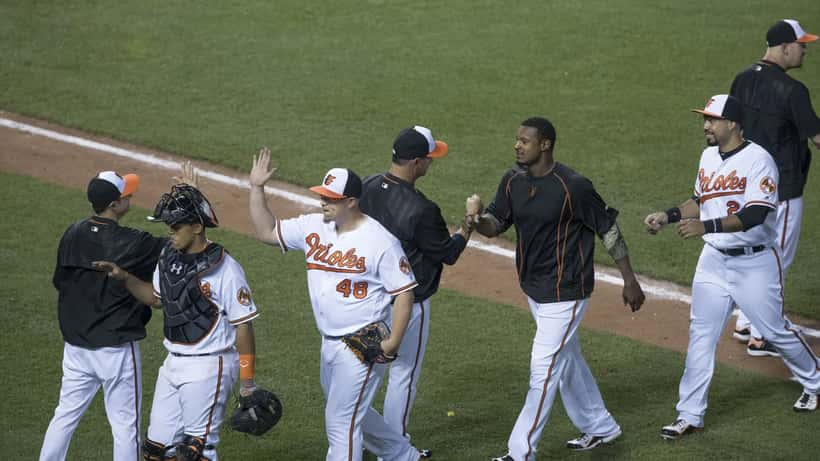
As the Baltimore Orioles and Texas Rangers wrapped up their three-game series at Globe Life Field this week, the scoreboard only told part of the story. Two AL wild-card hopefuls were grinding for every win on the field, but off it, a far more consequential financial game was already in motion — one that every young MLB player, including 24-year-old Orioles shortstop Gunnar Henderson, is navigating right now.
Henderson's $8.5 million one-year deal for 2026 — a franchise record for a first-time arbitration-eligible player and $1.9 million above what analysts at MLB Trade Rumors projected — put a spotlight on what happens when talented young athletes suddenly enter the multi-million dollar earning tier. The question isn't whether Henderson can hit. It's whether he, and players like him, are set up to protect and grow what they earn before the real money arrives.
The Context: A Series That Mirrors a Bigger Race
The Orioles came into this Arlington series sitting at 56-59, fourth in the AL East, while the Rangers sat at 57-58 in a crowded AL West. Both clubs are fighting to stay relevant in a playoff race that demands consistency at every level of the roster — on the mound, in the lineup, and increasingly in the front office's ability to retain cost-controlled talent through arbitration.
Henderson, widely regarded as one of the best young shortstops in baseball, remains under team control through 2029 with two additional arbitration years still ahead. His $8.5M deal broke the Orioles' previous Arb-1 record of $5.5M set by catcher Adley Rutschman the year before. Projections already peg his eventual free-agent contract at $400 million or more — but between now and that payday lies a three-year financial window where decisions made at 24 will compound, for better or worse, all the way to retirement.
Expert Analysis: The Gap Between the Headline Number and Reality
When a young MLB player sees "$8.5 million" next to their name, the instinct is to celebrate. A wealth management specialist would ask them to slow down and do the arithmetic first.
Federal income tax at the highest marginal bracket (37%) immediately claims roughly $3.1 million of Henderson's 2026 deal. Maryland's state income tax adds another 5.75%, or approximately $489,000. Factor in the standard MLBPA player agent commission of 3–5% on the contract value — up to $425,000 — plus union dues, the cost of maintaining housing in two cities during a 162-game season, and travel expenses that teams don't always cover, and the $8.5M headline starts to look considerably more modest.
Adding another layer of complexity: the "jock tax." According to IRS guidance on compensation earned by athletes and entertainers, income earned while performing in other states is subject to tax in those jurisdictions. For an MLB player who competes in roughly 25 different road cities across a season, this means filing returns in a dozen or more states — each with its own rate and threshold.
Before a single investment decision is made, a player in Henderson's position might realistically net $4.1 to $4.7 million from an $8.5M salary. That's still transformative. But it's also money that must fund 40+ years of post-career life, support family, and compound into lasting wealth — and most 24-year-olds aren't naturally equipped to manage that without expert guidance.
The Numbers Behind the Contract Tier
Henderson's arbitration outcome places him in a small but growing category of Arb-1 players receiving historic first-time paydays. Across MLB in 2026, the trend toward higher pre-free-agency salaries for standout young players is accelerating, partly driven by ongoing CBA discussions in which the MLBPA has proposed nearly doubling the league minimum to $1.5 million and expanding the pre-arbitration bonus pool from $50 million to $180 million.
For context on where Henderson's deal sits in the landscape:
- $8.5M: Gunnar Henderson, Baltimore Orioles (2026 Arb-1 — franchise record)
- $5.5M: Adley Rutschman, Baltimore Orioles (previous franchise Arb-1 record)
- $6.6M: MLB Trade Rumors' pre-arbitration projection for Henderson (exceeded by $1.9M)
The gap between the analyst projection and the actual agreement matters financially. That additional $1.9M beyond projection wasn't in the original financial model. A wealth advisor working with a client in this position would typically recommend that any arbitration "overage" go directly into long-term investment vehicles before lifestyle spending absorbs it — a discipline that separates the athletes who build generational wealth from those who arrive at free agency with less in the bank than the public assumes.
Concrete Case: What an $8.5M Arbitration Year Actually Produces
Consider a realistic composite scenario: a 24-year-old Arb-1 infielder signs an $8.5M deal, lives in Maryland during the season, and competes in approximately 25 road cities across roughly 81 away games.
After taxes, fees, and baseline costs, the picture looks like this:
| Line Item | Estimated Amount |
|---|---|
| Gross salary | $8,500,000 |
| Federal income tax (37% marginal) | −$3,145,000 |
| Maryland state income tax (5.75%) | −$488,750 |
| Multi-state jock tax (road games, ~12 filing states) | −$175,000 |
| Agent commission (4%) | −$340,000 |
| MLBPA dues and fees | −$40,000 |
| Dual-city housing and living | −$120,000 |
| Estimated annual net | ~$4,191,250 |
If this player maintains a $280,000 annual lifestyle budget — conservative by professional athlete standards — they're working with approximately $3.9 million to deploy across the year. That is the number a wealth manager is actually managing, not the $8.5M gross figure.
Here is where the if/then dynamic becomes critical:
If this player directs $2.5M of that $3.9M into a diversified long-term investment portfolio averaging a 7% annual return, then over the three remaining years of pre-free-agency team control, that single year's investment grows to approximately $3.06M — generating $560,000 in compounding gains without touching the principal.
If instead they deploy the same $2.5M into depreciating assets — luxury vehicles, jewelry, short-term spending — then they arrive at free agency with $0 in portfolio growth and the same dollars spent, not grown.
The Arb-1 year is not the destination. It is the most underestimated launching pad in professional sports.
Three Financial Decisions That Define the Outcome
Wealth advisors who specialize in professional athlete compensation consistently identify three decisions that create the widest divergence in long-term outcomes between players at the same salary level:
1. Entity structure for endorsement income. Playing as an individual versus through a properly structured LLC or S-Corp changes the tax treatment of endorsement deals, appearance fees, and social media revenue — all increasingly significant for marketable young stars. Endorsement income routed through a business entity can meaningfully reduce self-employment tax exposure, sometimes by $40,000–$80,000 annually at this income level.
2. Contract clause literacy. Arbitration agreements typically include performance bonus language tied to plate appearances, innings pitched, award designations (All-Star, Gold Glove, Silver Slugger), and statistical thresholds. A bonus-heavy clause that adds $500,000 to $1.5M on top of base salary requires financial planning from the start of spring training — not a reactive call to an accountant in October. Players who hit award thresholds without proactive planning regularly face unexpected quarterly estimated tax bills that exceed what they set aside.
3. The estate plan written at 24. Young athletes almost universally delay estate planning, treating it as something to revisit "later, when there's more to protect." But a 24-year-old with $8.5M in annual income, a $400M future contract on the horizon, and potentially global endorsement exposure already needs a will, designated beneficiaries on all accounts, and at minimum a revocable trust structure. The earlier these documents are in place, the less costly they are to revise as wealth accumulates.
What to Do Now
The Orioles and Rangers will both be fighting for playoff positioning through the final stretch of August. The standings reset every day. The financial decisions made during these arbitration years, however, do not.
For young MLB players approaching their first or second arbitration eligibility — and for any professional who has recently entered a new income tier — connecting with a certified wealth management specialist who has direct experience with athlete compensation structures is the highest-leverage action available. The difference between a well-advised and an unadvised Arb-1 year routinely runs into six figures after tax efficiency, entity structuring, and investment compounding are factored in.
Whether it's modeling an $8.5M deal for maximum after-tax efficiency or beginning to structure the financial architecture for a future $400M free-agent contract, the complexity is real and the stakes are high. See how similar MLB arbitration decisions played out for Jarren Duran and the three wealth lessons it produced, then connect with a verified wealth management specialist at Expert Zoom to map your own financial trajectory.
This article provides general financial education only and does not constitute personalized investment, tax, or legal advice. Consult a qualified wealth management professional for guidance tailored to your specific financial situation.
