 Ava Miller
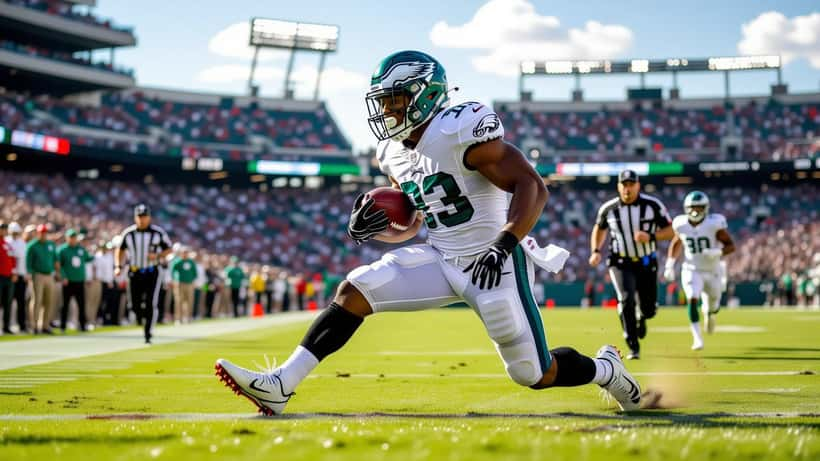
When De'Von Achane planted his left foot to cut right on September 27, 2026, and his knee buckled beneath him, the Miami Dolphins' season outlook darkened in an instant. No linebacker blindsided him. No foul play, no collision. The joint simply gave way under the force of his own movement — and within five minutes of the game's opening quarter, Achane was on his way to the locker room at Arrowhead Stadium, ruled out for the rest of a 24-10 loss to the Kansas City Chiefs. In his place: Ollie Gordon II, the second-year back who finished with 17 carries, 41 yards, and a touchdown. A breakout born from one of the most dangerous mechanisms in all of sports.
Head coach Jeff Hafley told reporters after the game that Achane's prognosis "does not sound optimistic" — a phrase that quietly set off alarm bells across sports medicine communities. Because what happened to Achane on that first-quarter carry is not rare. It is, in fact, the norm.
What Happened to Achane's Knee — and Why Doctors Were Unsurprised
Achane's injury fits a pattern orthopedic specialists recognize immediately: a sudden, non-contact ligament failure triggered by a deceleration and direction-change movement. He caught the handoff, accelerated into the secondary, planted his left leg, and pivoted. The knee did not cooperate.
According to research published in the British Journal of Sports Medicine, approximately 70% of all serious knee ligament injuries in athletes occur without direct contact — meaning no opponent touched them at the moment of failure. The structures most vulnerable to this mechanism include the anterior cruciate ligament (ACL), the medial collateral ligament (MCL), and the meniscus. Any one of these can fail under the rotational stress of a hard cut; in many cases, more than one tears simultaneously.
For Achane — a 23-year-old, elite-conditioned professional — the mechanism is still capable of causing significant structural damage. For the estimated 30 million Americans who participate in recreational sports every week, the same cut happens on fields, courts, and parking lots every day. The question is what they do in the hours and days that follow.
The Three Warning Signs That Mean "Call a Doctor Today"
Most recreational athletes have rolled an ankle or tweaked a knee and recovered without incident. The critical skill is distinguishing a minor strain from an injury that requires professional evaluation — ideally within 72 hours.
Sports medicine physicians identify three signs that turn a "wait and see" injury into an urgent consultation:
1. A pop or sudden giving-way sensation. Achane's knee visibly buckled — witnesses described the leg going momentarily limp before contact completed the tackle. An audible or felt "pop" at the moment of injury, even without immediate pain (adrenaline suppresses it), is the most consistent early marker of ligament rupture in clinical literature.
2. Rapid swelling within two hours. Swelling that appears within the first 90-120 minutes after a knee injury — called hemarthrosis, or bleeding within the joint — differs sharply from the delayed swelling of a typical sprain, which peaks at 24-48 hours. Fast swelling points to a torn blood vessel inside the joint, most commonly associated with ACL injury, rather than a simple inflammatory response.
3. Instability on weight-bearing or pivoting. If your knee feels like it might "give out again" when you walk, step down stairs, or attempt a turn, the structural support of the joint has been compromised. This is a functional deficit, not just pain — and it does not improve with rest alone.
Achane exhibited all three markers on Sunday. Hafley's postgame statement reflects what imaging almost certainly confirmed: the joint sustained more than incidental stress.
When a Recreational Athlete Waits Too Long: A Concrete Scenario
Picture a 37-year-old amateur soccer player in Austin, Texas, who takes a similar cut during a Saturday morning league match. The knee buckles slightly, swells by evening, but he finishes the second half on adrenaline and assumes he "just pulled something." He books a general practitioner appointment — the next available slot is three weeks out. Over those three weeks, he plays through it, compensates his stride, and notices the knee aching on stairs.
According to data from the American Orthopaedic Society for Sports Medicine, this delay carries a measurable cost. Meniscal damage — which occurs alongside approximately 50-65% of acute ACL tears — is significantly worsened when an unstable knee continues to bear rotational load. A meniscal tear that might have been repaired arthroscopically for approximately $6,000-$8,000 can progress to a condition requiring partial meniscectomy or, years later, early-onset osteoarthritis.
The financial math on early evaluation is clear. An MRI — the gold standard for soft-tissue knee diagnosis — costs $400-$2,500 depending on provider and insurance coverage. A sports medicine specialist consultation runs $150-$350 out of pocket. Against the $25,000-$50,000 cost of ACL reconstruction surgery plus 9-12 months of rehabilitation, the calculus is not close.
If the injury turns out to be a Grade I MCL sprain — recoverable in one to three weeks with physical therapy — the early consultation still cost under $400 and prevented weeks of unnecessary load on a potentially compromised joint. The asymmetry between the cost of early action and the cost of delay favors consultation in every scenario.
ACL, MCL, or Meniscus? Why the Specific Diagnosis Changes Everything
Not every plant-and-cut knee injury is an ACL tear. The three most common diagnoses carry dramatically different timelines and treatment requirements.
A Grade I or II MCL sprain typically heals in one to eight weeks with conservative management — rest, bracing, and targeted physical therapy — and rarely requires surgery. Return to sport is possible within three to four months.
A partial ACL tear may be managed non-surgically in moderately active adults, but only with imaging to confirm the degree of damage. Recovery ranges from three to six months with structured rehabilitation.
A complete ACL tear in an active adult almost always requires surgical reconstruction, followed by nine to twelve months of structured rehab before safe return to cutting sports. According to the American Academy of Orthopaedic Surgeons, delayed reconstruction — particularly when paired with secondary meniscal damage — significantly worsens long-term outcomes compared with timely intervention.
The mechanism of injury and immediate symptoms help clinicians narrow the diagnosis before MRI. But there is no substitute for an expert physical exam combined with imaging — and that process cannot happen on a three-week lag.
What to Do If Your Knee Gave Out Last Weekend
Achane's injury will be discussed through a lens of fantasy football and Dolphins playoff odds. For athletes outside the NFL, the more useful takeaway is procedural: if your knee buckled on a cut, landing, or pivot within the last seven days, the evidence supports seeking a sports medicine specialist this week — not at your next annual physical. Understanding how specialists approach acute MCL and knee injuries can help you prepare the right questions before your first appointment.
The National Institutes of Health estimates that approximately 200,000 ACL injuries occur in the United States each year, generating nearly $1 billion in healthcare costs annually. The vast majority of those patients are not professional running backs. They are recreational athletes, weekend soccer players, and people who pushed off awkwardly on a hardwood floor. Their outcomes are shaped largely by how quickly they pursue an accurate diagnosis and a structured recovery plan.
Ollie Gordon ran 17 times in relief on Sunday and delivered one of the performances of his young career. What happened to the player he replaced is a recurring story for millions of Americans — and the right response starts with knowing which warning signs mean "consult an expert today, not next month."
This article is for informational purposes only and does not constitute medical advice. Consult a qualified sports medicine physician or orthopedic surgeon for diagnosis and treatment of any knee injury.
