 Cora Nelson
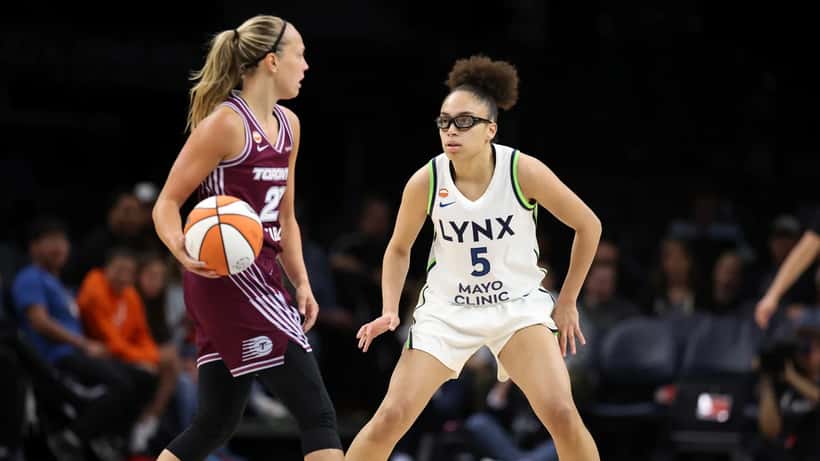
When Olivia Miles crumpled to the baseline at Louisville on February 26, 2023, tearing the anterior cruciate ligament in her right knee, most observers wondered whether the Notre Dame star would ever fully recapture her dominant form. Three years later, she is not only back — she is rewriting the WNBA record books as the Minnesota Lynx's second-overall draft pick and the only rookie All-Star starter of the 2026 season.
Miles' journey from surgical table to All-Star Game is more than an inspiring comeback story. For athletes at every level — from high school courts to weekend recreation leagues — it raises a question that sports medicine specialists field every day: when does a sports injury require expert care, and what does real, professional rehabilitation actually look like?
From Campus to Courtside: The 2026 WNBA Season in Context
The Minnesota Lynx selected Olivia Miles with the second overall pick in the 2026 WNBA Draft — a selection that would have seemed unlikely during the quiet months of her recovery in late 2023. Miles missed Notre Dame's entire 2023–24 season rehabbing the torn right ACL, and she has described the process as anything but smooth. "There was frustration building alongside pain and soreness," she noted, particularly during exercises that forced her surgically repaired right knee to bend farther than it wanted. She returned the following season, later transferred to TCU, and re-emerged on the national stage with noticeably stronger conditioning and a sharper mental edge.
The Lynx bet their second pick on that transformation. Through the first 30 games of the 2026 regular season, the investment has exceeded expectations. Miles is averaging 18.7 points on 51.9% shooting, 4.8 rebounds, 4.2 assists, and 1.4 steals in 30.5 minutes per game. She became the fastest player in WNBA history — not just among rookies — to accumulate 350 points and 100 assists. On June 4 against the Golden State Valkyries, she set the WNBA rookie record for three-pointers in a single game with eight made from eleven attempts.
These numbers do not happen by accident. Behind them lies a multi-year rehabilitation process managed with the kind of professional sports medicine oversight that most injured recreational athletes rarely receive — but very often should.
What Sports Medicine Looks Like at the Professional Level
Standard ACL reconstruction and rehabilitation protocols run 9 to 12 months, but return-to-play decisions at the professional level are now guided primarily by objective testing benchmarks rather than calendar timelines alone. Strength symmetry assessments — requiring the injured leg to demonstrate at least 90% of the output of the healthy leg — combined with single-leg hop tests and psychological readiness evaluations using validated instruments such as the ACL-RSI (Return to Sport after Injury) scale have become standard components of evidence-based protocols in elite settings.
What separates high-level recovery from typical recovery is not merely access to expensive facilities. It is the coordination among orthopedic surgeons, sports-certified physical therapists, strength and conditioning coaches, and sports psychologists — all aligned around sport-specific movement demands rather than generic function restoration. A basketball player's ACL rehab must ultimately include reactive cutting, lateral deceleration, and overhead ball-handling under load. A general PT clinic will rarely design that progression by default.
Miles credited the mental dimension of her recovery as especially difficult. The frustration of a slow-bending knee, she has explained, can erode an athlete's confidence as profoundly as the physical limitation itself. Sports psychologists embedded within professional medical teams address exactly this phenomenon — fear of re-injury, confidence deficits during loading, and the psychological plateau that often surfaces between months five and seven, when an athlete feels ready before objective testing confirms it.
When Generic Care Isn't Enough: A Concrete Scenario
Consider the case of a 21-year-old college basketball point guard — call her Mia — who tears her ACL during a January game. She has two paths available.
Path A — Sports medicine oversight: Mia consults an orthopedic surgeon within 72 hours, undergoes ACL reconstruction within three weeks (timing is deliberate: swelling must resolve before surgery to reduce stiffness risk), and enters a structured 10-month protocol with a sports-certified physical therapist. The program includes progressive loading, two sport-specific strength sessions per week, monthly hop-test benchmarking, and a psychological readiness assessment at month nine. Out-of-pocket costs after insurance: approximately $3,000–$6,000 over the full recovery period.
Path B — General care only: Mia sees her family physician, receives a referral to a general physical therapist, and completes two sessions per week of standard knee strengthening with no sport-specific progressions. Return to play is cleared at month nine because she reports feeling ready — not because any objective criterion has been met.
The outcomes diverge sharply. According to the American Orthopaedic Society for Sports Medicine, athletes who complete criteria-based return-to-sport protocols face ACL re-injury rates of approximately 8–15% in the two years following reconstruction. Athletes cleared on time-only protocols — with no objective benchmarks — face re-injury rates of 25–30% in the same window.
If Mia follows Path B and re-tears her ACL: she faces a second reconstruction surgery, an additional 12-month recovery period, elevated long-term risk of knee osteoarthritis from cumulative cartilage stress, and — at the collegiate level — potential loss of athletic eligibility. The total uncovered cost of a second reconstruction and extended rehabilitation commonly reaches $25,000–$40,000.
If Mia follows Path A and satisfies every objective criterion: she returns at month ten with documented strength symmetry above 90% and a psychological readiness score above the validated clinical threshold. Her re-injury risk falls into the single digits.
The $3,000–$6,000 invested in structured sports medicine is not an optional upgrade. Measured against the possibility of a $25,000–$40,000 second surgery, it is the most cost-effective decision an injured athlete will make.
Warning Signs That Require Specialist Consultation
Not every knee injury demands the level of care Olivia Miles received from a professional franchise's medical team. But several clinical thresholds should prompt immediate referral to a sports medicine specialist rather than a general-practitioner wait-and-see approach:
- An audible "pop" at the moment of injury — the hallmark acoustic sign of ACL or meniscal disruption
- Significant swelling developing within two hours — indicating hemarthrosis (bleeding into the joint)
- Inability to bear weight 24 hours post-injury without pain or instability
- A sensation of the knee "giving way" during direction changes or lateral movement
- Prior injury to the same joint — prior ACL reconstruction raises re-injury risk and requires closer specialist monitoring from the first symptom
For athletes who have already undergone reconstruction, the bar for specialist consultation is lower still. Persistent swelling after activity, pain under sport-specific load, or a noticeable reluctance to cut and accelerate at full speed are all clinical signals worth investigating before they become structural damage.
What Recreational Athletes Can Take From Miles' Comeback
The Lynx medical staff, strength team, and rehabilitation infrastructure available to Olivia Miles are beyond what most athletes will ever access. The underlying principles, however, are not. Sports medicine physicians (including board-certified fellows of the American Medical Society for Sports Medicine), physical therapists holding sports clinical specialist (SCS) or CSCS certifications, and orthopedic surgeons who specialize in athletic populations are available across most metropolitan and mid-size markets. Telehealth has extended access further, particularly for initial triage consultations and milestone progress reviews.
The pivotal decision is not whether to seek expert care for a significant joint injury — the evidence overwhelmingly supports it — but when. For ACL injuries and most major musculoskeletal events, the answer is consistently the same: within 72 hours of the acute injury, and again before any return to sport-specific training.
Miles' 2026 season is a documented case study in what happens when that decision is executed correctly, consistently, and backed by the right clinical team over a multi-year horizon. Eight three-pointers in a single game on a reconstructed right knee is not luck. It is the measurable product of three years of evidence-based, specialist-led rehabilitation — the same process available to athletes who choose to seek it.
This article is for informational purposes only and does not constitute medical advice. Consult a licensed sports medicine physician or orthopedic specialist for evaluation and treatment of any sports injury.
If you or an athlete in your life is managing a significant sports injury, ExpertZoom connects you with licensed health professionals who specialize in sports medicine and musculoskeletal rehabilitation.
