 Bernard Stone
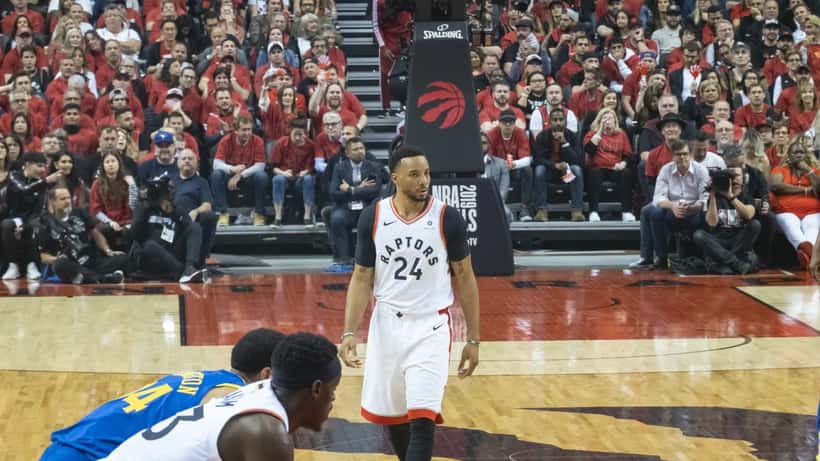
On July 1, 2026, Norman Powell officially agreed to a two-year, $45 million contract with the Chicago Bulls — making him one of the biggest free agency movers of Day 2. The deal, which carries a team option on the second year, rewards a 33-year-old guard who averaged 21.7 points, 3.5 rebounds, and 2.5 assists per game for the Miami Heat last season, earning his first career All-Star selection in the process.
But beyond the headlines, Powell's contract raises a question that every professional athlete eventually faces: when you sign a major deal in your 30s, how do you make sure the money outlasts the career?
A $45 Million Deal — With a Catch
The structure of Powell's contract matters as much as the dollar figure. The second year is a team option, meaning the Bulls — not Powell — decide whether he plays in Chicago beyond 2026/27. For a 33-year-old entering what could be the final chapter of his prime earning years, that distinction is significant.
According to the U.S. Bureau of Labor Statistics, the average professional basketball career lasts just 4.5 years. Powell has already beaten those odds considerably, but a team option on year two creates financial uncertainty that demands proactive planning rather than passive assumptions.
Contrast that with John Collins' three-year, $51 million deal with the Detroit Pistons, where only year one is guaranteed — another structure that caught financial planners' attention when it was signed. The lesson repeated across the league: the length and guarantee structure of a deal must inform an athlete's entire financial strategy.
The "Jock Tax" Problem Most Fans Don't See
Illinois levies a flat 4.95% state income tax, which will apply to Powell's home games and practice income in Chicago. But the tax picture is far more complex. NBA players are subject to what's known as the "jock tax" — they must file income tax returns in every state where they play road games, based on the proportion of their duty days spent there.
Depending on Powell's schedule, he could owe taxes in states including California (13.3% marginal rate), New York (10.9%), and New Jersey (10.75%) — among the highest in the country. Over two seasons and 164 regular-season games, the cumulative tax burden across multiple jurisdictions can reduce effective take-home pay by 40% or more.
The Consumer Financial Protection Bureau notes that complex multi-jurisdiction income is one of the leading drivers of unexpected tax liability for high earners who don't have specialized advisors (consumerfinance.gov). For Powell, who is a former second-round pick rather than a max-contract lottery pick, managing these costs carefully matters even more — because the margin for error is smaller.
At 33, This May Be His Last Big Deal
The NBA's age curve is unforgiving. Most shooting guards peak in their late 20s and see measurable decline by 34 or 35. Powell's 47/38/83 shooting splits and 21.7 points last season suggest he remains elite, but the team option clause signals that the Bulls have already accounted for the possibility of decline.
That makes this contract not just a payday — but potentially the final high-value contract of his career. Financial planners who work with professional athletes often describe this stage as the "last leverage window": the moment when an athlete still has market value and must translate that into a long-term financial structure rather than spending at the pace of current income.
Typical recommendations for athletes in Powell's position include:
- Living on no more than 50% of after-tax income
- Building 12-18 months of liquid reserves before pursuing illiquid investments
- Structuring post-career income streams (real estate, private equity stakes, franchise ownership) before the last contract expires
- Establishing retirement accounts including a Roth IRA and any available deferred compensation options
What Chicago's Market Means for His Wealth Picture
Chicago offers some structural advantages. Illinois doesn't tax retirement income, which matters for athletes who use deferred compensation arrangements — a tool increasingly common in the NBA. Real estate in Chicago's desirable neighborhoods has historically appreciated at 3-5% annually, making residential property an accessible entry point into income-generating assets.
At the same time, Chicago's sports market generates significant secondary income opportunities: endorsements, media appearances, community partnerships, and youth basketball programs. For a first-time All-Star at 33 who represents an underdog story — a second-round pick who built his career through relentless shooting improvement — those brand opportunities carry real commercial value.
Why Athletes at This Stage Need a Specialist, Not a Generalist
Standard financial advisors serve clients with predictable income streams, long careers, and traditional retirement timelines. Athletes operate in the opposite environment: peak income for 5-15 years, intense physical and schedule demands that limit time for financial oversight, multi-state tax complexity, and a post-career period that can last 50+ years beyond the final contract.
A wealth manager who specializes in professional athletes understands the interplay between contract structures, union benefits (the NBA Players Association offers pension plans, annuity programs, and health coverage), jock tax obligations, and the psychological shift from high income to post-career financial discipline.
That expertise is especially relevant now, at the start of free agency, when agents and front offices are finalizing deals at rapid pace. The decisions made in the 72 hours after signing — on taxes, investment allocation, and spending structure — often shape financial outcomes for decades.
If you're following an athlete's contract from the outside and wondering what smart money management looks like at this level, or if you're in a high-income profession facing similar complexity, a consultation with a certified financial planner who specializes in variable or multi-jurisdiction income can reframe how you approach your own financial planning.
Norman Powell earned his first All-Star spot at 33. With the right financial guidance, the $45 million he earns over the next two years can be the foundation of a financial life that outlasts his time on the court by generations.
