 Bernard Stone
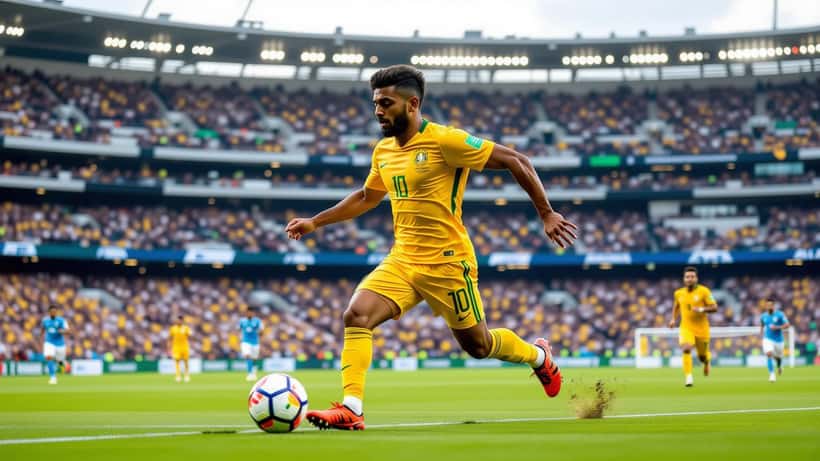
When Nishan Velupillay stepped onto a World Cup pitch in June 2026, he made history — becoming the first person of Tamil heritage ever to play at a FIFA Men's World Cup. For the 25-year-old Melbourne Victory winger, it was a personal milestone years in the making. For wealth advisors and sports finance professionals watching the same moment, it marked something else entirely: a textbook example of how a single tournament can permanently reshape an athlete's financial trajectory.
Who Is Nishan Velupillay?
Nishan Matthew Velupillay was born on May 7, 2001, in Australia. He plays as a winger for Melbourne Victory in the A-League and earned his place in Australia's 26-man Socceroos squad for the 2026 FIFA World Cup, co-hosted by Canada, Mexico, and the United States. He debuted for the Australian national team against China in October 2024 and has accumulated seven senior caps and three international goals ahead of this tournament.
His family background spans multiple continents: his father, Sasinath Velupillay, carries Malaysian and Sri Lankan Tamil heritage, while his mother Gillian is Anglo-Indian. For the global Tamil diaspora — communities spread across Australia, the United Kingdom, Canada, Germany, France, Malaysia, and Sri Lanka — Velupillay's World Cup selection carries enormous cultural weight.
According to FIFA, the 2026 World Cup is the largest in history with 48 participating nations, drawing a combined global television and streaming audience in the billions.
The Financial Inflection Point: What a World Cup Debut Actually Changes
In professional sports, career finances rarely move in a straight line. They advance in steps — moments where visibility, performance, and timing align to permanently raise an athlete's market value. Wealth managers who work with professional athletes call these "exposure events."
A World Cup debut is one of the most powerful exposure events in global sport. For a player like Velupillay — who arrives as a relatively unknown winger from the A-League with limited international profile — the financial implications can be significant, even before a contract renegotiation is on the table.
Here is why the next 12 to 18 months matter more financially than almost any other period of his career:
Endorsement windows open — briefly. The period immediately following a breakout tournament performance is when global brands actively seek athletes for new partnerships. Sports marketing data consistently shows that commercial value for breakout World Cup players can increase three to five times in the 12 months after the tournament. That window narrows quickly as other tournaments and players cycle through the media cycle.
Club contract leverage shifts. Velupillay currently plays for Melbourne Victory in the A-League. A strong World Cup performance puts him in view of European clubs and significantly strengthens his negotiating position for any A-League contract renewal. The same agent meeting that might have resulted in a modest raise pre-World Cup becomes a substantially different conversation post-tournament.
Diaspora premium. Tamil communities worldwide represent a commercially underserved audience that mainstream brands rarely reach through traditional sports sponsorship. An athlete with genuine cultural connection to the Tamil diaspora — rather than a surface-level "diversity" partnership — creates a rare opportunity for brands seeking authentic multi-market reach across Australia, the UK, Canada, Malaysia, and India simultaneously.
The Trap: Why Breakout Moments Become Financial Mistakes
For every athlete who converts a career-defining moment into lasting wealth, several more fail to capitalize — or worse, make decisions in the hype period that take years to unwind.
The pattern repeats across sports: sudden income increases coincide with an influx of agents, endorsement offers, and unsolicited investment pitches. Athletes in their mid-twenties — like Velupillay — often lack the financial infrastructure to evaluate these opportunities correctly, especially when they arrive simultaneously.
What sports finance professionals recommend for athletes at this inflection point:
Act on contract and endorsement timing deliberately. The instinct is to wait until the tournament ends to assess options. But the most favorable endorsement terms are often secured during peak coverage — not weeks after, when attention has shifted to the next news cycle.
Separate income streams from lifestyle. Signing bonuses and endorsement fees are one-time receipts. Athletes who treat them as recurring income rapidly outpace their earning with expenditure. A wealth advisor can establish separate accounts for one-time income versus salary, with clear investment mandates for each.
Plan for multi-jurisdiction tax. Velupillay's potential to earn in Australia, the UK, and Southeast Asia simultaneously creates cross-border tax obligations that require proactive structuring. Many athletes receive their first foreign endorsement payment before realizing they have created a tax reporting requirement in multiple countries.
Build a financial team before the offers arrive. The most financially successful athletes are those who had an independent advisor in place before the breakthrough — someone not financially tied to any specific deal. An agent earns commission; a fiduciary financial advisor is legally obligated to act in the athlete's interest.
History and Wealth: The Longer View
Velupillay's story carries meaning well beyond sports finance. For the Tamil diaspora, his presence at the World Cup is a cultural moment — a visible signal that Australians of Tamil heritage belong at the highest levels of global competition. That kind of visibility tends to have commercial durability that purely athletic achievement does not: community affiliation creates loyal audiences that persist beyond a single tournament.
For the athlete himself, the question is whether this moment becomes the foundation of long-term financial security, or a peak that passes without a plan to hold onto it.
Smart planning — started now, not after the final whistle — is what separates the two outcomes.
At Expert Zoom, independent wealth advisors with experience in sports income management, cross-border tax, and endorsement structuring can help athletes and their families navigate these decisions with clarity.
Disclaimer: This article is for informational purposes only and does not constitute financial advice. Consult a licensed financial advisor for guidance tailored to your specific situation.
