 Daniel Sterling
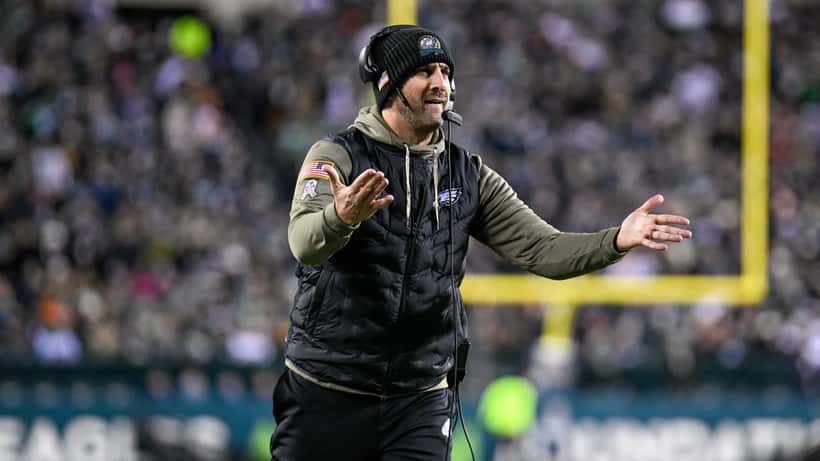
As the Philadelphia Eagles open the 2026 NFL season, head coach Nick Sirianni faces a paradox familiar to millions of American workers: five consecutive playoff appearances, two NFC championships, a Super Bowl ring — and still, his job security is openly questioned. According to Bleeding Green Nation, Sirianni is listed among the coaches most likely to face a defining season in 2026. His situation raises a question that extends far beyond football: can your employer push you out even when you've delivered?
Why Nick Sirianni Is Under Fire Despite a Winning Record
Nick Sirianni enters his sixth year leading the Philadelphia Eagles with a résumé most coaches would envy. His 11–6 record in 2025, back-to-back NFC Championship appearances, and a Super Bowl ring represent measurable, indisputable success. Yet analysts at ESPN, Bleeding Green Nation, and other sports outlets have consistently flagged him as a potential weak link heading into the 2026 campaign, citing what they describe as "a struggling offense" and concerns about long-term organizational fit.
According to Yahoo Sports, Sirianni even turned to ChatGPT this offseason to sharpen his preparation — a striking sign of the mounting pressure he feels to evolve heading into this season. The Eagles are routinely classified as Super Bowl favorites for 2026, which means the margin for error is essentially zero. Any shortfall gets magnified, and no amount of past success provides a permanent shield.
If you've ever performed well in your role and still found your position questioned, Sirianni's situation is worth paying close attention to — because the employment law dynamics at play in the NFL are the same ones that govern your own job.
What Employment Lawyers Say About Results Versus Rights
In the United States, most employment relationships operate under the "at-will" doctrine: an employer can terminate an employee at any time, for almost any reason, or for no stated reason at all — provided the termination doesn't violate anti-discrimination law or breach a formal written agreement.
That last phrase is the critical one. Sirianni, like most NFL head coaches, operates under a multi-year employment contract with defined terms, buyout provisions, and specific conditions under which termination "for cause" can be invoked. That written contract — not his win-loss record — is the primary legal document governing his relationship with the Eagles. This same dynamic applies to executives, senior managers, and professionals across every industry who have signed formal employment agreements.
Employment lawyers who advise coaches and executives on both sides of these disputes consistently highlight three contract mechanics that most professionals misunderstand:
Buyout clauses define the real cost of firing someone. NFL coaching contracts typically guarantee salary through the contract's expiration date unless "cause" is clearly established and documented. With Sirianni's reported salary at approximately $12 million per year, a mid-season or mid-contract termination without cause could cost the Eagles tens of millions in guaranteed payments. The same logic applies to any professional under a fixed-term agreement: the employer's ability to walk away cheaply depends entirely on whether they can prove "cause" as defined in the contract.
"Cause" is a legal term, not a general impression. Employment contracts enumerate specific conduct that constitutes termination for cause: criminal misconduct, willful insubordination, material breach of contractual duties. "The offense was too conservative" or "we're going in a different direction" almost never satisfies a contract's definition of cause. If your employer terminates you citing reasons not enumerated in your agreement, they likely owe you the remaining contract value.
Non-compete clauses can cut both ways. Many high-level employment contracts restrict employees from joining competitors for 12 to 24 months after termination. However, enforceability varies sharply by state. California, for example, renders most non-competes void. An employment attorney can tell you before you sign whether a non-compete in your agreement would actually hold in your jurisdiction — and negotiate it down or remove it during contract review.
When Strong Performance Metrics Don't Protect You
The most instructive — and uncomfortable — aspect of Sirianni's 2026 situation is that exceptional, measurable results haven't insulated him from scrutiny. Five consecutive playoff appearances are not ambiguous data points. Two NFC championships are not soft metrics. And yet the conversation around his job security in September 2026 consistently centers on qualitative assessments: "offensive struggles," "organizational fit," "long-term vision alignment."
These soft judgments are exactly the kind that appear in termination notices across industries. And they're precisely why the U.S. Equal Employment Opportunity Commission emphasizes that workers should understand both their statutory rights and their contractual protections — because anti-discrimination law alone doesn't address terminations framed as performance-based, even when the underlying driver is interpersonal conflict or shifting organizational priorities.
Employment attorneys advise professionals to maintain a private, ongoing performance record: saved emails acknowledging results, documented project outcomes, year-end review language. When a termination dispute turns on whether the stated reason for firing was genuine or pretextual, this documented evidence becomes critical. Without it, a well-performing employee can find themselves unable to challenge a termination that has far more to do with politics than performance.
Concrete Case: The VP Who Faced the Same Dynamics as Sirianni
Employment lawyers across the country encounter variations of this scenario every week. The names change; the contractual mechanics do not.
A regional VP of operations at a mid-size logistics company has led her division through three consecutive years of 12% efficiency gains, exceeding company targets in each period. She signed a two-year employment contract in March 2025 at $195,000 annually, with a performance bonus structure tied to division results. In September 2026 — eighteen months into her contract — her CEO informs her that the company is "restructuring leadership" and her role is being eliminated. No specific performance deficiencies are cited in the notice.
If the termination is without cause: She is owed the remaining six months of guaranteed salary on her contract — $97,500 in wages she cannot legally be denied. If her contract includes employer-sponsored health insurance, the employer must maintain that coverage through the contract's expiration or compensate her the equivalent COBRA costs, which in 2026 typically range from $700 to $1,100 per month for an individual plan — adding $4,200 to $6,600 more. Any annual performance bonus earned based on results through the termination date is also recoverable under the contract's bonus provisions.
If the employer attempts to invoke termination "for cause": They must demonstrate specific conduct meeting the contractual definition — not a general reorganization rationale. Courts routinely reject "restructuring" as a valid cause trigger when the individual contract doesn't enumerate it. If no specific conduct is cited that matches the agreement's cause definition, the full remaining contract value typically remains collectible.
The outcome in this case: An employment attorney consulted within two weeks of the termination notice identified approximately $103,000 in uncollected compensation — guaranteed wages plus benefits plus earned bonus — that the VP would have forfeited had she signed the separation agreement presented to her at termination. The attorney also identified a non-compete clause covering a 24-month radius that was unenforceable under her state's law, freeing her to immediately join a direct competitor.
This is not an unusual result. It is the pattern that employment attorneys see when professionals engage legal counsel before signing anything.
What You Should Do Before Your Situation Becomes a Crisis
Nick Sirianni isn't the only professional entering September 2026 with his job security dependent on others' subjective assessments. If you're in a senior role, in a performance-intensive environment, or simply operating under a written employment contract, the time to understand your rights is before you receive a termination notice — not after.
Have your employment contract reviewed by a lawyer now. Employment agreements are drafted by counsel representing the employer. They are optimized for the organization's interests. An independent employment attorney can identify gaps in your protections, explain what "cause" means in your specific contract, flag non-compete enforceability issues, and advise on bonus protections — before a dispute forces the issue.
Build your documented performance record proactively. Maintain a private file: positive performance reviews, emails acknowledging your results, objective metrics tied to your name, and any informal recognition from supervisors. Courts weigh evidence. Without it, even a strong real-world track record is difficult to prove.
Know your state's employment laws. Federal at-will doctrine is the baseline, but several states — including California, Montana, and others — provide additional protections through implied contract exceptions, good-faith covenants, or stronger anti-retaliation statutes. An employment attorney in your state will know which protections apply to you beyond federal law.
Don't sign a separation agreement without counsel. Employers routinely include broad liability releases in these documents. The standard review window is 21 to 45 days — enough time to have an employment lawyer review every clause before you give up claims you didn't know you had.
This article is for general informational purposes only and does not constitute legal advice. Employment law is highly fact-specific and varies by state and jurisdiction. Consult a licensed employment attorney for guidance on your individual situation.
Nick Sirianni may have the Eagles' front office, legal team, and union protections behind him. Most professionals don't have all of those. An experienced employment lawyer who knows contract law and your state's statutes is the professional who levels that playing field — and the one worth consulting before a high-pressure situation becomes a legal dispute.
