 Jessica Johnson
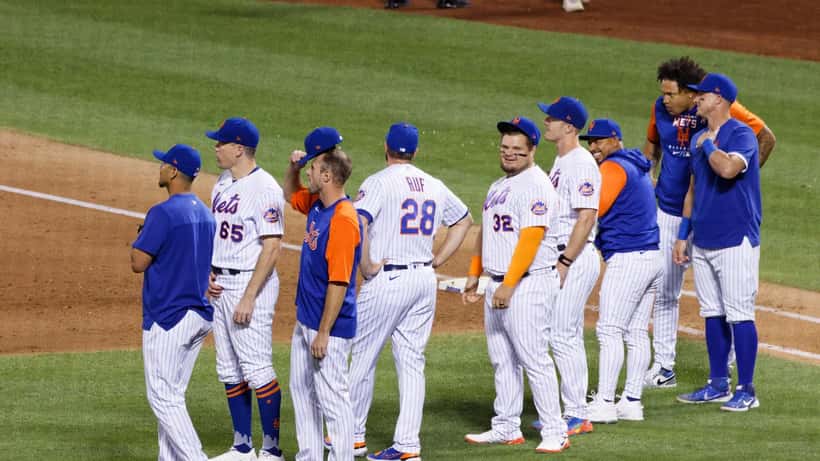
Nick Morabito stepped into the major leagues on May 19, 2026, when the New York Mets promoted the 23-year-old outfield prospect to fill a roster spot vacated by the DFA of veteran Austin Slater. For fans of the speedy center fielder, it is a moment to celebrate. For sports attorneys and labor experts, the precise timing of his callup is the real headline — one that could shape millions of dollars of career earnings.
How MLB Service Time Rules Work
Major League Baseball's Collective Bargaining Agreement governs when players become eligible for salary arbitration and, eventually, free agency. Those milestones are determined by "service time" — the number of days a player spends on an active MLB roster during a season.
A full year of service time equals 172 days on the active roster. A player needs six years of service time to reach free agency. Critically, a player needs three years of service time to become eligible for salary arbitration — the process where players can challenge their salaries before a neutral panel.
Here is where the math becomes consequential: if a player spends fewer than 172 days on the active roster in their first season, that season counts as less than a full year of service time. If a team keeps a prospect in the minor leagues for just the first 20 days of the season, they effectively delay the start of the player's service time clock — pushing back arbitration and free agency by one full year.
The Two-Week Trick: What It Costs Players
Prospect callup timing is one of the most contested practices in professional baseball labor law. Teams have a strong financial incentive to delay a top prospect's MLB debut by approximately two weeks at the start of the season. By doing so, they ensure the player's service time in that first year falls below the 172-day threshold, effectively gaining an extra year of team control.
The financial consequences for players are enormous. An extra year of pre-arbitration control means one additional year at the rookie minimum salary — currently around $740,000 per season under the 2022 CBA. Beyond that, it delays the player's eligibility for salary arbitration, where salaries often jump to $3M–$10M per year for productive players. And by delaying free agency by one year, teams limit when a player can sign a market-rate deal.
Over a career, a single delayed callup can cost a player $20 million to $50 million in total earnings, depending on their performance level.
Nick Morabito's callup on May 19 — nearly seven weeks into the 2026 season — means his first year of service time will not count as a full season. Whether that timing was intentional — or simply a reflection of his .253/.364/.390 line and 12% walk rate at Triple-A — is a question the MLB Players Association and player agents have debated hotly in recent seasons.
Is Service Time Manipulation Legal?
Service time manipulation is not illegal under US law — it is a labor practice governed by the MLB Collective Bargaining Agreement between MLB owners and the MLBPA. The 2022 CBA introduced new provisions intended to curb the practice. Under that agreement, the top 75 prospects (by pre-season prospect rankings) who spend more than 60% of the first 130 days of the season in the minors receive an additional year added to their service time at the end of their careers — effectively giving them one extra year of free agency.
However, critics argue the provision does not go far enough. It applies only to top-ranked prospects, excludes players ranked lower (like Morabito, who entered 2026 as the Mets' 15th-ranked prospect), and relies on pre-season rankings that clubs can influence through internal grading systems.
Sports attorneys who work with MLB players point to a structural conflict of interest: teams hold almost total control over when prospects are promoted, and the CBA's remedies are limited. A player who believes they were deliberately kept in the minors to manipulate service time has no direct legal claim for damages — they can only pursue remedies through the MLBPA grievance process.
What Sports Attorneys Advise Young Players
For young professional athletes entering the major leagues, a sports attorney or certified player agent offers several layers of protection:
Contract review and negotiation. Pre-arb players are entitled to advocate for salaries above the rookie minimum through team negotiation. A sports attorney can identify leverage points based on comparable players and performance metrics.
Understanding roster decisions. Agents track callup dates carefully and can flag potential service time manipulation. If a player's promotion timing appears designed to deprive them of an arbitration year, an attorney can guide them on whether a grievance through the MLBPA is viable.
Financial planning for the pre-arb years. The gap between the rookie minimum (~$740K) and what a player would earn in arbitration ($3M–$8M) is the most financially vulnerable period of an athlete's career. A financial advisor specializing in athlete compensation can help structure that income for long-term stability.
Post-career transitions. Service time also affects pension benefits and health coverage under the MLBPA benefit plan. One lost year of service time can affect post-career financial security.
When Should Young Professional Athletes Consult a Lawyer?
Not every roster decision requires legal intervention, but several situations warrant a conversation with a sports attorney:
- Your callup was delayed beyond what your performance justified, and you believe the timing was intentional
- You are approaching salary arbitration eligibility and want to understand your options
- You have received a contract offer above the rookie minimum and want it reviewed before signing
- You are navigating a minor league assignment dispute or option year
The rules governing professional baseball are dense and financially consequential. For a player like Nick Morabito — talented, young, and at the beginning of a career that could last a decade — understanding those rules from day one is not just smart. It is essential.
This article is for informational purposes only and does not constitute legal advice. Consult a licensed sports attorney or MLBPA-affiliated agent for advice specific to your situation.
