 Harper Brooks
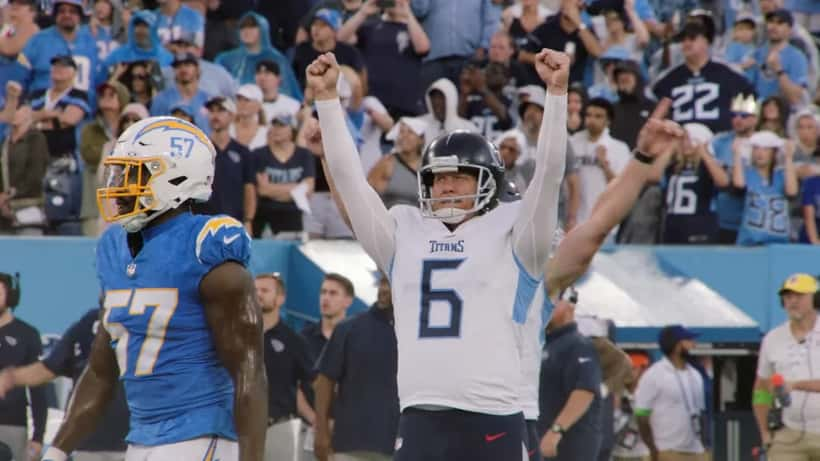
Nick Folk turned 41 in November 2025, weighed retirement with his family, then signed a two-year, $9 million contract with the Atlanta Falcons — becoming the NFL's oldest active kicker. Three weeks into the new season, with three missed field goals in two games, his decision is being scrutinized by every sports desk in America. But the question millions of older American workers are quietly asking themselves is exactly the same one Folk faced: when is the right moment to walk away?
The Story Driving This Week's Search Traffic
Folk came to Atlanta carrying 19 seasons of NFL experience. In 2025, with the New York Jets, he converted 96.6% of his field goal attempts — the best rate in the entire league that year. His career accuracy over the last six seasons sits at 93.4%, which would tie the all-time NFL record if it holds up. That track record earned him a two-year deal worth $4.5 million per year, with $4 million guaranteed.
Then the 2026 season opened. Week 1 against the Pittsburgh Steelers: a 54-yard miss wide right in the second quarter, contributing to a 20-13 road loss. Week 2: another miss from 53 yards. Three failed attempts in two games. Suddenly, despite a coaching staff that publicly expressed confidence in him, the word "retirement" is circulating again — not just in NFL front offices, but among the millions of viewers who see in Folk's situation a version of their own professional crossroads.
Why Retirement Timing Is Never Just a Financial Decision
The Folk story reveals something wealth management advisors hear constantly in their offices: the decision to keep working or step away is rarely a pure financial calculation. It is a collision of identity, earning potential, health reserves, and life goals — in that order, for most high-performing professionals.
People who have spent decades at the top of their field often stay too long, not because they need the income, but because their professional identity and their sense of purpose are inseparable. The financial model might say retire at 62; the psychological pull says never. For Folk, the math on continuing was compelling: $4 million in guaranteed money, a shot at making history with his accuracy percentage, and an organization willing to invest in him. But math is only part of the equation. The physical wear of a 19-year career — and the public scrutiny every miss generates at 42 — introduces dimensions that no spreadsheet captures.
What a Wealth Manager Reviews Before Advising "Stay" or "Go"
When a client walks into a wealth management consultation asking whether they can afford to retire, the conversation rarely begins with account balances. A qualified advisor works through four distinct lenses:
Income replacement ratio. How much of current take-home pay does retirement income — Social Security, portfolio withdrawals, pensions — actually replace? The widely accepted benchmark is 70–80% of pre-retirement income. Falling short of that threshold means lifestyle adjustments, not just financial ones.
Sequence-of-returns risk. Retiring into a market downturn permanently impairs a portfolio in ways that delaying by even two or three years can avoid. The first five years of retirement are the most financially fragile period most Americans will ever navigate.
Longevity horizon. With average U.S. life expectancy now past 79, a 62-year-old retiree needs a portfolio to sustain withdrawals for more than 20 years — ideally closer to 30. Working two additional years does not just add 24 months of savings contributions; it compresses the withdrawal period and allows compound growth to continue working.
Healthcare bridge cost. Medicare eligibility begins at 65. Retiring at 62 means three years of private health coverage, which in 2026 runs $1,200–$2,000 per month for a couple without employer-sponsored insurance — a $43,000–$72,000 out-of-pocket obligation most early retirees underestimate.
Folk's situation maps directly onto all four lenses: his earnings are irreplaceable at this stage of life, his professional longevity window is definitionally closing, and the "body-as-capital" parallel to healthcare cost is uncomfortably literal.
How the Numbers Change Over Two Years: A Concrete Calculation
Consider a scenario that mirrors what millions of Americans over 55 face right now:
You are 61 years old. Your employer offers a two-year contract extension at your current salary of $115,000 per year. Your retirement savings total $850,000. Your projected annual expenses in retirement are $72,000. You are eligible for Social Security at 62, but your monthly benefit increases by approximately 8% for every year you delay claiming, up to age 70.
If you retire immediately at 61:
- Social Security at 62: approximately $1,680/month ($20,160/year)
- Annual gap between expenses and Social Security income: $72,000 − $20,160 = $51,840 drawn from portfolio each year
- At that withdrawal rate from an $850,000 base, the portfolio is statistically depleted by age 83–84 — below the average American life expectancy
- Any significant market downturn in the first three years accelerates depletion
If you work two more years to 63:
- Net savings added: approximately $230,000 (assuming $115,000 gross salary with a 50% net-to-savings rate after taxes and living expenses)
- Portfolio value at 63: approximately $1,105,000 — assuming 6% average annual growth on the original balance
- Social Security at 63: approximately $1,900/month ($22,800/year) — a permanent 13% lifetime income increase from waiting just one additional year
- Annual gap at 63: $72,000 − $22,800 = $49,200
- Sustainable withdrawal period: approximately 30 years, reaching age 93 — well past statistical life expectancy
The bottom line: two more working years extend portfolio longevity by 7–8 years and generate over $45,000 in additional lifetime Social Security income. That is the exact calculation Folk weighed when he signed his Falcons contract — except instead of field goals missed, the performance variable was whether his accuracy would hold at 42 in NFL conditions.
This article is for informational purposes only and does not constitute personalized financial or investment advice. Retirement planning involves individual variables that require consultation with a licensed wealth management professional.
The Risk No One Talks About: Staying Past Your Window
There is a version of "one more season" that wealth managers also recognize — the one where staying too long destroys what staying was supposed to protect.
Three indicators that the calculus has shifted:
- Error rates trending up, not down. Folk's three misses in two games from 50+ yards are data points. If they reflect a structural pattern rather than a difficult-field-conditions anomaly, no guaranteed money buys back consistent performance.
- The replacement cost of failure has changed. Missing a 53-yard field goal costs a game. For most professionals, a comparable late-career stumble — a failed project at 63, a strategic misjudgment under pressure — can cost a bonus structure, a title, or a role entirely.
- The income you're earning is spending health capital you'll need later. If two additional years of work add $200,000 to a retirement account but require $60,000 in stress-related medical costs over the following decade, the net gain is significantly smaller than the spreadsheet suggests.
What This Moment Means for Your Own Decision
Whether you are watching Nick Folk boot field goals for the Falcons or sitting across from a buyout offer, the right first step is identical: get a structured financial review before the window closes.
According to U.S. Department of Labor retirement planning resources, Americans who engage a professional advisor are significantly more likely to have a formal retirement strategy, accumulate greater assets, and approach their retirement date with confidence rather than uncertainty. The principles are publicly available — but the personalized modeling that translates your age, your savings balance, your Social Security timing, and your healthcare situation into a concrete "stay" or "go" recommendation requires a qualified conversation.
Nick Folk's answer was stay — backed by 19 years of data, $4 million guaranteed, and a coaching staff that believes the fundamentals will return. The 2026 season will deliver a verdict. For everyone else watching from the stands, the right answer is out there — but it takes an expert to find it.
