 Daniel Sterling
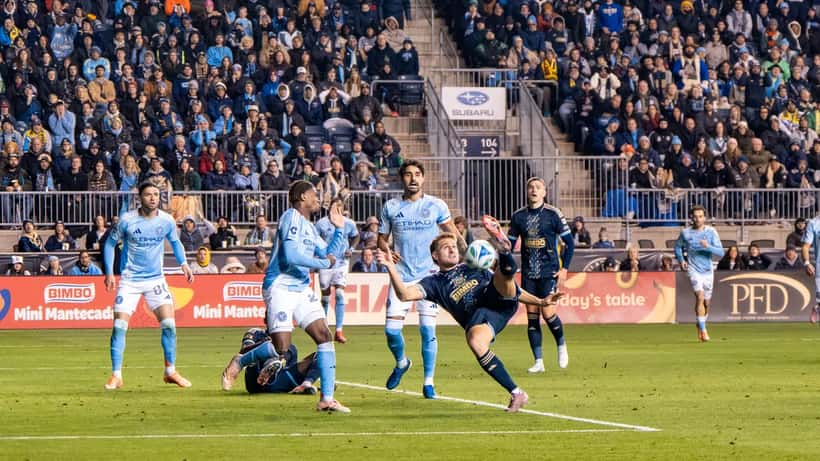
New York City FC and the New York Red Bulls collide again in the 2026 MLS season, renewing the Hudson River Derby that divides the New York metropolitan area's soccer faithful. But beyond the passion of this local rivalry lies a legal structure unlike any other major professional sports league in America — one that directly affects every player on both rosters.
The Hudson River Derby: NYC FC vs. NY Red Bulls in 2026
The Hudson River Derby remains one of MLS's most electric matchups. As of April 2026, both clubs sit in the Eastern Conference playoff picture. New York City FC, backed by City Football Group (the Manchester City ownership consortium), plays at Yankee Stadium. The New York Red Bulls, owned by Austrian energy drink giant Red Bull GmbH, plays in Harrison, New Jersey, at Red Bull Arena.
The two clubs have met more than 30 times since NYCFC joined MLS in 2015, with each match drawing national attention and passionate crowds from both sides of the Hudson River.
MLS's Unique Single-Entity Structure: What Players — and Fans — Need to Know
Most professional sports leagues in the United States operate as associations of independently owned teams. MLS is different. Major League Soccer was structured from its founding in 1993 as a single-entity organization: technically, the league itself owns all player contracts, not the individual clubs.
This unusual arrangement has significant legal implications.
What "single-entity" means in practice: When NYCFC or the Red Bulls "sign" a player, the player's contract is actually with MLS as the employer. The club operates more like a franchise licensee that leases player rights from the league. This structure was specifically designed to avoid the antitrust problems that plagued other leagues and to control labor costs during MLS's early years.
The Fraser v. Major League Soccer case: In 2002, the U.S. Court of Appeals for the First Circuit upheld MLS's single-entity status in Fraser v. Major League Soccer, ruling that the league's structure did not violate federal antitrust law. This decision set the foundation for how player contracts, trade agreements, and salary rules function to this day.
Salary transparency — the MLS Players Association publishes salaries: Unlike the NFL or NBA, where individual contract details are generally private, the MLS Players Association (MLSPA) publishes a full list of player salaries twice per year. As of the September 2025 report, the average MLS player earned approximately $550,000 annually — but median pay is significantly lower at around $175,000, skewed by a handful of designated players earning millions.
Designated Players: The Legal Exception That Changed MLS
The "Beckham Rule" — formally the Designated Player Rule — allows each MLS club to sign up to three players outside the salary cap guidelines. The club pays the market rate for the player, while MLS contributes a fixed amount (approximately $650,000 per DP slot in 2026) toward the salary cap calculation.
For the Red Bulls and NYCFC, this means their marquee players are hired under different legal agreements than standard MLS roster players. Contract negotiations for DPs often involve European-style transfer fees, image rights agreements, and complex tax considerations — particularly when players come from abroad.
International transfers and their legal requirements: When NYCFC or the Red Bulls acquire a player from a European club, the transfer must comply with FIFA's Regulations on the Status and Transfer of Players (RSTP). This includes the international transfer certificate (ITC) process, solidarity payment rules (a portion of transfer fees is redistributed to clubs that trained the player between ages 12 and 23), and training compensation rules.
A player moving from a Premier League club to MLS triggers solidarity payments that may be owed to five or more clubs across different countries. Coordinating these payments requires international sports law expertise that most general attorneys don't have.
What MLS Players Should Know About Their Employment Rights
MLS players are represented by the MLS Players Association, which negotiated a collective bargaining agreement (CBA) in 2020 that runs through 2027. Key provisions include:
Free agency protections: MLS players can become free agents after five years of professional service (reduced from six years in the previous CBA). Before reaching that threshold, the league has significant control over where a player can be transferred.
Allocation and discovery process: When a player is waived or released, they enter an "allocation order" — essentially a draft list that determines which clubs can sign them. This limits a released player's ability to negotiate freely with multiple clubs simultaneously. Understanding this mechanism is critical for players and agents navigating roster cuts.
Grievance procedures: Disputes about salary payments, contract terms, or disciplinary actions go through a grievance arbitration process outlined in the CBA. Players generally cannot sue MLS in civil court without first exhausting internal grievance procedures — a significant limitation compared to standard employment law.
When Should Athletes Consult a Sports Attorney?
The legal complexity of MLS — with its single-entity structure, international transfers, and unique labor rules — means that even mid-level players benefit from having their own legal representation separate from what the league or their agent provides.
Key moments when a sports attorney adds value:
- Contract signing or extension negotiations
- Trade or loan situations involving international components
- Disputes over incentive clauses, bonus payments, or image rights
- Disciplinary proceedings before the league or club
- Career transition and contract termination planning
The ExpertZoom network connects players, coaches, and sports business professionals with licensed sports and employment law attorneys who understand the specific rules governing American soccer. Whether you're navigating an MLS contract, a college NIL agreement, or a dispute with an agent, the right legal counsel protects your career and your income.
The Business Behind the Rivalry
The next Hudson River Derby is more than a soccer match — it's a showcase for one of the most legally complex employment environments in American sports. Every tackle, every transfer, every contract extension plays out against a backdrop of regulations that only a handful of attorneys in the country truly master.
If you're a player, coach, or sports business professional affected by MLS's unique structure, don't rely solely on your club or the league for legal guidance. Independent legal representation ensures your rights are protected in the league that plays by its own rules.
Disclaimer: This article is for informational purposes only and does not constitute legal advice. Consult a licensed attorney for guidance on your specific situation.
