 Cora Nelson
The moment Sheldon Creed's No. 00 Chevrolet crossed the finish line at Darlington Raceway on September 5, 2026, most fans focused on the championship implications of his Fleetio 200 victory. What received far less attention was the invisible adversary every driver battled across 200 laps of the Lady in Black: a cockpit temperature that routinely exceeds 130 degrees Fahrenheit — conditions most emergency physicians would flag as medically extreme.
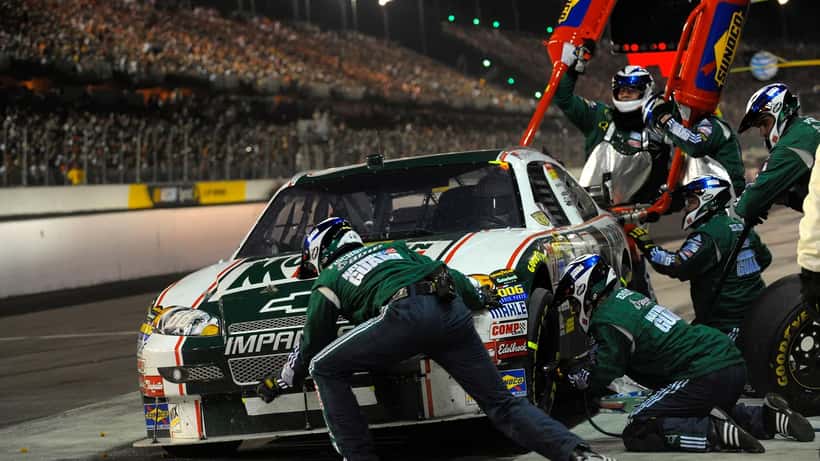
While Creed led the final 49 laps to defeat Hendrick Motorsports rookie Corey Day by 2.961 seconds and close his O'Reilly Auto Parts Series championship gap, each competitor sat inside a steel and carbon-fiber oven that turned the race into an endurance test most spectators watching from shaded grandstands never fully appreciate.
What the Darlington Numbers Actually Look Like Inside the Cockpit
Research into Next Gen car conditions, compiled by speedway performance analysts and reported by SpeedwayMedia in May 2026, puts NASCAR cockpit temperatures between 130 and 160 degrees Fahrenheit during sustained green-flag runs at summer events. Darlington in early September, when ambient track temperatures can exceed 110°F on the surface, sits firmly in that range.
At those temperatures, a driver's cardiovascular system responds dramatically. Heart rate settles between 150 and 170 beats per minute and holds there for stretches lasting three to four consecutive hours — the sustained output of someone running a marathon at maximum pace, performed while simultaneously making micro-second decisions at 180 miles per hour.
During extreme heat conditions, heart rates spike toward 180 BPM. Over the course of a single race, drivers lose between six and ten pounds of body weight through sweat alone. When fluid loss reaches just two to three percent of total body mass, cognitive performance drops measurably: reaction time slows and decision-making quality degrades. This is not a matter of grit or focus. It is straightforward physiology.
The physiological threshold that matters most is a core body temperature approaching 102 degrees Fahrenheit. At that point, according to heat stress research, irreversible fatigue processes activate. No amount of competitive will compensates for what happens at the biochemical level.
Why a NASCAR Cockpit Is Medically Relevant to People Who Never Race
The NASCAR setting is extreme, but it compresses and accelerates a physiological process that plays out more slowly — and therefore more invisibly — for ordinary people exercising or working outdoors in hot weather. When a NASCAR driver monitors their sweat loss, heart rate, and core temperature during a race, they are doing, with professional medical teams, exactly what an emergency physician would want every outdoor athlete or laborer doing on a hot day.
Most people are not doing it.
According to the Centers for Disease Control and Prevention, heat-related illnesses affect hundreds of thousands of Americans annually, and the progression from heat stress to heat exhaustion to heat stroke can move faster than expected. The warning signs — persistent heavy sweating, rapid heartbeat, headache, dizziness, nausea, cold and clammy skin — closely mirror what NASCAR teams are trained to watch for during a race, often via biometric monitoring inside the car.
A distinction health professionals emphasize strongly: heat exhaustion typically preserves cognitive function, while heat stroke does not. A person who becomes confused, stops making sense, or cannot follow basic instructions while overheated is experiencing a medical emergency that requires immediate emergency services, not shade and water. That line can narrow within minutes in the right conditions.
A Scenario That Translates the Data to Real Life
Consider a 40-year-old amateur cyclist completing a two-hour group ride outside Phoenix, Arizona, on a September afternoon when the ambient temperature reaches 97°F. The ride ends. They feel tired and slightly light-headed — normal, they assume, and attribute it to the effort rather than the heat. They spend 25 additional minutes in the parking lot loading their bike, talking to friends, and standing in direct sun.
By this point, they have lost approximately 1.8 to 2.2 pounds of fluid — roughly 1 to 1.2 percent of a typical adult body mass — without replacing any of it. Not yet at the danger zone. But here is the if/then dynamic that matters: if they drive home with car air conditioning cooling their skin without restoring core temperature, and if they skip fluid replacement in the next 30 minutes because they "don't feel that thirsty," the body's cooling mechanism continues working without adequate fuel.
Sweating requires fluid. When fluid drops below a critical level, the body reduces sweating to preserve what remains. Core temperature then climbs rather than stabilizes. If their core temperature reaches 102°F before they consume at least 500 ml — roughly 17 fluid ounces — of an electrolyte solution rather than plain water, they have crossed into the medical consultation zone. Not the emergency room, necessarily, but the point where a physician's evaluation becomes advisable rather than optional.
The cost of getting that assessment wrong: missing the window between heat exhaustion, which resolves with rest and rehydration, and heat stroke, which can cause organ damage in under an hour. A consultation with a health specialist can help weekend athletes establish their personal heat tolerance thresholds, understand the medications or conditions that elevate their individual risk, and learn the specific signals that mean "stop now and call someone." ExpertZoom's article on heat-related health risks and when to call a doctor outlines the key warning signals in detail.
Important: This article provides general health information for educational purposes only. It is not a substitute for professional medical advice, diagnosis, or treatment. If you are experiencing symptoms of heat illness, seek immediate medical attention or call emergency services.
The Biometric Signals Every Outdoor Athlete Should Know
NASCAR teams track several physiological markers during races that translate directly into practical checkpoints for anyone active in hot weather conditions.
Fluid loss tracking: Weigh yourself before and after exercise in the heat. Each pound lost represents approximately 16 ounces of fluid that needs replacing. A loss of more than 2 percent of body weight — roughly 3 pounds for a 150-pound person — is the threshold where a physician would want you to pay close attention to what your body is communicating.
Elevated resting heart rate: After stopping exercise, a heart rate that stays 20 or more beats above your personal normal baseline for longer than 30 minutes is a signal that the body is still actively managing temperature stress. This is a reason to rest in a cool environment, not to assess whether you feel "well enough" to continue your day.
Sweat cessation during continued heat exposure: This counterintuitive signal is one of the most dangerous. If sweating stops while a person remains hot and unwell, the body's primary cooling mechanism has been impaired. This warrants immediate cooling measures and medical attention.
Cognitive changes: Difficulty counting, recalling recent events, or following straightforward instructions in someone who was previously coherent and is currently overheated represents a medical emergency regardless of how mild the weather conditions might seem to an observer.
What AJ Allmendinger's Cooling Failure Taught the Sport
Earlier this season, AJ Allmendinger experienced a cooling suit failure at Circuit of the Americas, triggering a broader NASCAR safety debate about heat management protocols for professional drivers. The incident highlighted that even athletes with dedicated pit crews, biometric monitoring, and immediate medical personnel available at trackside can be caught off guard by heat management failures.
For everyone outside the professional paddock, the safety margin is thinner. There is no team physician monitoring biometrics via a radio-linked data feed. There is no crew chief watching core temperature on a laptop. There is only the driver — or in this case, the runner, the hiker, the cyclist, the weekend lawn-care worker — making real-time decisions based on subjective feeling, which heat stress itself is known to distort.
The Practical Takeaway from Darlington
Sheldon Creed and every driver who completed the Fleetio 200 at Darlington on September 5 did so with months of physical preparation, professional nutrition planning, and heat acclimatization work built into their training schedules. They knew, to within a narrow range, how their bodies respond to extreme cockpit heat and at what signals to communicate distress to their teams.
Most people planning a weekend race, an outdoor work session, or a long hike in September heat have none of that preparation. A preventive consultation with a licensed sports medicine physician or general health practitioner — available through ExpertZoom — can establish a baseline, flag individual risk factors including cardiovascular conditions, and define a personal action plan with specific thresholds. That conversation takes 30 minutes. The alternative can take much longer to recover from.
NASCAR's cockpit data is extreme because the sport is extreme. But the physiology it reveals belongs to all of us.
format_used: Expert reaction
