 Jessica Johnson
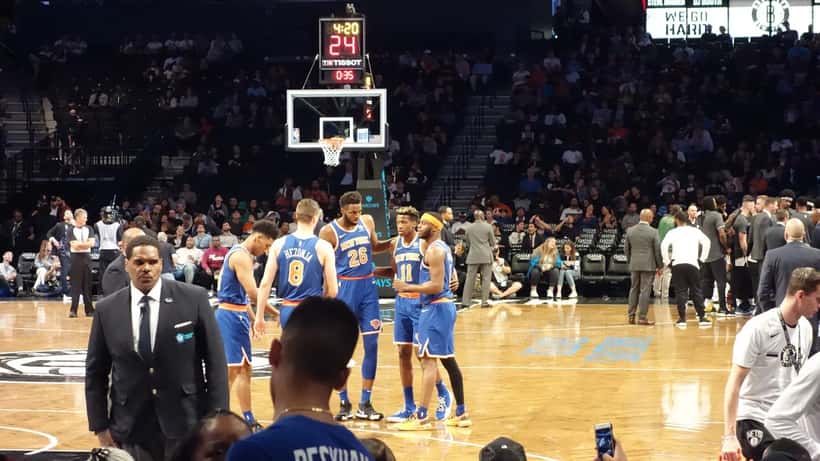
New York Knicks center Mitchell Robinson was fined $50,000 by the NBA on May 1, 2026 — double the $25,000 levied against Hawks guard Dyson Daniels for the same Game 6 altercation. The reason for the penalty gap: Robinson reposted a social media video related to the incident after the league had explicitly warned him not to, violating the NBA's conduct guidelines. His case is an almost perfect illustration of how employees can turn a manageable workplace incident into a costly disciplinary matter by ignoring a direct warning and going online. Here is what every worker should understand about social media conduct policies at work.
Why Robinson's Fine Was Doubled
The underlying altercation between Robinson and Daniels during the Knicks' blowout playoff victory over the Atlanta Hawks was significant enough to draw a fine. But what elevated Robinson's penalty was his decision to amplify the incident on social media despite a specific warning from league officials.
This distinction matters enormously in employment law. The initial conduct violation and the response to the employer's warning are two separate events, and the response often carries more weight in determining final consequences. An employee who makes a mistake and then defies a direct instruction from management has done something fundamentally different from one who makes the same mistake and cooperates.
In Robinson's case, the NBA's disciplinary structure treated the social media post as evidence of continued non-compliance — and priced it accordingly.
What Workplace Social Media Policies Actually Cover
Most employees are aware that their employers have social media policies. Far fewer understand exactly what those policies prohibit or what rights employees retain regardless of what the policy says.
Under the National Labor Relations Act, employees have the right to engage in "protected concerted activity" — which can include online discussions about working conditions, wages, or workplace disputes. A blanket employer policy that prohibits all employee social media posts about work may be unenforceable if it restricts these rights.
According to the National Labor Relations Board, lawful social media policies must be carefully drawn. Policies that are overly broad — prohibiting "disparagement of the company" or "discussion of internal matters" without specific limits — have been found unlawful in NLRB cases because they could reasonably deter employees from exercising their Section 7 rights.
However, the protections are not unlimited. Employees who post content that is harassing, defamatory, discriminatory, or in violation of a specific workplace directive (like Robinson's situation) are not protected. There is a meaningful legal difference between an employee discussing workplace conditions online and one who posts content that violates a directly issued warning.
The Three Zones Every Employee Should Understand
Employment attorneys typically categorize social media conduct into three zones:
Zone 1 — Protected: Discussing wages, hours, and working conditions with coworkers, including online. Sharing information about workplace safety violations. Coordinating with colleagues about grievances. This activity is protected under federal law and most employers cannot legally prohibit or punish it.
Zone 2 — Gray area: Posting opinions about your employer, supervisors, or company practices without coordinating with coworkers. Whether this is protected depends on context, timing, and whether it relates to terms and conditions of employment. Courts and the NLRB evaluate these cases individually.
Zone 3 — Unprotected: Posts that harass individuals, reveal trade secrets, violate a specific and lawfully issued management directive, or contain false statements about identifiable people. Robinson's situation falls here — the defiance of a specific warning converted what might have been protected commentary into a punishable violation.
What Employers Can and Cannot Do
Employers can adopt social media policies that restrict the use of company systems for personal posts, prohibit disclosure of confidential business information, and prohibit harassment or defamation on personal accounts when it relates to work. They can also lawfully discipline employees who violate a specific, written directive — particularly when the employee received advance notice of the rule.
What employers generally cannot do is adopt policies so sweeping that they effectively silence all employee speech about working conditions. The NLRB has repeatedly struck down policies containing phrases like "do not post anything that could be embarrassing to the company" or "all public statements about work must be pre-approved," finding that these impermissibly chill protected activity.
If you receive a disciplinary warning related to social media, your first step should be to obtain a copy of the company's actual written policy. If no written policy exists, or if the verbal warning you received contradicts the written policy, you may have grounds to contest the disciplinary action.
The Cost of Defying a Warning
Robinson's case highlights a dynamic that employment lawyers see regularly: the cover-up — or in this case, the doubling-down — is often treated more harshly than the original act. In progressive discipline systems, a first offense might result in a verbal warning. A second offense, particularly one that involves defiance of a direct instruction, typically escalates to written warnings, suspensions, or termination.
The practical lesson is straightforward: if you receive a workplace warning, the moment to seek legal advice is before you do anything further — not after. An employment attorney can clarify whether the warning was lawfully issued, whether your rights were violated in how it was delivered, and what your options are without increasing your exposure.
When to Consult an Employment Lawyer
Social media discipline cases are increasing across industries as employers adapt their policies to evolving platforms and technologies. The legal framework — NLRA protections, state-level privacy laws, and evolving case law — is complex and changes frequently.
If you have received a disciplinary action related to social media, been terminated following an online post, or been asked to sign a social media policy that feels overly broad, consulting an employment attorney before you respond can make a significant difference in the outcome.
At Expert Zoom, our employment lawyers advise workers on their rights under workplace conduct policies and can help you understand exactly where the line is before you cross it.
Legal Disclaimer: This article is for informational purposes only and does not constitute legal advice. Employment and social media law varies by state, employer type, and specific circumstances. Consult a licensed employment attorney before making decisions based on your situation.
