 Joseph Wallace
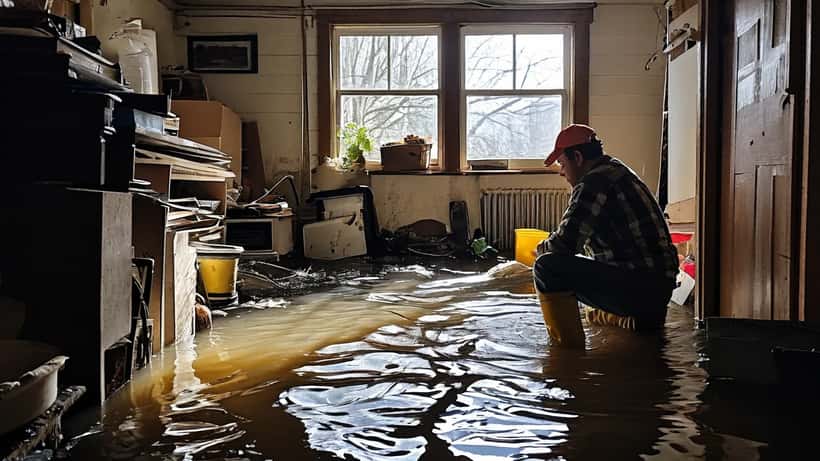
Milwaukee was hit again. Back-to-back nights of torrential rain, lightning, and howling winds battered the city and surrounding counties on April 13–15, 2026, flooding basements, snapping trees, and leaving hundreds of residents scrambling to salvage their homes. The Milwaukee Fire Department responded to roughly 50 water-rescue calls in a single night, and IMPACT 211 fielded dozens of flooding-related requests within 24 hours — the majority tied to basement damage.
This is not an isolated bad week. It comes less than a year after the August 2025 historic flooding event that dumped more than 10 inches of rain on Milwaukee and Waukesha counties, left over 1,800 homes damaged, and caused an estimated $200 million in property destruction across the region. The city is now fast-tracking $96 million in flood management projects. For homeowners, however, the question is not what the city is doing — it is what you should be doing right now, in the next 48 to 72 hours, before permanent damage sets in.
The First 24 Hours: Safety Before Anything Else
The most critical — and most ignored — rule after flood damage is this: do not enter your basement until you know the electricity is off. Water and live circuits are a lethal combination, and in a flooding event, circuit breakers can trip without cutting all current. Switch off the main breaker at your panel before you step onto the stairs.
Once power is confirmed off, gear up. Rubber boots and waterproof gloves are non-negotiable. Floodwater is not clean water — it carries raw sewage, chemical runoff, and bacteria. The Milwaukee Health Department recommends treating all flood-exposed surfaces as contaminated, including packaged food, medication, and cosmetics. If it touched floodwater, it goes in the trash.
The city received 145 emergency tree service requests on Monday night alone, according to the Milwaukee Courier, with 26 more the following morning. If a tree has fallen against your structure, do not attempt to remove it yourself — call a licensed contractor before touching anything.
Assessing the Damage: What to Document Before Cleanup
Before you touch a mop, photograph everything. Insurance claims live and die on documentation. Walk the perimeter of every affected room with your phone, capturing:
- The waterline on walls and floors
- All damaged appliances, furniture, and fixtures
- Exterior damage to the foundation, windows, and entry points
- Any visible structural cracking or warping
Check your furnace, water heater, and HVAC unit carefully. According to city guidelines, all pilot lights must be verified as lit before restoring gas appliances to service. Wet insulation inside ducts can harbor mold within 24 to 48 hours.
Contact your homeowner's insurance company immediately. Document the date and time of the event, all water-entry points, and every item removed. According to FEMA's guidance on flood events, the faster you notify your insurer, the faster your claim moves — delays are one of the top reasons reimbursements are reduced or denied.
The U.S. Small Business Administration (SBA) and FEMA both offer disaster loans and grants for homeowners affected by declared weather events. With Wisconsin Emergency Management actively responding to this flooding, federal assistance applications may be available depending on your county's disaster declaration status.
The Mold Clock Is Ticking: 48 Hours Is Your Window
This is the part most homeowners learn too late. Mold colonies can establish in as little as 24 to 48 hours after water intrusion, especially in warm spring temperatures. Once mold is growing inside walls or under flooring, the remediation cost jumps dramatically — often from hundreds of dollars to tens of thousands.
The Milwaukee Health Department specifically warns against using household bleach on mold. This counterintuitive guidance surprises many homeowners, but bleach does not penetrate porous surfaces. It kills surface mold while leaving roots intact — and can actually open spores, spreading contamination. Use a dedicated mold-remediation spray designed to inhibit regrowth.
For drywall and carpeting that has been submerged, the calculus is usually straightforward: remove it. Porous materials saturated with floodwater cannot be reliably cleaned. A licensed contractor can assess which materials are salvageable and which must go.
When to Call a Professional — and Why It Matters
Many homeowners attempt flood remediation themselves, both to save money and to avoid the chaos of finding a contractor. This is understandable — but for anything beyond minor surface water, professional assessment is the safer financial decision.
A licensed home improvement contractor can:
- Assess structural integrity, including foundation walls and floor joists that may have shifted under water pressure
- Identify hidden moisture using thermal imaging cameras — moisture inside wall cavities will trigger mold for months after visible damage looks resolved
- Coordinate waterproofing upgrades, sump pump installation, and drainage corrections that reduce future risk
- Provide documentation for insurance claims that carries significantly more weight than homeowner photos
Given that Milwaukee has now experienced two major flooding events in less than 12 months, the question for homeowners is no longer whether to upgrade flood protection — it is when. A qualified contractor can assess your property's specific vulnerabilities: basement waterproofing, window well drainage, grading around the foundation, and backup sump pump capacity.
Renters Are Not Off the Hook
If you are renting and your landlord is unreachable or unresponsive after flood damage, you have legal options. Contact Milwaukee's Department of Neighborhood Services (DNS) at 414-286-2543 to report an unresponsive landlord. Renters must obtain landlord permission before undertaking repairs themselves — but they also have the right to habitable living conditions, and flooding that produces unsafe mold conditions may constitute a violation.
What Comes Next for Milwaukee
The $96 million in flood infrastructure projects approved by the city after August 2025 will add 220 million gallons of additional stormwater storage capacity. These projects are welcome — but they take years to build. In the meantime, April 2026 shows exactly how vulnerable homes remain.
If your home sustained damage this week, the window for minimizing long-term costs is short. Act in the first 24 to 72 hours. Document everything. Call in a professional when in doubt. And for residents navigating insurance disputes, contractor agreements, or landlord standoffs, a consultation with an expert can save you far more than the cost of the call.
This article does not constitute legal, insurance, or structural engineering advice. For complex property damage disputes or insurance claim denials, consult a licensed professional.
