 Michael Campbell
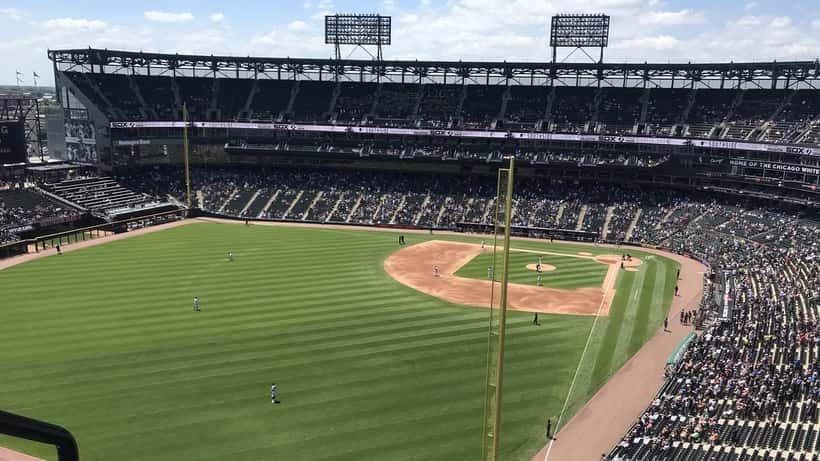
The numbers don't lie, and on August 21, 2026, they delivered an uncomfortable verdict at Guaranteed Rate Field in Chicago. The New York Mets — carrying a $368.7 million competitive balance tax payroll, the highest figure in Major League Baseball history — stepped onto the field against a White Sox team operating on $117 million, ranked 26th in the sport. The Mets are 58-70. The White Sox are 66-61 and leading the AL Central. Spending $251 million more hasn't bought more wins. For anyone managing a personal investment portfolio, that stat line deserves a closer look.
When the Biggest Payroll in Baseball Fails to Deliver
Steve Cohen bought the Mets in 2020 with a mandate to spend what it takes. The billionaire founder of Point72 Asset Management has followed through, ranking the Mets first or second in MLB payroll every year since 2022. The 2026 season sees the Mets' luxury tax bill alone exceed $88.7 million — penalties paid on top of base salaries, on top of player development costs, on top of a front office headcount that rivals a small corporation. By some estimates, the full operational cost of running the New York Mets in 2026 approaches $400 million.
The return on that investment as of August 21: a team twelve games under .500, fifth in the NL East, with no realistic path to October. Sean Manaea starts tonight's game at a 4.22 ERA, and the Mets have lost two of their last three road series.
This isn't a baseball anomaly. It is a well-documented financial pattern. Concentrating capital in a small number of high-cost, high-profile assets — whether marquee shortstops or blue-chip technology stocks — doesn't guarantee proportional returns. It creates larger possibilities, but also greater fragility. One injury, one market correction, one unexpected underperformance, and a concentrated position collapses faster than a diversified portfolio can. The Mets have discovered this sequentially across multiple roster cycles.
The White Sox Blueprint: Building Smart vs. Spending Big
While the Mets outbid every competitor for established stars, White Sox general manager Chris Getz spent three years running a different strategy. He identified young players with high developmental ceilings, built a patient farm system, maintained payroll discipline, and then made one calculated outside investment: a $17 million annual contract for Japanese NPB superstar Munetaka Murakami, who provides a veteran anchor and genuine power production for a lineup of still-developing contributors.
The results through this series: 66 wins and 61 losses, first place in the AL Central, and a roster that baseball analysts consistently cite as 2026's most surprising competitive emergence. A franchise that ranked among the worst in baseball two years ago is now a genuine playoff contender on approximately one-third the operational budget of the team taking the field tonight.
The White Sox didn't succeed by finding a way to spend less. They succeeded by building a framework that deploys capital more efficiently — spreading investment across many contributors rather than betting the season on five contracts all performing simultaneously. When the Mets lose a key player, the roster has limited fallback. When one White Sox contributor underperforms, the diversified lineup absorbs it. This structural difference — not talent evaluation alone — explains the standings gap. Anyone who has sat across a desk from a licensed wealth manager will recognize the principle immediately.
What the Payroll Data Actually Shows
The 2026 MLB season provides a rare public experiment in two competing investment philosophies:
| Metric | New York Mets | Chicago White Sox |
|---|---|---|
| 2026 CBT Payroll | $368.7 million | $117 million |
| Luxury Tax Penalty | ~$88.7 million | $0 |
| Win-Loss Record | 58-70 (.453) | 66-61 (.520) |
| Division Standing | 5th, NL East | 1st, AL Central |
| Cost Per Win | ~$6.3 million | ~$1.8 million |
Every White Sox win is costing ownership approximately $1.8 million in payroll. Every Mets win is costing roughly $6.3 million. That $4.5 million-per-win difference, compounded over a full 162-game schedule, represents a structural efficiency gap that no mid-season acquisition can bridge.
The SEC's Office of Investor Education documents at investor.gov that concentrated positions in a small number of holdings produce measurably higher return volatility than diversified portfolios — without consistently delivering higher long-term performance. The 2026 Mets are running a $368 million proof of concept for that finding.
For more context on how MLB franchise economics intersect with personal financial strategy, the Tigers vs. Giants 2026 franchise valuation analysis at ExpertZoom covers how stadium economics and team valuations ripple into secondary markets and investor behavior.
A Chicago Investor's Lesson from the White Sox Surprise
Consider Daniel, a 51-year-old operations manager and White Sox season ticket holder based in the western Chicago suburbs. He has watched his team's improbable 2026 climb with a mix of disbelief and genuine satisfaction — and the season prompted a financial conversation he had been postponing for two years.
Daniel's investment portfolio held $760,000, concentrated in five technology companies he had followed closely since the early 2020s. He knew their products, trusted their leadership, and had watched each recover well from previous downturns. Through the first seven months of 2026, his portfolio was up 6.9%.
The S&P 500 index returned 17.4% over the same period.
Here is the arithmetic that changed his approach. At 6.9% growth, Daniel's $760,000 generated $52,440 in gains across seven months. Had his portfolio matched the market's 17.4% return, the same capital would have produced $132,240 — a difference of $79,800 in a single year.
His wealth manager ran a second calculation: the compounding impact over Daniel's 14-year runway to retirement. If that 10.5-percentage-point gap persisted at even half its current size — a conservative assumption — the lifetime cost would reduce Daniel's projected retirement portfolio by an estimated $318,000.
If Daniel restructured into a diversified allocation — index funds, investment-grade bonds, REITs, and international equity across 10 to 12 asset categories with systematic quarterly rebalancing — his projected portfolio at age 65 would reach approximately $2.68 million under a 7% average annual return assumption. Under his existing concentrated approach, with an adjusted 4.1% average return reflecting the observed drag, the same projection falls to $2.36 million.
The $320,000 difference isn't caused by poor judgment about individual companies. It is caused by the same structural problem the Mets face: too much capital riding on too few positions, with no buffer when any one of them underperforms. That is not a stock-picking problem. It is a portfolio construction problem — and it has a straightforward solution.
Daniel's wealth management consultation covered two sessions over three hours and cost $380. He restructured his portfolio in late May 2026. By mid-August, his reallocated holdings are up 13.1% — 6.2 percentage points above his old approach and approximately $47,000 more in absolute gains for the year.
What to Do Before the Postseason Starts
The Mets' situation isn't permanent. Cohen has the financial runway to reset the roster, revise player evaluation systems, and build smarter in future offseasons. Most individual investors don't have Cohen-level capital, which makes structural errors more consequential, not less — there is no offseason to reload.
A licensed, fiduciary wealth manager typically charges between $200 and $500 for an initial consultation. Advisors who operate on an assets-under-management model charge 0.5% to 1% annually — on a $500,000 portfolio, that is $2,500 to $5,000 per year. Vanguard's Advisor's Alpha research estimates that professional financial guidance adds 1.5 to 3 percentage points of net annual return through behavioral coaching, tax-loss harvesting, and systematic rebalancing — strategies that are difficult to execute consistently without external accountability.
On a $500,000 base, 2 additional percentage points per year compounds to $148,000 in additional wealth over 15 years.
The 2026 Mets and White Sox will finish their series in the coming days. Before the season ends, the question worth asking isn't which team wins tonight — it's which roster construction philosophy your investment portfolio most resembles.
This article is for informational purposes only and does not constitute investment or financial advice. Individual investment and portfolio decisions should be made in consultation with a licensed fiduciary financial advisor. Past performance does not guarantee future results.
