 Elizabeth Chen
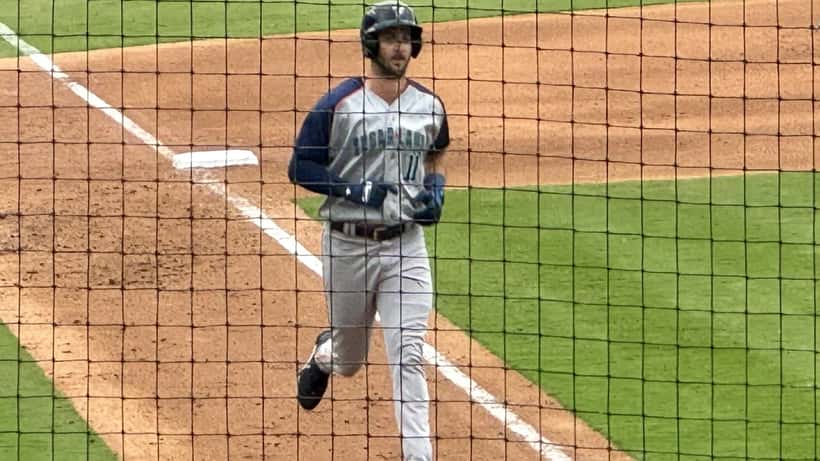
James Wood hit a ball into the Citi Field gap on May 19, 2026, and kept running. By the time the Mets' outfielders had tracked it down, Wood had rounded all four bases — completing an inside-the-park grand slam, the first in Major League Baseball since 2022. The Washington Nationals went on to beat the Mets 9-6, capping an extraordinary moment in a three-game series that also saw the Mets win 16-7 on May 18 before Washington closed the series with an 8-4 victory on May 20.
Inside-the-park home runs are baseball's rarest event. Inside-the-park grand slams — where a batter circles the bases with all three occupied — are almost mythological. Wood's achievement was legitimately historic. It also illustrated, in real time, the extraordinary physical demands that elite baseball players face on a play that most fans watch without thinking about what it requires of a body in full sprint.
What an Inside-the-Park Grand Slam Actually Demands
The physics of an inside-the-park home run are unforgiving. A batter who hits a ball into the gap must immediately commit to maximum acceleration from a dead stop — a transition that places intense eccentric load on the hamstrings, hip flexors, and quadriceps. At first base, rounding requires a quick deceleration followed by an abrupt direction change. The same pattern repeats at second and third, with each turn demanding lateral stress on the ankles and knees.
Wood completed four full bases, likely in under 16 seconds at major league sprint speed. For a player of his size, that means four explosive acceleration sequences, three aggressive directional shifts, and a final burst to home plate — all in real-time, with no opportunity to self-monitor form or protect vulnerable joints.
Sports medicine specialists call this type of multi-directional explosive movement one of the highest injury-risk scenarios in baseball. It's not the distance — players run farther in center field every game. It's the intensity, the sudden stops and starts, and the combination of linear and lateral forces occurring within a single continuous effort.
The Most Common Injuries in High-Intensity Baserunning
When MLB players are evaluated after inside-the-park home run attempts, the injury profile that orthopedic specialists watch for includes:
Hamstring strains. The posterior chain — hamstrings, glutes, and lower back — absorbs the initial explosive load of sprinting from a batter's box stance. Hamstring strains account for a significant proportion of MLB position player time on the injured list. According to the American Academy of Orthopaedic Surgeons, hamstring injuries range from Grade 1 (minor fiber tearing with no loss of function) to Grade 3 (complete rupture requiring surgical evaluation). Elite athletes are not immune — they are actually more susceptible to high-grade strains because the forces their muscles generate during maximal effort outpace what typical training prepares them for.
Ankle sprains on the turns. The aggressive cuts required at each base create lateral shear stress on the ankle ligament complex. Lateral ankle sprains — particularly to the anterior talofibular ligament — are the most common musculoskeletal injury across all sports. In baseball, baserunning cuts on hard dirt surfaces amplify this risk.
Quad and hip flexor strains. The deceleration into each bag and the subsequent re-acceleration engage the quadriceps and hip flexor complex in ways that a standard defensive play does not. When fatigue accumulates across all four bases, form degrades — increasing the risk of muscular strain in the final sprint home.
What Weekend Baseball Players Should Know
James Wood is a professional athlete with a conditioning staff, pre-game warmup protocols, and immediate access to athletic trainers. When the same play unfolds in a recreational league — a Saturday softball game, a company softball tournament, or an adult amateur baseball league — the risk profile is substantially different.
Recreational athletes are typically less conditioned for maximal explosive efforts, are more likely to be participating without a proper warmup, and have no access to immediate sideline evaluation after an unusual sprint sequence. That combination means a recreational inside-the-park hit — or any play that demands sudden maximum sprint effort — carries higher injury risk than the same play in a professional context.
The signs that a post-game physical effort warrants medical evaluation include:
- Sharp pain or a "pop" sensation during or immediately after sprinting
- Localized swelling or bruising within 24 hours of the incident
- Inability to bear full weight on the affected limb
- Persistent tightness or restricted range of motion in the hamstring, hip, or ankle 72 hours after the event
A sports medicine physician or orthopedic specialist can distinguish between soreness that resolves with rest and a structural injury that requires imaging, physical therapy, or modified activity to heal correctly without long-term consequence.
Disclaimer: This article is for informational purposes only and does not constitute medical advice. Consult a licensed healthcare professional for diagnosis and treatment of sports-related injuries.
The Broader Mets-Nationals Series and Its Physical Cost
The three-game series at Citi Field illustrated the cumulative physical demands of a 162-game MLB season. The Mets' 16-7 blowout win on May 18 — capped by a 10-run 12th inning — required extended high-effort play deep into the night. Washington's back-to-back wins on May 19 and 20 each featured significant moments: the Wood grand slam on Tuesday, and CJ Abrams plus Jacob Young home runs on Wednesday.
For Mets fans watching Juan Soto homer twice in the May 20 loss, the experience is easy to follow. For the players on the field across all three games, the physical reality is less glamorous. MLB players manage minor injuries, fatigue, and recovery through the five-month regular season in ways that recreational athletes often underestimate.
If you play recreational baseball or softball and have noticed how differently your body responds after high-intensity outings — compared to lighter games — you're observing a real physiological phenomenon. For Mets injury background, context on how spine inflammation affects elite pitchers like Kodai Senga has been documented in this analysis of MLB spinal injuries and what fans should know.
Managing that intensity safely — whether you're a weekend player or a competitive adult league athlete — often benefits from a conversation with a sports medicine provider. Baseline assessments, appropriate conditioning programs, and clear guidance on what constitutes a warning sign versus normal post-game soreness are all within the scope of what a sports medicine physician or physical therapist can offer.
