 Laura Clark
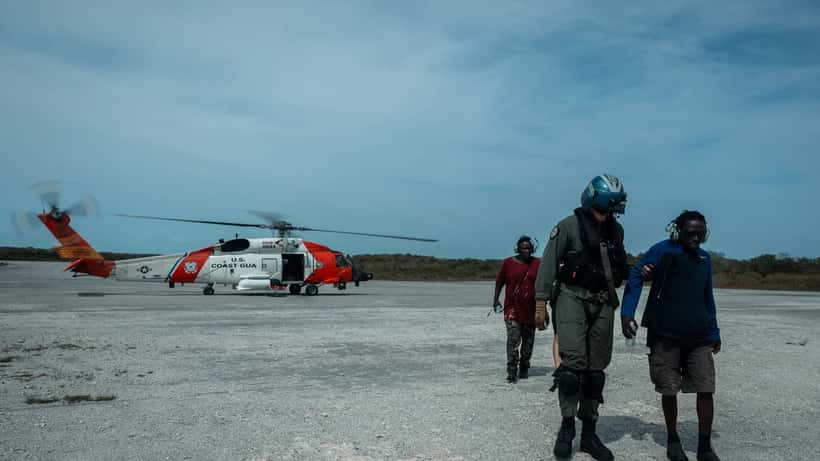
A Gulfstream G100 medical transport jet operated by Latitude Air Ambulance vanished south of Nantucket, Massachusetts, on October 3, 2026, while carrying six people from Bermuda to Boston. The pilot had declared an emergency after reporting electrical failures, and the aircraft plunged from 24,000 feet to 11,000 feet before radar contact was lost entirely. U.S. Coast Guard crews located a debris field off Nantucket by mid-morning — confirming what rescue teams feared. All six aboard, including a patient being repatriated home, are presumed lost.
The tragedy has reignited urgent questions about an industry most Americans never think about until they are desperate: medical air ambulance transport. Behind every medevac flight is a set of decisions — some made by physicians, some by insurance coordinators, some by families in crisis — that carry real consequences. Health professionals say those decisions deserve far more scrutiny than they typically receive.
What Happened Off Nantucket
The Latitude Air Ambulance Gulfstream departed Bermuda's L.F. Wade International Airport at 11:41 p.m. Eastern on October 2, carrying two Canadian pilots, two medical staff members, and two passengers — including a critically ill patient who had sought care in Bermuda and was being flown to Boston. As the aircraft neared Nantucket, the pilot reported electrical system failures. The plane then dropped 13,000 feet in minutes before disappearing from FAA radar.
The Federal Aviation Administration issued an alert at approximately 1:20 a.m. after losing contact with the flight. The Coast Guard launched a wide search across the Atlantic south of Nantucket. By mid-morning October 3, searchers confirmed the debris was consistent with the missing Gulfstream G100, according to NBC Boston.
Latitude Air Ambulance, headquartered in Ontario, Canada, specializes in international medical repatriation — transporting critically ill or injured patients when commercial travel is not medically appropriate. The aircraft involved, a Gulfstream G100, is a small business jet commonly used in medevac configurations to carry a patient plus two to three medical crew members.
The Safety Gap Most Patients Never See
Medical transport aviation occupies a fragmented regulatory space. Domestic air ambulance operations in the United States fall under FAA Part 135 rules, which govern on-demand air carrier operations. International medevac flights — like the Bermuda-to-Boston route — involve overlapping oversight from Transport Canada, the FAA, and international aviation protocols. According to a 2024 report from the U.S. Government Accountability Office, oversight of medical transport operators remains inconsistent, with air ambulance operators recording fatal accident rates approximately four times higher per flight hour than scheduled commercial carriers between 2015 and 2023.
The Commission on Accreditation of Medical Transport Systems (CAMTS) sets voluntary international standards for medical air transport programs — covering aircraft maintenance documentation, crew credentialing, patient care protocols, and emergency procedures. CAMTS-accredited operators must demonstrate that every element of their operation meets those benchmarks before accreditation is granted. Critically, accreditation is not required by law. Not all operators carry it, and insurance companies are not obligated to verify it before dispatching a vendor to pick up your family member.
From a health professional's perspective, medevac carries two parallel risk tracks: the medical risk of transporting an unstable patient, and the aviation risk of the aircraft and crew. When things go mechanically wrong at altitude — as apparently occurred here — the medical team can do nothing. This is why physicians who recommend air evacuation, and health consultants who help patients and families navigate the process, increasingly emphasize the need to assess aviation safety credentials before any flight is booked.
When the Crisis Hits: A Concrete Scenario
Consider a 57-year-old American traveling alone in Bermuda who suffers a severe hemorrhagic stroke. The island's King Edward VII Memorial Hospital can stabilize them initially, but lacks the neurosurgical capacity for the definitive intervention required. The attending physician recommends immediate air transport to Massachusetts General Hospital in Boston — 1,040 nautical miles away.
Here is what typically unfolds — and where families face hidden risk:
If the patient has travel insurance with emergency evacuation coverage: premium policies typically cover between $250,000 and $500,000 per incident for air evacuation. The insurer coordinates the transport through a network of approved vendors. However, insurers are not required to use CAMTS-accredited operators. The patient, likely sedated or cognitively impaired by the stroke, cannot vet the aircraft or crew. The family, often thousands of miles away and in shock, typically accepts whoever the insurer dispatches.
If the patient lacks evacuation coverage: direct costs for a Bermuda-to-Boston medevac range from $22,000 to $85,000, depending on aircraft type, medical crew configuration, and equipment required. Under time pressure, families accept whatever provider the hospital discharge coordinator recommends — without asking for credentials.
The critical if/then that gets missed: if the dispatched operator is not FAA Part 135-certified for the specific aircraft being used on that flight — or if its maintenance records show deferred repairs — or if the pilots lack the instrument ratings required for overwater, oceanic routing — then the risk profile is fundamentally different from what a family believes they are accepting. None of this information is surfaced during a crisis booking. None of it appears on an insurance authorization form. The patient and family often have no way to know.
The reported electrical failure aboard the Nantucket Gulfstream represents exactly the category of mechanical event that CAMTS accreditation standards require operators to address through documented pre-flight verification protocols. Whether those protocols were followed on this flight is not yet known. But the fact that aviation safety oversight can fail even on a medical transport — a service implicitly trusted to be doubly safe — is the lesson families are absorbing this week.
Medical and health decisions related to air transport carry serious safety and legal implications. Consult a qualified health professional before making any transport decisions, particularly for critically ill patients.
What to Ask Before Any Medical Flight
Health professionals and medical travel consultants advise asking these specific questions before any medevac is booked on your behalf — whether by an insurer, a hospital, or a coordinating service:
1. Is the operator FAA Part 135-certified? For flights into or out of the United States, this is a legal baseline, not a premium option. Request the certificate number and verify it directly at faa.gov.
2. Is the company CAMTS-accredited? Accreditation indicates the operator meets internationally benchmarked standards for aircraft maintenance, crew training, and patient care protocols. It is the single most reliable proxy for quality that a family can check quickly.
3. What is the aircraft's maintenance status? Ask when the specific aircraft last completed its mandatory inspection. "We're ready to fly" is not an acceptable answer. A documented inspection date is.
4. What are the pilots' overwater or oceanic credentials? Bermuda-to-Boston crosses open Atlantic waters at night. Not every commercial pilot is rated for that specific routing, and not every medevac company verifies this before assignment.
5. Does your travel or health insurance restrict coverage to specific approved operators? Some policies contain language limiting coverage to "network-approved" providers. Confirm this in writing before departure — not after the family is already thousands of dollars into an unauthorized transport.
For people facing medical emergencies abroad, the bandwidth to work through these questions rarely exists. This is precisely where a medical travel specialist or health consultant can intervene — vetting providers, interpreting insurance language, and flagging red flags in real time. The Delta Flight 2204 health emergency story earlier this year showed how in-flight medical events can spiral quickly without proper protocols in place; the Nantucket crash shows the stakes when the aircraft itself becomes the hazard.
The debris field south of Nantucket is a devastating reminder that in medical air transport, the plane matters as much as the people aboard it. Before the next flight is arranged in your name, the questions above are worth asking — and a health professional consultation may be the fastest way to get reliable answers.
