 Daniel Sterling
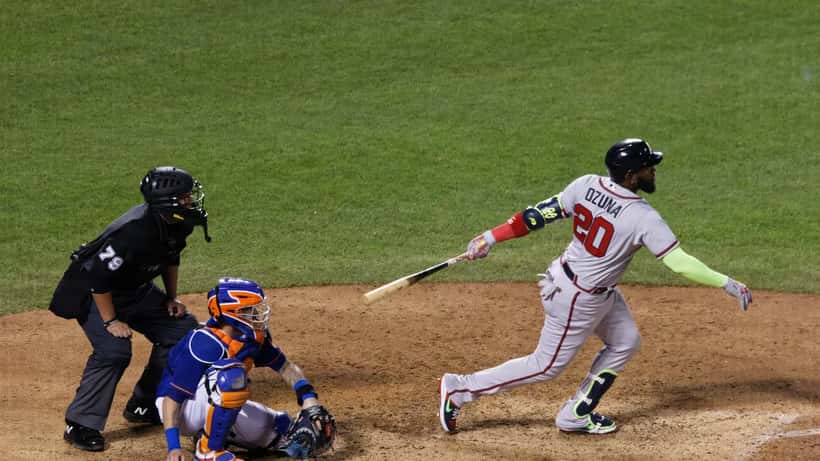
The Pittsburgh Pirates officially released designated hitter Marcell Ozuna on August 5, 2026, absorbing the remaining balance of his $12 million guaranteed contract after one of the worst offensive seasons of his 14-year career. Ozuna posted a .203/.286/.327 slash line across 280 plate appearances — 31% below league average — before the organization decided the roster spot was more valuable than any remaining upside. Despite that performance, the Pirates owe him every dollar he was promised. That financial obligation is not a quirk of baseball. It is how guaranteed employment contracts work under U.S. law, and the lesson it contains applies to professionals in every industry who have ever signed one.
What Happened in Pittsburgh
Ozuna joined the Pirates last offseason on a one-year, $12 million deal that included a mutual $16 million option for 2027 with a $1.5 million buyout. The Pirates needed a power bat in the DH slot, and Ozuna had mashed 40 home runs for the Atlanta Braves as recently as 2023. By August 2026, the experiment had clearly failed. His bat speed had declined, his strikeout rate approached 26%, and he had been largely benched across July.
According to MLB Trade Rumors, the Pirates made the release official on August 5, absorbing Ozuna's remaining salary rather than continuing to carry a bat generating negative value. Three key position players — Oneil Cruz (broken fingers), Konnor Griffin (torn hand tendon), and Ryan O'Hearn (quad strain) — are already out. The roster spot is worth more than what Ozuna offers at the plate. The money, however, is gone either way.
That last point is the one professionals outside baseball should internalize.
Why Guaranteed Means Guaranteed
Under U.S. contract law, a guaranteed employment agreement binds the employer financially to the full term of the deal regardless of whether the employment relationship continues. This is fundamentally different from at-will employment — the default arrangement for most American workers — where either party can end the relationship without notice or financial penalty.
When a contract is truly guaranteed, the employer cannot simply cite disappointing results and walk away from the payment obligation. To void a guarantee legally, the employer must demonstrate a material breach by the employee: fraud, gross misconduct, or violation of specific performance thresholds explicitly written into the agreement. A bad batting average — or a bad quarterly review — does not meet that bar unless the contract was specifically drafted to treat performance metrics as termination triggers.
This is exactly why the Pirates are paying Ozuna to play elsewhere: their legal obligation is not contingent on his on-field production. The U.S. Department of Labor's Wage and Hour Division, which enforces wage-related obligations including contractual pay guarantees, makes clear that employers must honor binding compensation agreements even after employment ends — and that workers have enforceable remedies when they do not. More at dol.gov/agencies/whd.
A Concrete Case: When Your Employer Wants to "Cut" You
Consider a scenario that mirrors Ozuna's — translated to a sector where this happens more often than it makes headlines.
A marketing director signs a two-year guaranteed contract with a mid-size SaaS company in January 2025 for $240,000 per year, totaling $480,000 guaranteed over the full term. By August 2026 — 20 months in — the new CEO has brought in a replacement and wants the marketing director gone. Q2 results were below internal targets. The relationship has soured. The company issues a termination notice.
Here is the if/then that matters: if the original contract contains no explicit performance-based termination clause and no at-will employment carve-out, then the employer owes the remaining four months of guaranteed compensation — $80,000 — regardless of why they want the director gone. The company cannot point to missed KPIs as justification for voiding the guarantee unless those KPIs were specifically written into the termination triggers in the agreement.
That $80,000 gap is where legal expertise changes outcomes. Most employees in this position receive a phone call from HR, a separation agreement, and a settlement offer — often framed as generous but frequently representing a fraction of what the contract legally requires. Signing that agreement without legal review can mean surrendering tens of thousands of dollars that the employer was already obligated to pay.
In Ozuna's case, the number is $12 million. For the marketing director, it is $80,000. The legal architecture is identical.
What the MLB Model Reveals About Employer Strategy
Professional sports leagues have spent decades stress-testing guaranteed contract structures in high-dollar, high-visibility settings. The patterns that emerge are instructive for anyone negotiating a fixed-term deal outside baseball.
Full salary obligation survives release. Releasing Ozuna does not reduce what the Pirates owe. The money was effectively pre-committed the day the contract was signed. Employers in other industries sometimes behave as if termination cancels remaining payment obligations — it does not, absent a valid breach.
Performance alone rarely justifies voiding a guarantee. Ozuna's .203 average is objectively poor. It does not constitute a material breach. MLB contracts almost never include statistical performance thresholds as termination triggers, and for good reason: the bar for proving breach of a guaranteed compensation agreement is intentionally high. Courts have consistently ruled that subjective performance dissatisfaction is not sufficient grounds for an employer to escape its contractual obligations.
Mutual options signal shared risk. The $16 million mutual option for 2027 required both sides to agree for it to execute. The Pirates' decision to release before that option even became relevant is a calculated financial move: paying the 2026 balance and accepting the $1.5 million buyout is cheaper than triggering a mutual option they cannot afford to honor. Employees negotiating similar structures — bonuses tied to mutual renewal options — should understand that these provisions carry real financial weight in both directions.
Steps to Protect Your Guarantee Before and After Termination
The Ozuna release plays out cleanly in the press because MLB clubs have experienced legal teams managing every step of the process. Individual employees — even senior executives with seven-figure guaranteed deals — often do not have that institutional support in place.
Before signing any guaranteed employment agreement, have an employment attorney review the full document for:
- At-will employment carve-outs buried in arbitration or dispute resolution clauses
- Performance triggers that could legally define a termination-for-cause event
- Language around "constructive dismissal" — actions like demotion, salary reduction, or hostile reassignment designed to push an employee to resign voluntarily and abandon the guarantee
- Option structures that appear guaranteed but carry conditions the employer controls
After a termination notice, do not sign a separation agreement or general release before obtaining legal review. Separation agreements routinely include broad releases that permanently surrender your right to pursue any additional claims, including unpaid compensation owed under the guarantee. Signing in a moment of shock or under deadline pressure is one of the most common — and most costly — mistakes professionals make in this situation.
During the employment relationship, document any pattern of being sidelined, excluded from decisions, or informally demoted. If an employer cannot directly fire you without triggering payment obligations, they may instead attempt constructive dismissal — a legally actionable form of constructive breach in many U.S. jurisdictions.
What This Means for You
Most people watching the Ozuna news will think about batting averages and roster construction. The deeper story is about the legal infrastructure that guaranteed contracts create — and how rarely individuals outside professional sports understand what those guarantees actually require from their employers.
Ozuna will be paid his full $12 million and will be free to sign with any club that wants him. That outcome is not luck. It is contract law functioning as designed, backed by a players union that has spent decades ensuring athletes understand and enforce their rights.
For professionals outside baseball, that same protection exists on paper — but it only functions when you know to invoke it, and when you have counsel capable of doing so effectively.
Disclaimer: This article provides general information about U.S. employment contract law for educational purposes. It does not constitute legal advice. If you are facing a contract dispute or potential termination, consult a licensed employment attorney familiar with your state's laws and the specific language of your agreement.
At Expert Zoom, employment lawyers and contract specialists are available for direct consultations — whether you are negotiating a new guaranteed deal or facing termination from an existing one. Connect with an expert today to understand exactly what your contract protects.
