 Alice King
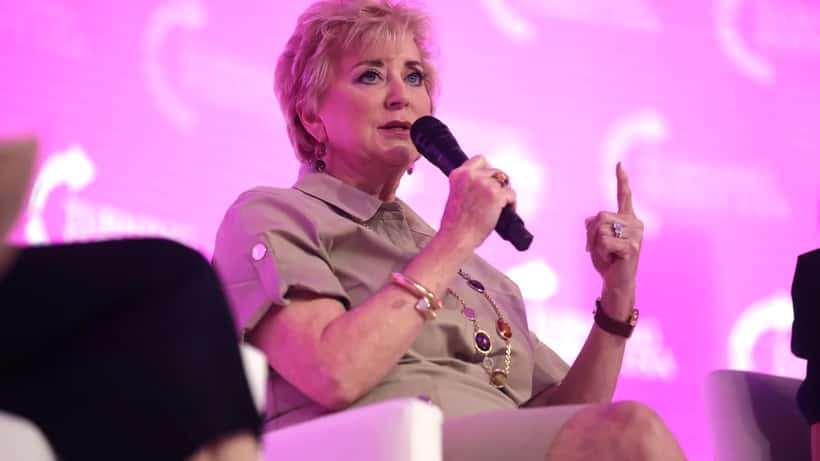
Education Secretary Linda McMahon declared at Yale University on April 16, 2026, that she wants to "shut down the bureaucracy of education" and return all authority to states — a policy shift that could reshape how millions of American children learn. For parents already navigating a patchy public school system, it raises an urgent question: who fills the gap when Washington steps back?
What McMahon Said — and What It Means
Speaking at Yale on April 16, McMahon made her agenda explicit: "In 2026 we will empower parents, strengthen families, and end Washington's grip on education by returning it to the states." She is currently conducting a 50-states tour, visiting schools and communities while promoting school choice programs and career/technical education.
This comes weeks after McMahon shared an AI-generated image of civil rights icon Ida B. Wells in an April 11 tribute post — drawing widespread criticism and raising questions about the administration's approach to historical accuracy in public communications.
The policy direction, however, is clear. The Department of Education — which oversees $79 billion in annual K-12 funding according to the U.S. Department of Education — faces a structural overhaul that could redistribute or eliminate programs millions of students rely on.
What Federal Education Programs Actually Do
Before assessing the impact of cuts, it helps to understand what federal dollars fund:
- Title I funding supports schools in low-income districts, covering reading specialists, after-school programs, and remedial instruction
- IDEA (Individuals with Disabilities Education Act) guarantees services for students with learning differences including dyslexia, ADHD, and autism
- Head Start and Early Head Start provide early childhood education for families at or below the poverty line
- Federal student loan programs and Pell Grants make higher education accessible to first-generation students
If authority returns entirely to states — with no federal floor on standards or funding minimums — access to these services will vary dramatically by zip code.
The Private Tutoring Safety Net
When public structures weaken, families with resources historically turn to private instruction. This creates a widening equity gap — but it also highlights what high-quality tutoring actually provides.
"A skilled private tutor doesn't just cover curriculum," explains the Expert Zoom network. "They identify the specific cognitive gaps a student has, adapt teaching methods in real time, and provide the kind of one-on-one attention a classroom teacher with 30 students simply cannot."
The demand for tutoring has already surged since the COVID-19 pandemic's learning losses. A family navigating a 2026 education landscape with reduced federal oversight and shifting state mandates needs to know:
- Specialized tutors can assess learning needs independently — if school-provided evaluations slow down due to budget cuts, a private educational specialist can identify dyslexia, processing disorders, or giftedness without waiting for a school referral
- Consistency matters more than volume — regular weekly sessions with the right tutor outperform cramming or general test prep
- Online tutoring expands access — regardless of state policy, digital tutoring platforms allow rural and underserved families to access specialists unavailable locally
For families whose children receive disability services through IDEA, it is especially important to document current IEP (Individualized Education Program) goals in writing — now — so any future disruption has a clear baseline.
See also: Dyslexia in the Spotlight: How Specialized Tutors Can Help
What States Could Do — and What They Might Not
State takeover of education funding is not a single event. It unfolds over budget cycles, legislative sessions, and court challenges. Some states, like Massachusetts and Connecticut, already fund schools well above federal minimums. Others, particularly rural states with weak tax bases, rely heavily on federal equalization funding.
The risk of a sharp federal withdrawal is a "race to the bottom" in underfunded states — reduced staffing, larger class sizes, and eliminated specialist positions (reading coaches, school psychologists, bilingual educators). These are exactly the services that private tutors, educational therapists, and academic coaches can supplement — though not for free.
What You Should Do Now
Whether you are a parent of a young child or have a teenager approaching college applications, three steps make sense regardless of how Washington's education policy evolves:
1. Review your child's current academic standing with data. Ask your school for your child's reading level, standardized test scores, and any flagged learning concerns. Get this in writing.
2. If your child has a learning difference, consult a specialist now. Waiting for the school system to initiate evaluations could take longer as budgets tighten. An educational psychologist or specialist tutor can provide an independent assessment.
3. Talk to an education consultant or private tutor. They can map out a personalized learning plan that works independently of what state or federal policy dictates.
Expert Zoom connects families with vetted private tutors and education specialists across every academic subject and age group. Whether you need reading remediation, STEM enrichment, or test prep, a qualified expert can meet your child where they are — without waiting for Washington.
This article is for informational purposes only and does not constitute legal or financial advice. Education policy is evolving and families should verify current program availability with their local school district.
