 Laura Clark
Lili Reinhart arrived at SXSW in Austin on March 16, 2026 for the premiere of her new film "Forbidden Fruits," drawing renewed attention to a topic she has championed for years: the intersection of creative pressure, public life, and mental health. For millions of her fans — many of them young adults navigating their own anxiety — the question her presence raises is very real: when does anxiety become something you should take to a doctor?
Lili Reinhart and Mental Health: A Public Conversation
The 29-year-old "Riverdale" actress has been one of Hollywood's most open voices on anxiety and depression since her 2018 book Swimming Lessons. At SXSW, during press for "Forbidden Fruits" — in which she plays Apple, a charismatic leader of a wellness cult at a fictional tech company — she spoke again about the mental toll of being in the public eye.
"There's a specific pressure that comes with performing identity," she said in one interview, "where you're always being seen, always being evaluated. That can become extremely consuming."
Her comments resonated widely, particularly among young adults in the US, where anxiety disorders now affect an estimated 19.1% of adults per year, according to the Anxiety & Depression Association of America (ADAA). That's more than 40 million people.
Anxiety vs. Anxiety Disorder: What's the Clinical Difference?
Feeling anxious before a stressful event — a job interview, an exam, a performance — is normal and healthy. It activates the body's stress response, sharpens focus, and prepares us for action.
An anxiety disorder is different. The American Psychiatric Association identifies it when:
- Anxiety is persistent (most days for 6+ months)
- It is disproportionate to the actual situation
- It interferes with work, relationships, or daily functioning
- Physical symptoms appear: racing heart, chest tightness, insomnia, nausea
The most common anxiety disorders in the US are:
- Generalized Anxiety Disorder (GAD) — chronic worry about everyday concerns
- Social Anxiety Disorder — intense fear of social situations or being judged
- Panic Disorder — repeated unexpected panic attacks
- Performance Anxiety — fear of judgment during high-stakes activities (common in creative professions)
Lili Reinhart has spoken specifically about social anxiety and its link to her work as an actress — an inherently exposing profession.
When Should You See a Doctor About Anxiety?
This is the question that often goes unanswered. People suffering from anxiety frequently delay care because they're unsure whether their experience is "serious enough." The answer, according to clinical guidance, is clear.
See a doctor or mental health professional if:
- You've experienced anxious symptoms for more than two weeks without relief
- You've started avoiding situations, people, or activities because of anxiety
- Sleep is regularly disrupted by worry
- You use alcohol, substances, or excessive screen time to manage anxious feelings
- You've had one or more panic attacks
- Your anxiety is affecting your work performance or personal relationships
Early intervention is consistently linked to better outcomes. The National Institute of Mental Health (NIMH) notes that anxiety disorders are highly treatable — with therapy, medication, or both — yet fewer than 37% of those affected receive treatment.
What a Mental Health Consultation Looks Like
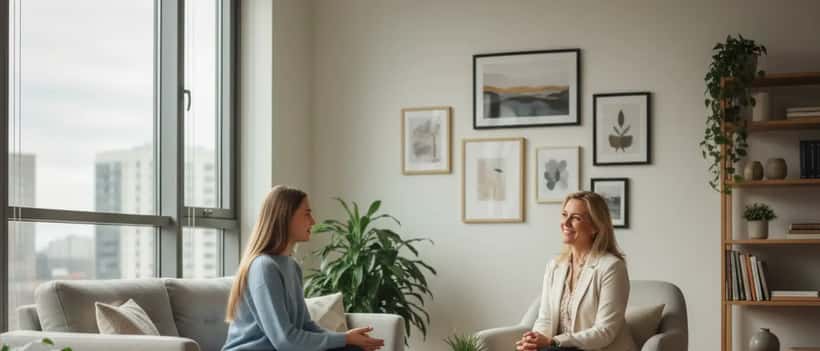
Seeing a doctor about anxiety doesn't mean you'll be immediately prescribed medication. A first consultation typically covers:
Assessment: The doctor or psychiatrist will ask about duration, triggers, physical symptoms, and how anxiety affects daily life. Standard tools like the GAD-7 questionnaire are often used.
Discussion of options: Depending on severity, options range from lifestyle changes (sleep, exercise, nutrition) to talking therapies (Cognitive Behavioral Therapy, CBT, is the most evidence-based) to medication when appropriate.
Specialist referral: For moderate to severe cases, a general practitioner may refer you to a psychiatrist, psychologist, or certified therapist.
The process is confidential, non-judgmental, and increasingly available through online platforms — which has removed a major barrier for young adults who might not feel comfortable seeking help in person.
The "Forbidden Fruits" Effect: Pop Culture as a Gateway to Care
Films and TV shows that center mental health are increasingly recognized by therapists as "gateway moments" — when someone who has been minimizing their own struggles sees a character experience something they recognize.
"Forbidden Fruits" doesn't directly address anxiety disorders, but Reinhart's public presence around the film has reignited a broader conversation. Therapists across the US have noted increases in first-contact inquiries following celebrity mental health disclosures — the so-called "Selena Gomez effect," named after the pop star's 2016 public discussion of lupus and anxiety.
You Don't Need to Be an Actress to Take Anxiety Seriously
The common thread in Lili Reinhart's advocacy is this: anxiety is not a weakness, and it doesn't require a dramatic crisis to justify professional attention. Small, persistent anxiety erodes quality of life quietly — until suddenly it doesn't feel small anymore.
Expert Zoom connects you with licensed health and mental health professionals for confidential consultations, available online. Whether you're ready for a full assessment or just want to understand your options, speaking to a doctor is the first and most important step.
Disclaimer: This article is for informational purposes only and does not constitute medical advice. If you are in crisis, please contact the 988 Suicide and Crisis Lifeline by calling or texting 988.
