 Emily Wang
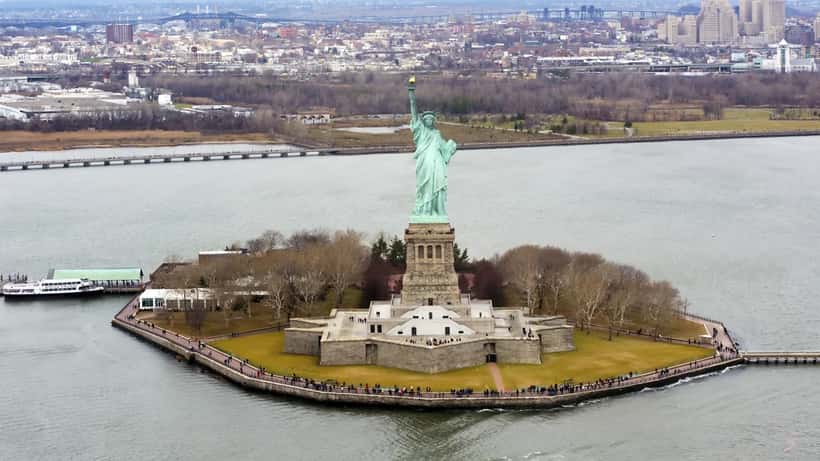
The Saturday night capsize of a 22-foot Bayliner speedboat near Liberty Island claimed two lives on August 9, 2026 — Sara Sanchez, 27, a Queens resident, and her 5-month-old daughter Antonella Garcia — leaving 12 survivors pulled from the dark waters of New York Harbor and a boat captain facing criminal charges. Within hours, the U.S. Coast Guard opened a parallel investigation into whether the vessel was operating as an illegal charter, a legal designation that transforms a tragic accident into a case of institutional negligence — and one where victims' families may have far stronger claims than they realize.
What the Criminal Charges Actually Mean for Victims
Manuel Hernandez, 46, was arrested and charged with 13 counts of reckless endangerment in the second degree — one count for each of the 13 passengers he is alleged to have endangered that night. Under New York Penal Law § 120.20, this charge requires that the operator "consciously disregarded a substantial and unjustifiable risk" of serious physical injury. The criminal case will unfold on its own timeline, but it is almost entirely separate from the civil remedies available to the families and survivors.
This distinction matters enormously. A criminal conviction requires proof beyond a reasonable doubt. A civil maritime claim requires only a preponderance of the evidence — more likely than not. Families do not need to wait for a criminal verdict to file civil claims, and in maritime law, the two tracks can run concurrently. Waiting for the criminal process to conclude before contacting a maritime attorney is one of the most common — and costly — mistakes a victim's family can make after a boating accident.
Why the Illegal Charter Designation Changes Everything
The U.S. Coast Guard confirmed it is investigating whether the 22-foot Bayliner operated as an "illegal charter" — defined as any passenger-for-hire vessel that lacks Coast Guard credentials, mandatory safety inspections, and required life-saving equipment. According to the U.S. Coast Guard's boating safety regulations, a commercial vessel carrying passengers for hire must hold a Certificate of Inspection, and its operator must carry a valid USCG Merchant Mariner Credential. A 22-foot Bayliner speedboat is a recreational vessel — it was never certified to carry 14 paying passengers.
Why does this legal designation matter so much for civil liability? Under the Limitation of Liability Act of 1851, a vessel owner may typically cap their total liability at the post-accident value of the boat. After a sunken 22-foot speedboat, that value is effectively zero — meaning families could be limited to recovering nothing. But courts have consistently held that this cap does not protect owners who were personally negligent or who knowingly operated an unseaworthy, uncertified vessel. An illegal charter operation is by definition unseaworthy. If confirmed, that finding removes the liability cap — opening the operator's personal assets to civil judgment.
A maritime attorney acting quickly can file a "claim and answer" in any limitation proceedings the owner initiates, preserving the family's right to pursue damages in a standard jury trial rather than being forced into a capped admiralty proceeding.
What Federal Maritime Law Entitles Victims' Families To
The Death on the High Seas Act (DOHSA) governs wrongful death claims arising from incidents on navigable U.S. waters. It permits recovery for "pecuniary losses" — documented financial support the deceased would have provided. This is a more limited framework than state tort law, which is why having a maritime attorney assess whether New York state wrongful death statutes apply concurrently is critical. New York law allows recovery for conscious pain and suffering and the grief of surviving family members, claims that DOHSA alone does not provide.
For survivors who were injured but survived the capsize, the General Maritime Law negligence standard applies. The operator owed passengers the highest duty of care under admiralty law. Overturning a 22-foot boat carrying 14 people at 10:25 p.m. in New York Harbor — with, according to investigators, potentially no certified safety equipment for all aboard — is a textbook breach of that duty.
See also: Briana Miller's Death on the Carnival Firenze: What Maritime Law Means for Your Family and Maldives Cave Dive Kills 5 Italians: Legal Rights
Concrete Case: If You Survived or Lost Someone on Board
Take the specific situation of a survivor who paid $80 in cash to board the Bayliner that Saturday night, was rescued from New York Harbor with hypothermia and a fractured wrist, and missed three weeks of work as a result.
Under maritime negligence, that survivor has claims on at least three distinct grounds:
Negligence per se: If investigators confirm the vessel lacked the required number of U.S. Coast Guard-approved life jackets for all 14 passengers — a federal requirement under 33 CFR Part 175.15 — then the operator's violation of that regulation is negligence as a matter of law. The survivor does not need to prove the captain was careless in a general sense; the regulatory violation establishes the breach automatically.
Loss of earnings with documented calculation: If the survivor earned $1,200 per week and missed three weeks of work ($3,600), plus incurred $8,500 in emergency medical costs and required $2,200 in follow-up physical therapy, the documented out-of-pocket loss alone reaches $14,300. Maritime negligence claims also permit recovery for pain and suffering, which in a jury context can run 2–5 times the economic damages — placing the realistic settlement range between $28,000 and $71,500 for this specific scenario, before any cap-stripping argument is applied.
If the illegal charter is confirmed: The operator's personal assets — not just the vessel — can be pursued. Cash payment records, passenger text confirmations, or Venmo/Zelle transfers collected by Hernandez before the trip could establish the commercial relationship that triggers the stronger negligence standard. A maritime attorney can subpoena those records in the first weeks of litigation.
For the families of Sara Sanchez and Antonella Garcia, the calculus is more complex: DOHSA's pecuniary-loss standard is difficult to apply to an infant with no income history. But New York's wrongful death statute, which can apply concurrently, provides a pathway to recovery for the parents' grief and the child's conscious pain and suffering — claims worth pursuing separately.
The Six-Month Window That Can Cut Off Your Rights
Under federal maritime law, a vessel owner or operator may file a Limitation of Liability proceeding — a special federal court action — within six months of receiving written notice of a claim. Once that proceeding is filed, all related claims must be consolidated before a federal judge, and the liability cap argument is front and center from day one.
For families and survivors of the Liberty Island capsize of August 9, 2026, this means the effective deadline for strategic positioning is around February 9, 2027 — but waiting that long is inadvisable. The Coast Guard marine casualty investigation will produce a formal report that becomes central evidence. Witnesses are interviewed, boat registration records are pulled, and payment documentation is gathered early — all while memories are fresh. An attorney who enters the case in month five faces a far harder evidentiary landscape than one who enters in month one.
The six-month clock is the most dangerous feature of maritime law for people unfamiliar with it. It is shorter than the statute of limitations for many state tort claims, and missing it can permanently eliminate your right to a jury trial.
What to Do Now
If you or someone you love was aboard the boat that capsized near Liberty Island on August 9, 2026, or if you lost a family member in the incident, the priority is immediate consultation with a maritime attorney — not a general personal injury lawyer, but one with specific admiralty and maritime experience. Many take these cases on contingency, meaning no legal fee unless they recover damages.
In the meantime: preserve any evidence you have. Screenshots of any payment made to the operator, text messages about the trip, photos taken before or during the outing, and a written account of what you experienced are all potentially valuable. Do not give recorded statements to insurance adjusters before consulting an attorney.
The legal system has specific, robust protections for boating accident victims — but those protections must be activated quickly. On a case like this, where the illegal charter investigation is already underway, the evidentiary record is being built right now. Your attorney needs to be part of that process.
YMYL disclaimer: This article is for informational purposes only and does not constitute legal advice. Maritime law is complex and fact-specific. Consult a licensed maritime attorney regarding your specific situation.
