 Evelyn Carter
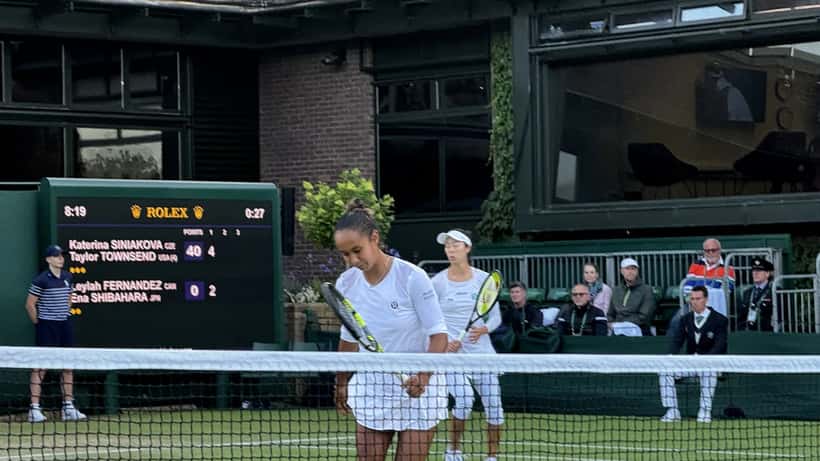
Leylah Fernandez walked onto a clay court in Stuttgart on April 14, 2026, and dismantled Alexandra Eala 6-1, 6-4 in 62 minutes. The result mattered — but for sports medicine specialists, the story worth watching is what got her back to that level after a turbulent start to 2026.
A Tough Start, Then Stuttgart
Fernandez entered the Porsche Tennis Grand Prix ranked No. 25 in the WTA rankings with just four wins in her first 13 matches of the 2026 season. After a strong 2025, the early-year struggles fueled speculation about physical issues. Yet Stuttgart showed a sharper, more composed player — and her upcoming second-round match against Zeynep Sonmez will test whether the form is sustainable.
For the athletes and coaches watching, Fernandez's trajectory raises a question that applies far beyond the professional tour: how do you come back strong after a slow patch, and how do you protect your body in racquet sports through the process?
The Biomechanics of a Tennis Comeback
Tennis is one of the most physically demanding racquet sports because it combines explosive lateral movement, overhead striking, and high rotational forces — all on a body that must repeat the same asymmetrical movements thousands of times per match.
Sports medicine specialists identify four commonly injured regions in tennis players returning to form after a performance dip:
Lateral elbow (tennis elbow / lateral epicondylalgia): The extensor carpi radialis brevis tendon absorbs enormous force on off-center groundstrokes. Inflammation here is the most common overuse injury in recreational tennis players, affecting 1–3% of the population annually, according to the American Academy of Orthopaedic Surgeons.
Wrist (TFCC injury, De Quervain's): The triangular fibrocartilage complex in the wrist absorbs torsional load on every swing. Partial tears and De Quervain's tenosynovitis are increasingly common as players push through fatigue.
Shoulder (rotator cuff / labrum): Overhead serves generate maximum velocity by loading and releasing the shoulder's internal rotators. Imbalances between internal and external rotators — often from training overload — lead to impingement and partial cuff tears.
Knee (patellar tendinopathy): The quick-stop, pivot, and push-off mechanics of baseline play load the patellar tendon repeatedly. "Jumper's knee" is equally common in tennis as in basketball, though less discussed.
When Pain Is a Signal vs. When to Push Through
This is the question every recreational player, weekend warrior, and amateur competitor faces — and the answer is not intuitive.
Push through: Generalized muscle soreness, fatigue in late sets, minor cramping. These reflect fitness, not injury. Conditioning, hydration, and rest resolve them.
Stop and seek evaluation:
- Pain localized to a single joint that persists beyond 72 hours after play
- Swelling, warmth, or clicking/locking in a joint
- Any neurological symptoms: numbness, tingling, or weakness in an arm or hand
- Pain that changes your mechanics — if you're compensating by altering your stroke, the injury is affecting performance AND potentially creating secondary damage
The distinction matters because an ignored tendinopathy can progress to a tendon rupture requiring surgical repair and months of rehabilitation. Early intervention — typically 4–6 weeks of targeted physiotherapy — can resolve most racquet sport overuse injuries before they become season-ending events.
What a Sports Medicine Evaluation for a Tennis Player Includes
When a racquet sport athlete presents at a sports medicine clinic, the assessment typically involves:
- Biomechanical stroke analysis: Video review of serve and groundstrokes to identify the mechanical driver of the injury — grip, swing path, or footwork.
- Functional movement screen: Hip mobility, shoulder rotation range, and spinal stability all influence arm and shoulder load. Restrictions in the lower chain create compensatory overload in the upper limb.
- Ultrasound or MRI if indicated: Real-time ultrasound can visualize tendon structure and detect micro-tears without radiation exposure.
- Load management prescription: A graded return-to-play protocol — not simply "rest until it stops hurting" but a phased reintroduction of hitting volume and intensity.
Many players — at every level — skip this step and default to rest alone. Rest removes the stimulus but doesn't correct the underlying biomechanical issue. The injury typically recurs when play resumes.
The Recreational Player's Takeaway from Fernandez
Professional players have access to touring physiotherapists, sports scientists, and match analytics. Recreational players do not — which is exactly why the threshold for seeking expert evaluation should be lower, not higher, for amateurs.
The average amateur tennis player plays on harder surfaces more often than the WTA tour, has less developed neuromuscular conditioning than a touring professional, and trains without biomechanical supervision. These factors amplify injury risk for every serve and every lateral sprint.
If you're a recreational tennis player navigating a painful comeback, the comparison to a professional's resilience is useful inspiration — but the mechanism behind that resilience is medical expertise, not willpower.
Tennis players dealing with arm or shoulder issues have found useful context in how ATP players like Musetti manage clay season fatigue and injury prevention — many of the same principles apply at the recreational level.
Leylah Fernandez's WTA profile at the official WTA website tracks her return to form in real time. What it won't tell you is whether your elbow pain is lateral epicondylalgia or referred nerve pain from the cervical spine — that answer requires a specialist.
YMYL Disclaimer
This article is for general informational and educational purposes only and does not constitute medical advice. Consult a licensed sports medicine physician or physiotherapist before returning to sport after injury.
ExpertZoom connects tennis players and active adults with sports medicine specialists, physiotherapists, and orthopedic consultants for evaluations tailored to racquet sport demands.
