 Marcus Samuel
LeShon Johnson, a former running back for the Green Bay Packers, Arizona Cardinals, and New York Giants, was sentenced on September 10, 2026 to five years in federal prison for operating the largest dogfighting ring ever prosecuted against a single individual in U.S. federal history. A jury convicted him in August 2025 on six felony counts of violating the Animal Welfare Act after federal authorities seized 190 dogs from his "Mal Kant Kennels" operation in Broken Arrow, Oklahoma. The sentence — 60 months in prison, three years of supervised release, and a $30,000 fine — closes the criminal chapter. For animal welfare professionals, it opens an urgent question: what happens next to nearly 200 animals who have known nothing but cruelty?
The Scale of an Unprecedented Case
Johnson, 54, had been running the illegal breeding and fighting venture under the name "Mal Kant Kennels" since at least 2007, according to testimony presented at trial. Prosecutors showed that he bred, sold, and transported fighting dogs across state lines — a federal felony under the Animal Welfare Act. This was his second dogfighting conviction: Johnson had previously pleaded guilty to state-level charges in Oklahoma in 2004, then continued operating for nearly two additional decades.
The 190 dogs seized from his property represent the single largest forfeiture from an individual defendant in U.S. federal dogfighting history, according to the U.S. Department of Justice. For context, the landmark Michael Vick case in 2007 involved 51 dogs. The Johnson seizure is nearly four times that in scale.
The U.S. Marshals Service took custody of the dogs through its asset forfeiture program, coordinating with licensed animal rescue organizations and contracted veterinary care providers for housing, medical treatment, and behavioral evaluation. That process is lengthy, expensive, and far more complex than most dog owners realize — and it directly mirrors what any responsible adopter of a rescue dog should expect to navigate.
What Veterinary Experts Do After a Seizure of This Scale
When law enforcement seizes fighting dogs, they do not go directly to a public shelter. They enter a structured pipeline of veterinary and behavioral care that can span months before placement.
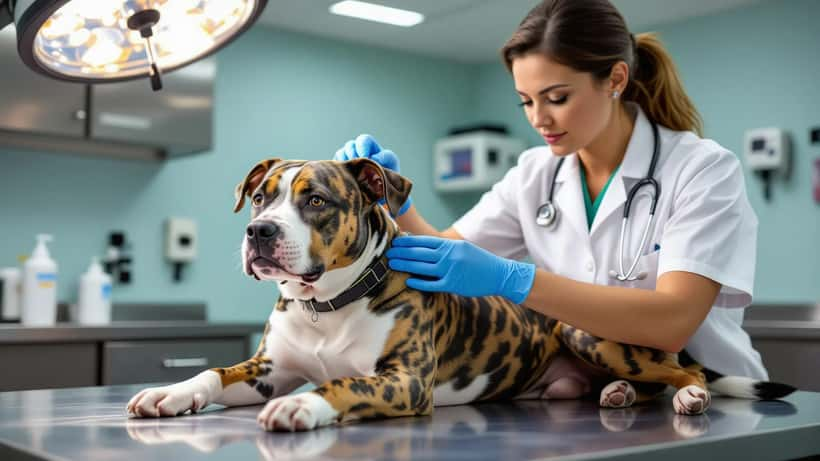
The ASPCA's Anti-Cruelty Behavior Team, which frequently assists federal agencies in large-scale fighting dog seizures, conducts individual medical evaluations on each animal. This means a full physical examination, bloodwork, parasite screening (heartworm and intestinal parasites are near-universal in unsanctioned kennels), wound assessment, and orthopedic evaluation. Dogs used in fighting operations carry a predictable spectrum of injuries: puncture wounds and bite-wound abscesses, broken teeth, facial and forelimb scarring, and chronic joint damage from repeated impact over years.
Following medical stabilization, behavioral assessment begins. A certified veterinary behaviorist or ASPCA-trained behavior consultant evaluates each dog's response to humans, other animals, and novel environments. This evaluation — not the dog's breed or fighting history — determines placement. Dogs may be cleared for adoption into general homes, placed with experienced foster or rescue organizations, or in rare cases designated for lifetime sanctuary care when behavioral concerns cannot be safely resolved.
The civil forfeiture process governing custody of these animals typically takes three to four months before animals can be dispersed to rescue organizations. During that window, the federal government contracts veterinary providers to house and treat the dogs — funded through asset forfeiture proceeds from the case.
What This Means If You Adopt a Rescue Dog
This is where the story connects directly to everyday dog owners. Organizations involved in high-profile seizures like the Johnson case eventually place cleared dogs with rescue groups, who in turn work with the public on adoptions. And outside major federal cases, thousands of dogs with unknown or troubled backgrounds enter the adoption pipeline every year.
If you adopt a dog rescued from a fighting-related or severe neglect situation, veterinary due diligence goes well beyond a routine wellness visit.
When "Cleared" Doesn't Mean "Cost-Free": A Concrete Case
Consider this scenario: a family in Tulsa adopts a three-year-old male pit bull mix through an Oklahoma rescue organization that participated in placement for the Johnson case. The dog cleared behavioral evaluation and arrived with documentation showing a clean bill of health from the federal assessment period. Six weeks into the adoption, the dog shows intermittent lameness in the right forelimb and heightened reactivity to other dogs on leash.
If the lameness goes unaddressed, the financial and medical consequences cascade quickly:
- A veterinary orthopedic consultation runs approximately $150–$300, plus radiographs at $200–$400.
- If chronic injury is identified — old untreated fractures or joint damage are common in fighting dogs — corrective procedures range from $1,500 to $4,500 depending on severity.
- If the limb issue is ignored for 12 months, compensatory gait changes cause secondary joint degeneration in the opposite leg, potentially doubling eventual treatment costs to $8,000 or more.
The reactivity issue is a separate line item: a structured behavioral consultation with a veterinary behaviorist costs $200–$450 per session in most U.S. metro areas. A desensitization and counter-conditioning protocol for dog-reactive behavior typically requires 6–12 sessions over three to six months — roughly $1,200 to $5,400 before any maintenance work is needed.
The math is clear: a dog from a fighting background who appears healthy at adoption may carry $3,000 to $8,000 in near-term veterinary needs. This is not a reason to avoid adopting rescue dogs. It is a reason to budget accurately and consult a veterinarian before signing the adoption paperwork — not after the first problem surfaces.
Note: This article contains general veterinary cost estimates for informational purposes only. Costs vary significantly by region, clinic, and individual animal. Consult a licensed veterinarian for guidance specific to your animal's needs.
What to Ask a Vet Before Adopting a High-Risk Rescue
Veterinarians who practice in shelter medicine increasingly recommend pre-adoption consultations for dogs with known or suspected histories of fighting or severe neglect. This is a distinct appointment type from a routine post-adoption checkup, and it should happen before the adoption is finalized when possible.
Orthopedic integrity. Old healed fractures, joint effusion, or soft-tissue calcification may not cause obvious lameness but will worsen under normal activity over 18–24 months. Baseline radiographs at adoption create a reference point before symptoms appear.
Heartworm status and parasite load. Dogs kept in outdoor, unsupervised kennel environments — exactly the conditions documented at Johnson's Broken Arrow operation — face dramatically elevated heartworm exposure. Active heartworm treatment costs $900 to $1,800 and requires strict activity restriction for 60 days.
Dental assessment. Fighting dogs frequently have broken canine teeth from gripping, often with exposed pulp that becomes a source of chronic infection and pain. Extraction or root canal treatment runs $300–$700 per tooth.
Neurological screening. Head trauma from repeated altercations can cause latent seizure activity that doesn't present until months after placement. Unusual behaviors — prolonged staring, jaw tremors, sudden collapse — warrant prompt neurological referral.
A pre-adoption veterinary consultation for a high-risk rescue typically costs $150–$300. It is the highest-return veterinary investment you can make before committing to a dog with an uncertain history.
Federal Law and What You Can Do
The Animal Welfare Act makes it a federal felony to knowingly sponsor, use, buy, sell, transport, or deliver any animal for an animal fighting venture. Johnson's six-count conviction and five-year sentence reflects the maximum available under current sentencing guidelines for an operation of this scale — compounded by his prior 2004 conviction, which prosecutors argued showed his deliberate and sustained disregard for the law over nearly two decades.
For anyone who encounters suspected animal fighting activity, both the ASPCA and the Humane Society of the United States maintain anonymous reporting lines. In several states, failure to report known animal fighting activity carries its own criminal penalties for bystanders.
If you are currently considering adopting a rescue dog — with or without a direct connection to a fighting case — the LeShon Johnson sentencing is a reminder that a shelter clearance is a starting point, not an endpoint. Ask the rescue organization for the complete behavioral and veterinary evaluation file before signing. Ask your vet for a pre-adoption consultation that specifically accounts for the animal's documented history.
An ExpertZoom veterinarian can help you interpret what a rescue dog's evaluation records actually mean, identify which follow-up care is most urgent, and build a realistic six-month care plan. The 190 dogs seized from "Mal Kant Kennels" will need thousands of hours of expert veterinary attention. Yours needs at least one consultation — before you commit.
format_used: Expert reaction
