 Jessica Johnson
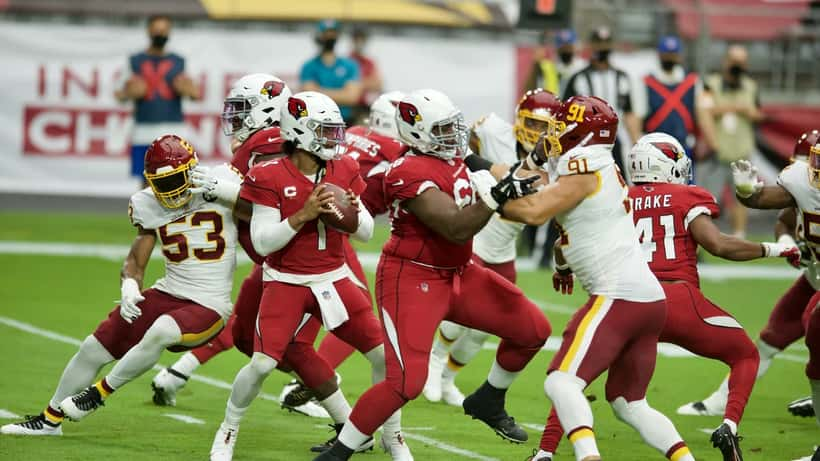
Minnesota Vikings quarterback Kyler Murray was knocked unconscious just 11 snaps into his 2026 NFL debut after taking what officials are calling an illegal hit from Green Bay Packers safety Javon Bullard. The September 7, 2026 incident — broadcast live to millions of viewers — left Murray in the concussion protocol and ignited a national conversation about player safety. Employment and personal injury attorneys say the legal questions it raises apply to workers in every industry, not just professional sports.
What Happened in Week 1: A Hit That Changed the Game
Murray signed a one-year contract with Minnesota after the Arizona Cardinals released him in March 2026, ending a turbulent seven-year tenure that included a torn ACL in December 2022 and a mid-foot sprain that shut him down in October 2025. Week 1 against the Packers was supposed to be his fresh start.
Instead, Murray — sliding to end a third-down scramble — took a helmet-to-helmet blow from Bullard that dropped him to the turf at U.S. Bank Stadium. He lay motionless for several minutes before being assisted off the field. The former No. 1 overall pick had gone 3-for-5 for 18 yards and thrown one interception before leaving. Carson Wentz replaced him under center.
The NFL has since opened a formal review of Bullard's hit under Rule 12, Section 2, Article 8 of the official rulebook, which prohibits unnecessary roughness against a sliding quarterback. Penalties for flagrant violations include fines exceeding $50,000, suspension, and — in extreme cases — civil liability. As of September 13, 2026, Murray remains in the concussion protocol with no official return timeline.
What a Workers' Rights Attorney Sees in This Play
To most fans, this is a dramatic football story. To an employment and personal injury lawyer, it is a near-perfect illustration of a third-party workplace injury — one of the most misunderstood and financially consequential situations in American labor law.
Professional athletes are employees under federal and state law. When they are injured on the job, they have the same foundational rights as any construction worker, nurse, or warehouse operator. The difference is that Murray has an NFL Players Association representative, a personal attorney, and a contract with guaranteed injury provisions fighting for him. Most American workers face the same legal moment entirely alone.
The core issue in cases like Murray's is not simply that an injury occurred at work — it is that the injury was caused by someone outside your employer's organization. Bullard plays for a different NFL franchise. In civilian workplaces, the equivalent is a negligent subcontractor, a delivery driver from another company, or a defective piece of equipment made by a third-party manufacturer. That distinction is what opens the door to rights beyond the standard workers' compensation system.
Under the U.S. Department of Labor's Office of Workers' Compensation Programs, workers' compensation is a no-fault insurance system. It covers medical expenses and replaces a portion of your wages — typically capped at 66.67% of your average weekly earnings — regardless of who caused the accident. That protection is valuable. But it explicitly bars you from suing your own employer for pain and suffering.
What it does not bar is suing a negligent third party. When a third party's reckless or negligent conduct contributed to your workplace injury, you can pursue a personal injury claim against that party simultaneously with your workers' comp claim. Third-party claims can recover damages that workers' compensation by design excludes: full lost wages (not just two-thirds), pain and suffering, future medical expenses, and punitive damages when the conduct was egregious.
That layered protection is exactly what Murray's legal team will invoke if Bullard is found to have violated league safety rules.
The Electrician Who Got Hit in the Head: A Concrete 2026 Case
Here is a scenario that plays out in American workplaces dozens of times each week — one where the outcome depends almost entirely on whether the injured worker knows to ask the right question.
Imagine a licensed electrician earning $85,000 per year in Minneapolis, Minnesota — roughly $1,635 per week. On September 7, 2026, a contractor from a separate company is operating on the same job site. The contractor swings a heavy steel conduit without checking clearance and strikes the electrician in the back of the head. The electrician is taken to Hennepin Healthcare, diagnosed with a moderate concussion, and told not to return to work for at least three weeks.
Under Minnesota workers' compensation law (Minn. Stat. § 176.101):
Weekly benefit = 66.67% × $1,635 = approximately $1,091 per week.
That leaves a $544 weekly gap. Over three weeks, the worker has already lost $1,632 in take-home income before accounting for any long-term symptoms.
If the concussion progresses to post-concussion syndrome — headaches, cognitive difficulty, light sensitivity — and a treating physician certifies the electrician cannot return to precision electrical work for more than 90 days, permanent partial disability benefits become available. Minnesota's schedule rates moderate traumatic brain injury at between 10% and 35% of the state's maximum benefit, translating to a potential lump-sum award of $15,000 to $45,000 in additional benefits.
Now apply the third-party lens:
- If the contractor's company violated OSHA's multi-employer worksite rules (29 CFR 1910.132) by failing to control a hazard they created → the worker can file a personal injury lawsuit against the contractor's firm in addition to the comp claim.
- If a jury assigns 60% of fault to the contractor → the worker recovers 60% of total civil damages, which could include full lost wages, medical expenses not covered by comp, and pain and suffering.
- If the contractor's firm carried $1 million in general liability coverage → the settlement range typically opens in the $200,000–$600,000 corridor for moderate TBI cases, based on comparable Minnesota jury verdicts.
Settling the workers' comp claim in the first month — without speaking to a personal injury attorney about the contractor's separate liability — could mean walking away from six figures that are legally yours.
Three Steps Workers Must Take in the First 72 Hours
The NFL's legal and medical machine kicked into motion the moment Murray hit the turf. For the rest of us, the clock starts ticking without anyone managing it. Here is what employment lawyers consistently say workers get wrong:
1. Notify your employer in writing before the 14-day window closes. In Minnesota, failure to give timely written notice can void your workers' comp claim entirely, with limited exceptions. Email creates a timestamp. A verbal report to a supervisor does not.
2. Exercise your right to choose your own physician. Workers' comp insurers in Minnesota have the right to direct your care — but you retain the absolute right to a one-time independent medical examination (IME) by a physician of your choosing. For concussions in particular, early neurological assessments shape the entire arc of your claim. An insurer-chosen physician has a financial incentive to minimize the severity of your symptoms.
3. Identify every party present at the scene. Before leaving the job site, document the names of every contractor, subcontractor, and delivery service operating in your vicinity that day. Murray's incident involved a player from a clearly identified opposing team. Your workplace injury may involve four different companies, none of which your employer will volunteer to identify for you. This list is the foundation of any third-party claim.
YMYL Disclaimer: This article provides general legal information for educational purposes only and does not constitute legal advice. Laws vary significantly by state and individual circumstances. If you have been injured at work, consult a licensed attorney in your jurisdiction as soon as possible.
You Deserve the Same Legal Team Kyler Murray Has
The Vikings' front office, the NFLPA, and Murray's personal legal counsel are collectively ensuring that every contractual protection, workers' compensation entitlement, and potential third-party claim is identified and pursued. That is the standard of care that every injured worker in America is legally entitled to — but rarely receives unless they actively seek it.
Workers' compensation and personal injury attorneys in the United States almost universally work on a contingency fee basis. You pay nothing unless they recover money for you. There is no financial barrier to getting the expert guidance Murray's team provides as a matter of professional routine.
A hit that ends a quarterback's week — and potentially a season — is the same legal event as a contractor who swings a beam without looking. The question in both cases is not whether you have rights. You do. The question is whether you know how to use them before the statute of limitations runs out.
If you were injured at work and believe a third party contributed to your injury, connecting with an employment or personal injury attorney within days — not months — is the single most consequential step you can take. ExpertZoom's verified Lawyers can connect you with licensed attorneys experienced in workplace injury and third-party liability cases in your state.
