 Daniel Sterling
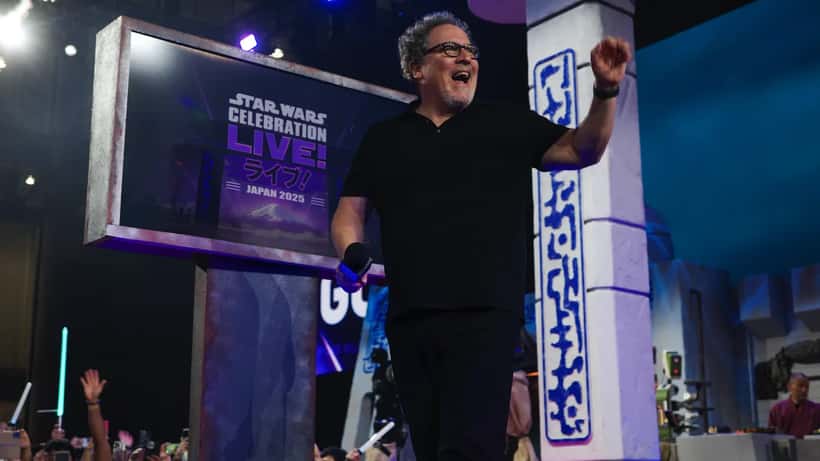
When Jon Favreau stepped onto the red carpet at TCL Chinese Theatre in Hollywood on May 14, 2026, for the premiere of Star Wars: The Mandalorian and Grogu, he wasn't just celebrating a blockbuster. He was marking a turning point in how major productions integrate artificial intelligence — and raising questions that entertainment lawyers across the country are still scrambling to answer.
The film, set for wide release on May 22, 2026, is the first Star Wars movie shot entirely in Los Angeles. But what has drawn as much attention as Baby Yoda is what Favreau told audiences at CinemaCon in April: AI played a significant role in the production pipeline, from pre-visualization to post-production workflows.
What Favreau Said About AI at CinemaCon
At the Creative Community Luncheon in Las Vegas, Favreau addressed the future of AI in filmmaking directly. While celebrating technology as a storytelling tool, he framed AI as a collaboration partner rather than a replacement for human craft. The Mandalorian franchise long pushed technical boundaries — the ILM StageCraft LED volume used on the Disney+ series was revolutionary. The new film goes further.
Reports from the event described Favreau discussing AI-assisted workflows in scene planning, visual effects generation, and script analysis. "We're in a moment where the tools are evolving faster than the contracts," one entertainment attorney told industry trade press following the CinemaCon appearance. That is the central legal concern: the technology has outpaced the agreements.
The Contracts That Haven't Caught Up
When the Writers Guild of America and SAG-AFTRA negotiated their landmark 2023 contracts — ending historic strikes over AI protections — the focus was on preventing AI from replacing writers and actors entirely. Those agreements established consent and compensation frameworks for union members.
But three years later, AI is no longer a threat on the horizon. It is embedded in production pipelines at studios like Lucasfilm, Disney, and dozens of smaller independents. The legal frameworks have not kept pace.
According to the U.S. Copyright Office, copyright protection does not automatically extend to AI-generated content without meaningful human authorship. That ruling has created a legal minefield for productions that use AI to generate or significantly alter creative elements — whether a visual effects sequence, a musical score, or a scene framing decision.
If an AI system contributed substantially to a shot in The Mandalorian and Grogu, who owns it? Is it Lucasfilm? Disney? ILM? The software vendor? These questions are not hypothetical. They are being litigated right now in federal courts across the country.
Four AI Contract Clauses You May Be Missing
Independent creators face the sharpest risk. If you sign a contract for a production that uses AI without clear contractual language, you may be signing away rights you didn't know you had — or accepting liability for outputs you didn't create.
Entertainment lawyers identify four critical areas where AI clauses are now essential in 2026:
Authorship and credit. If AI assists in creating any part of your work, the contract should define who holds authorship credit and whether that affects guild residuals or backend participation.
Likeness and voice rights. SAG-AFTRA's AI provisions require performers to consent before their digital likeness is replicated. But non-union creators and voice artists working independently have no equivalent protection unless the contract explicitly provides it.
Training data consent. Some studios include clauses permitting them to use submitted work to train AI models. These clauses are often buried in boilerplate. Screenwriters, composers, and visual artists submitting pitches should have an entertainment lawyer review this language before signing.
Ownership of AI outputs. If you use an AI tool during a work-for-hire engagement, the contract may assign all outputs entirely to the studio — even when your creative direction drove the result. This has become a flash point in negotiations across Hollywood.
For deeper context on how these clauses play out in practice, this breakdown of entertainment IP rights in 2026 examines how studios structure major franchise deals.
What Favreau's Career Teaches About Creator Leverage
Favreau's trajectory is instructive. He created The Mandalorian and is the primary creative force behind the franchise. His leverage was sufficient to negotiate meaningful creative control — a rarity in big-studio deals. Yet Favreau himself revealed earlier this year that he tried unsuccessfully to prevent the death of Tony Stark in Avengers: Endgame. Even creators with enormous clout don't always win disputes with studio executives.
For creators with less leverage than the director of Iron Man, the contract negotiation is the only real moment of power. Once you sign, the studio holds the rights.
Favreau's career also illustrates how quickly roles blur in modern productions. He wrote, directed, and produced The Mandalorian while also acting in it. Each of those roles carries different rights and obligations — and an AI clause that protects him as a director may not protect him as a performer.
When to Consult an Entertainment Lawyer
If any of the following apply to your situation, consulting an entertainment attorney before signing is essential:
- You are entering a production agreement for the first time
- The contract includes language about AI, machine learning, or automated systems
- You are submitting creative work — scripts, music, artwork — to a company that uses AI tools
- You are negotiating likeness or voice rights for any commercial purpose
- You work outside a union and have no guild protections
The entertainment industry is changing at a pace that even Jon Favreau, with 30 years of experience navigating it, finds challenging. The legal frameworks are evolving but remain behind the technology. An experienced entertainment lawyer can identify the clauses that protect your rights — and the ones that quietly strip them away.
ExpertZoom connects you with entertainment lawyers who specialize in AI, IP, and creator rights. If you're signing anything in 2026 that touches on AI-assisted production, a one-hour consultation may be the most valuable investment you make in your career.
This article is for informational purposes only and does not constitute legal advice. Consult a qualified attorney for guidance specific to your situation.
