 Harper Brooks
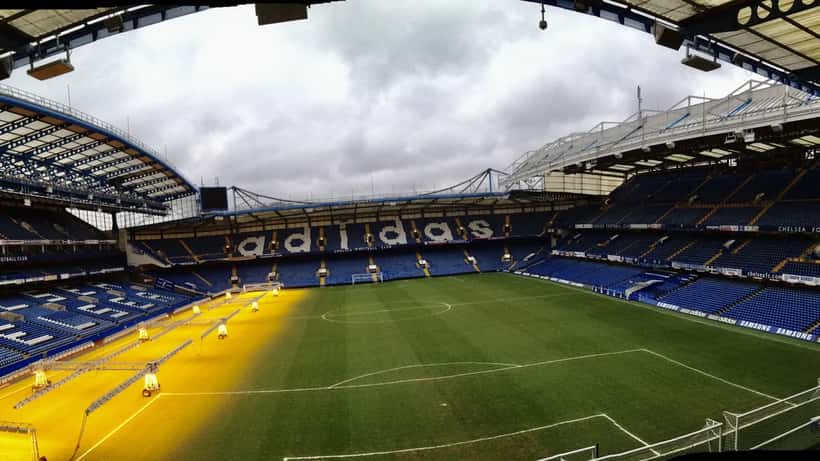
Chelsea FC touched down in Malaysia this weekend, preparing to face Johor Darul Ta'zim at Iskandar Puteri on August 9, 2026 — the final Asian leg of a six-match pre-season tour that has already taken Xabi Alonso's squad through Sydney, Hong Kong, and Jakarta. Under new head coach Alonso, appointed after departing Bayer Leverkusen in June 2026, the club is projecting commercial confidence and sporting ambition. But in boardrooms from New York to Los Angeles, today's match carries a different kind of weight: it is a reminder that American investors now own the most valuable soccer brands on the planet — and that the returns are far more complex than the trophy cabinet suggests.
When Billionaires Buy Soccer Clubs: The American Ownership Wave
By mid-2026, 11 of the 20 Premier League clubs are majority-owned by Americans. The shift accelerated dramatically after Todd Boehly and Clearlake Capital completed their $5 billion purchase of Chelsea FC from Roman Abramovich in May 2022 — at the time, the most expensive sports acquisition in history. Clearlake Capital took a 60% stake, with Boehly and partners holding the remainder through Eldridge Industries.
The investment rationale was compelling on paper. Premier League clubs generate multi-billion-dollar media rights revenues, and global appetite for English soccer is still growing. The Premier League's international TV rights cycle for 2025-2028 is valued at more than £6.7 billion, a 20% increase over the previous deal. In the United States alone, NBC Sports and Peacock's broadcasting agreement is estimated at $2.7 billion, and weekend match audiences continue to climb year over year.
Chelsea's Asia-Australia tour — which includes today's match against Johor Darul Ta'zim in Malaysia — is not just athletic preparation. It is business development at scale. JDT, backed by the Johor royal family and among the most prominent clubs in Southeast Asian soccer, draws Chelsea to a market of over 600 million potential fans. Matchday revenue, broadcast rights, commercial activations, and shirt sales in this region typically generate between $5 million and $12 million in direct value for a Premier League club on a full summer tour, according to industry estimates from sports business analysts covering the Asia soccer market.
The Bloomberg Alarm: When the Private Equity Model Strains
In April 2026, Bloomberg published a sharply worded analysis titled "Chelsea Calls Into Question the Boehly-Clearlake Private Equity Model." The piece documented mounting fan hostility, inconsistent on-pitch results, and deep questions about whether a high-volume player-trading strategy — buying young players on long-term contracts and hoping to resell them at a profit — can survive contact with the cultural realities of English soccer.
Chelsea spent over £1.5 billion on transfer fees between 2022 and 2026. Several signings underperformed expectations and were loaned out within 18 months. The club tested the accounting limits of the Premier League's Profit and Sustainability Rules (PSR) by spreading amortization of transfer fees across unusually long contract durations. Fan satisfaction surveys declined meaningfully over that period.
The club's valuation has remained elevated — top-tier Premier League franchises have appreciated 15–20% annually in enterprise value over the past decade, and Chelsea's brand reach is genuinely global. But "elevated valuation" does not automatically translate into a successful private equity exit within a predictable timeline. That gap between headline asset appreciation and real investable return is precisely what US investors need to understand before committing capital to sports franchise opportunities.
The Investment Case in Plain Terms
Why do American investors keep buying Premier League clubs? The reasons are real, even if the execution is complicated.
First, sports franchises are inflation-resistant hard assets. Unlike bonds or cash, a Premier League club's value is driven by global media demand, which has been growing for 30 years. Second, the US television audience for the Premier League has tripled since 2010, making these assets more relevant to American commercial partners every year. Third, the supply of top-tier European clubs is genuinely limited — there are 20 Premier League spots, and admission is determined by on-field performance, not capital.
That combination of scarcity, global brand power, and growing revenue streams is what drives the institutional interest. For ultra-high-net-worth US investors, adding a sports franchise to a portfolio of private equity, real estate, and venture capital made intuitive sense throughout the 2010s and early 2020s.
The challenge is that 2026 looks different. Regulatory tightening around PSR compliance in England, UEFA's Financial Sustainability Regulations in European competition, and the genuine complexity of integrating private-equity management styles into institutions shaped by decades of fan culture have all introduced friction that was not priced into the original 2022 Chelsea acquisition thesis.
Concrete Case: A $250,000 Allocation to a Sports Franchise SPV
Consider the following scenario, which wealth advisers describe as increasingly common in their high-net-worth client base.
A 44-year-old US physician in Charlotte, North Carolina, holds $2.1 million in liquid assets outside retirement accounts. In July 2026, they receive an invitation to join a private placement offering: a Special Purpose Vehicle (SPV) providing fractional equity in a Championship-level English soccer club, minimum investment $250,000, seven-year lock-up, with a stated target return of 18-22% annualized, contingent primarily on promotion to the Premier League.
If the club achieves Premier League promotion within three years — historically achieved by roughly one-third of Championship clubs entering a given season — franchise valuation could realistically jump from $45 million to $140 million based on comparable sales data from recently promoted clubs. At a 0.8% equity stake for $250,000, that scenario yields approximately $840,000 in paper gains before fees and taxes.
But the downside scenario is equally instructive: two consecutive bad seasons and a drop to League One would compress the valuation to $18–22 million. The same 0.8% stake would be worth $144,000–$176,000. There is no public market for an early exit. And the legal friction is real: SEC Regulation D compliance, FBAR filings for foreign-held accounts, Passive Foreign Investment Company (PFIC) rules, and UK-to-US capital gains treatment on an eventual sale could add 1.5–3% in annual friction costs.
If you commit $250,000 to a seven-year, no-liquidity sports equity vehicle and the club underperforms in years two and three, you cannot exit, cannot rebalance, and may face paper losses for years before any recovery. That is a materially different risk profile than a diversified stock portfolio or even a traditional private equity fund with secondary market access.
What a Wealth Manager Would Flag Before You Sign
Wealth advisers with alternative-investment experience consistently raise the same concerns when sports equity deals cross their desk:
Liquidity mismatch. A seven-year lock-up means the capital is unavailable for a primary home down payment, business expansion, a child's tuition, or an emergency. If your liquidity cushion is thin, this asset class is wrong for you regardless of the projected upside.
Regulatory complexity. US investors in foreign sports entities face FBAR obligations if the investment holds foreign accounts above $10,000, PFIC classification that can create adverse tax treatment on gains, and in some structures, Unrelated Business Taxable Income (UBTI) issues if the investment flows through a retirement account.
Correlation illusions. Sports assets appear uncorrelated to equities — which is appealing for portfolio diversification. In a sustained global recession, however, sponsorship revenues and media rights deals compress at the same moment equity portfolios fall. The correlation tends to spike precisely when diversification is most needed.
Due diligence deficits. A private sports club does not file quarterly SEC reports. Promotional materials often use optimistic promotion-scenario projections without stress-testing the base case. A CAIA-credentialed adviser or a wealth manager experienced in alternative assets can verify the valuation methodology, model realistic scenarios, and assess whether the promoter is properly registered.
According to FINRA's investor guidance on alternative investments, every investor should verify that the investment is registered or exempt, fully understand the fee structure and exit rights, and confirm that the promoter holds the appropriate licenses before committing capital.
What to Do Now
Chelsea's match against Johor Darul Ta'zim today is a showcase of what American-funded European soccer looks like at full operational scale: a globally recognized brand, a high-profile manager, and a commercial machine traveling through four countries to build revenue and fan bases. Whether Xabi Alonso's squad produces results on the pitch in the 2026/27 Premier League season will shape the Boehly-Clearlake investment thesis for years to come.
For US investors watching from the sidelines, the lesson is not that sports franchise investment is impossible — it is that it requires the same rigorous, scenario-tested financial planning that any illiquid, high-variance alternative asset demands. A 5-10% allocation to alternatives, including sports equity, can make sense for a high-net-worth portfolio. But "makes sense" requires a wealth manager who can model the downside, navigate the tax complexity, and ensure the lock-up period does not compromise your broader financial plan.
If you are considering a sports franchise investment, or simply want to understand how alternative assets fit into your current wealth strategy, consulting with a licensed wealth management expert before signing is not optional — it is the minimum standard of financial care. You can find vetted, experienced wealth advisers through Expert Zoom's US platform.
This article is for informational purposes only and does not constitute financial or investment advice. Consult a licensed financial adviser before making investment decisions.
