 Evelyn Carter
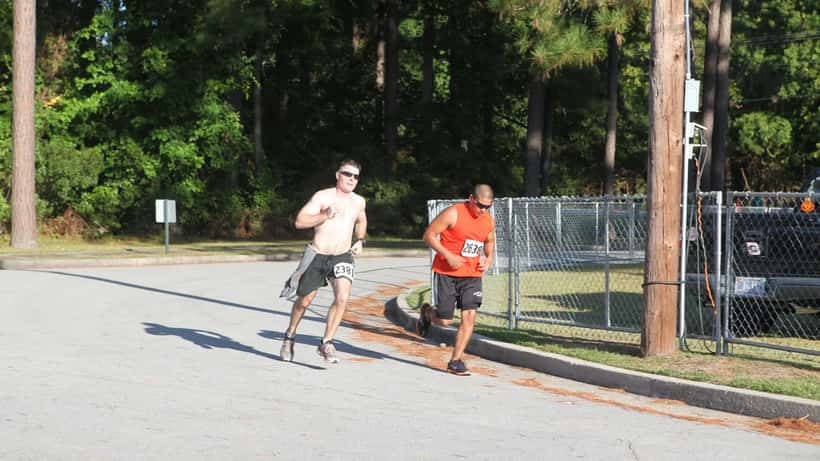
A father of four from Waukesha, Wisconsin collapsed and died just 600 feet from the finish line of the Milwaukee Lakefront Half Marathon on October 4, 2026. John Meise, 36, was 13 miles into what would have been his first half marathon when witnesses saw him fall to the ground near the final stretch. Despite immediate emergency response on the course, he was pronounced dead at Froedtert Hospital shortly after. The Milwaukee County Medical Examiner's Office confirmed he had no known medical history.
His death sent shockwaves through the running community and prompted a question that quietly haunts millions of amateur endurance athletes: if a fit, experienced runner with no health history can die 600 feet from the finish line, how do you know whether you are safe?
Who Was John Meise?
Meise had been a committed runner for six years before registering for the Milwaukee Lakefront Half Marathon. By all accounts he was healthy — no prior cardiac diagnoses, no red flags that his family or friends could have anticipated. He was not a casual jogger attempting something reckless. He was an experienced recreational runner who had trained for this event and arrived at race day prepared.
Emergency medical personnel on the course responded immediately. He was transported to Froedtert Hospital but could not be revived. His wife and four children were left without him.
The cause of death has not been formally determined. That uncertainty is itself a piece of the story. It reflects a pattern that cardiologists have documented for decades: young, apparently healthy adults dying during endurance events, often from conditions that were never screened for, never suspected, and never treated — because they produced no symptoms until the race that killed them.
A GoFundMe campaign for his family reached its goal within days of the news breaking, as the running community rallied around the Meise family. But no fundraiser can address the underlying question his death forces into focus: when should an amateur runner see a cardiologist before signing up for a race?
Why Healthy Runners Collapse at the Finish Line
The data on this is sobering. A landmark study in the New England Journal of Medicine analyzed 10.9 million registered participants across U.S. marathons and half marathons over a decade. There were 59 cardiac arrests — 40 in full marathons, 19 in half marathons. The incidence of cardiac arrest was 0.54 per 100,000 participants. Of those who arrested, 71% died. The incidence of sudden death was 0.39 per 100,000.
What's striking in the demographic breakdown is the age distribution. The mean age of all runners with cardiac arrest was 42. But the mean age of those who died was younger than those who survived: 39 versus 49. That reversal is counterintuitive until you understand what it reveals about cause. Younger victims are far more likely to die from structural heart defects — primarily hypertrophic cardiomyopathy — than from the atherosclerotic coronary disease more common in older runners.
Hypertrophic cardiomyopathy, or HCM, is a genetic condition in which the heart muscle thickens abnormally. It can develop without producing a single noticeable symptom for years or decades. The heart functions normally at rest and during moderate exertion. But under the sustained high-intensity cardiovascular load of a half marathon — particularly in the final miles when fatigue and heart rate are both peaking — an affected heart may suddenly fail to maintain adequate output. For many people, the race is the first time their body has ever encountered that precise combination of stress factors.
This is why a clean annual physical provides incomplete reassurance. A standard physical examination does not include an echocardiogram, an exercise stress test, or a detailed cardiac history review specifically designed for endurance athletes. Those are the tools that detect HCM and similar conditions. Without them, the condition is invisible.
Four Warning Signs That Should Trigger a Medical Evaluation
Cardiovascular specialists consistently identify four symptoms that must not be ignored before any endurance event:
Chest pain or tightness during exertion. Discomfort that appears specifically during hard running effort — and especially if it radiates to the arm, jaw, or back — should be evaluated before the next race.
Unexplained shortness of breath disproportionate to effort. Every runner gets winded on tough intervals. The flag is breathlessness that arrives far earlier or more severely than your training level would predict.
Dizziness or near-fainting during or after runs. These episodes are frequently dismissed as dehydration. In some cases, they signal the heart is temporarily failing to maintain adequate cerebral blood flow — a serious warning sign.
Family history of sudden cardiac death before age 50. This is the warning that has nothing to do with your own symptoms. If a parent, sibling, or close relative died suddenly or unexpectedly from a cardiac event before 50, that history substantially elevates your risk. It should be discussed with a physician before any race registration.
The absence of these symptoms is reassuring — but not a guarantee. HCM can be present without ever triggering any of them. That is precisely why pre-race screening matters.
Concrete Case: The First-Time Racer With a Family History
Consider a 38-year-old man — call him Marcus — training for his first half marathon in spring 2027 outside Milwaukee. He has been running four days a week for three years. His last physical was clean. He feels strong.
But Marcus's father died at 48 from a sudden cardiac event. And in the last two months of training, Marcus has noticed he gets lightheaded on his longer runs when he pushes his pace hard in the final miles — the exact same race-day scenario Meise was in when he collapsed.
If Marcus visits a sports medicine physician or sports cardiologist for a pre-race evaluation, here is what that typically involves: a detailed personal and family cardiac history, a resting 12-lead ECG, and — given his family history and exertional symptoms — likely an echocardiogram to visualize heart structure. A resting ECG in a clinical setting costs $50–$150. An echocardiogram typically runs $1,000–$3,000 out of pocket, though most major insurance plans cover it when clinically indicated by symptoms or family history. A sports cardiology consultation itself averages $200–$400 for a first appointment.
If Marcus has HCM: that appointment identifies it. His doctor advises him against unmonitored high-intensity endurance racing. His life is saved by a $200 appointment.
If Marcus does not have HCM: his echo comes back normal, his ECG shows no abnormalities, and he races his half marathon in spring with genuine medical clearance rather than just hope. The $200–$400 buys him confirmed peace of mind.
The if/then is not complicated: a one-time sports cardiology evaluation costs less than most half marathon training shoe budgets. What it potentially costs to skip it has no dollar amount.
What a Doctor Can Actually Do Before Race Day
The American Heart Association and the American College of Cardiology publish joint guidelines for cardiovascular screening in athletes. The 14-element preparticipation physical evaluation — originally designed for organized sport programs — applies equally to recreational endurance athletes who plan to compete. It systematically covers personal cardiac history, family history, and a targeted physical examination for structural markers.
For runners over 35, the AHA increasingly endorses an ECG as part of any pre-race evaluation, a standard that European athletics programs have followed for decades. Italy, notably, has required ECG-based cardiac screening for all competitive athletes since 1982 — and its rates of sudden cardiac death during organized sport events are substantially lower than in the United States.
If your primary care physician is not familiar with sports cardiology, ask specifically for a referral to a sports medicine physician or cardiologist who works with athletes. Many major health systems operate dedicated sports cardiology programs. Froedtert Hospital, where Meise was treated, is among them.
This is not about fear-based medicine. The overwhelming majority of runners who undergo pre-race screening are cleared without any findings. The point is that screening finds the fraction who are not — and those are the runners for whom the race they signed up for is genuinely dangerous.
An NFL fan's heart rate spikes nearly as dramatically watching a playoff game as running one — something researchers have noted about fan cardiac stress. But unlike passive watching, distance running is an intervention you choose, and one you can prepare for safely. The tools exist. The screenings exist. The specialists exist.
According to the American Heart Association, sudden cardiac arrest in people under 40 most often occurs during or immediately after physical exertion — and in the majority of those cases, an underlying structural heart condition is found on autopsy that was never diagnosed in life.
Before Your Next Race, Consider This
John Meise was 36 years old, a devoted father, a six-year runner, and 600 feet from finishing his first half marathon. His death has no clean explanation yet. But it carries a question every amateur endurance athlete owes themselves: have I ever talked to a doctor specifically about my cardiac readiness for the race I am training for?
If the answer is no, Expert Zoom connects you with certified health professionals who can review your personal and family cardiac history, explain what pre-race screening is appropriate for your age and risk profile, and advise whether an ECG or echocardiogram is indicated before your next event. A virtual consultation can begin that conversation today — before you pin on your bib.
This article is for informational purposes only and does not constitute medical advice. Always consult a licensed physician or cardiologist before beginning or continuing any endurance training or competitive racing program.
format_used: Expert reaction
