 Cora Nelson
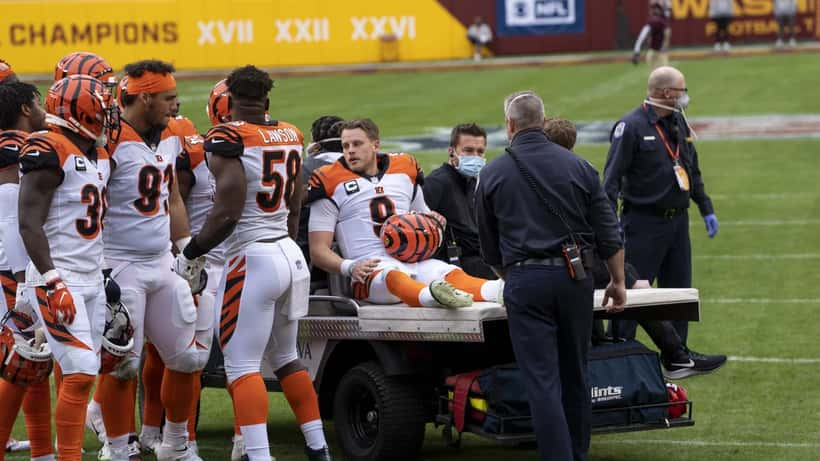
Joe Burrow spent all of Friday's practice throwing full reps, insisting he will play Sunday against the Houston Texans despite being listed as questionable with a back injury. His message: "If I'm not getting surgery, I'll be out there." But behind that confidence is a medical question that goes far beyond the NFL — one that millions of Americans face every weekend after a hard game, a fall, or a long shift on their feet.
When Burrow scrambled for a first down in the Bengals' 33-27 win over the Tampa Bay Buccaneers on September 13, 2026, he absorbed a hit that left his lower back tight. Within 48 hours, the Bengals elevated backup quarterback Josh Johnson from the practice squad as a precaution. The story trended nationally not because Burrow is likely to miss the game, but because it forced a universal question into the spotlight: how do you know when back pain is just soreness — and when it is something that requires professional evaluation?
The Question Every Active Person Is Actually Asking
For NFL quarterbacks, the threshold for imaging and evaluation is immediate. Team physicians, sports medicine doctors, and certified athletic trainers are on the sideline. The moment a player reports tightness, the medical apparatus activates.
For the rest of us — weekend athletes, warehouse workers, parents who lift car seats — the process is far murkier. Back pain is the second most common reason Americans visit a doctor, according to the National Institute of Arthritis and Musculoskeletal and Skin Diseases. An estimated 80% of adults will experience significant back pain at some point in their life. Yet the majority never receive a proper clinical assessment of the underlying cause.
This is the real story in Joe Burrow's Week 2 injury status: not whether Cincinnati's $275 million quarterback will play against Houston, but what his situation reveals about how most people fail to distinguish between muscle tightness that resolves on its own and the early warning signs of something that will get dramatically worse without treatment.
What Happens Physiologically When a Quarterback Takes a Hit to the Lower Back
Burrow's injury mechanism — a scramble followed by a hit — is a textbook mechanism for two very different outcomes in the lumbar spine.
The first and more benign outcome is a paraspinal muscle strain. The erector spinae and multifidus muscles that run along the spine can go into protective spasm when stressed suddenly. This feels tight, it responds to rest and heat, and it typically resolves within three to seven days without structural damage.
The second outcome — less visible on initial exam, more serious over time — is a disc herniation or annular tear at one of the lumbar vertebral levels, most commonly L4-L5 or L5-S1. A disc injury at these levels does not always announce itself immediately. The acute pain may feel similar to a muscle strain in the first 24 to 48 hours. But disc injuries rarely self-resolve, and without proper evaluation, many patients spend weeks "resting" a condition that is quietly progressing.
The clinical red flags that distinguish the two are not visible on a smartphone. They require a physical examination: assessing where the pain radiates, whether it extends below the knee, whether there is any numbness or tingling in the leg, and how range of motion responds under controlled movement. This is the evaluation that Joe Burrow received immediately after the game. Most people never get it.
What the Science Says About "Walking It Off"
Sports medicine research is blunt on this point. A 2019 review published by the American Academy of Orthopaedic Surgeons found that patients who delayed evaluation of acute lumbar spine injuries by more than two weeks were significantly more likely to require interventional treatment — including injections or surgery — compared to those who sought early clinical assessment.
The reluctance to consult a physician after a sports-related back injury is widespread. Common reasons include: assuming rest will resolve the issue, fear of being told to stop playing, and underestimating the significance of pain that does not immediately limit daily function. Joe Burrow had the advantage of a sports medicine physician who evaluated him within hours. His comment — "if I'm not getting surgery, I'll be out there" — was actually a medically informed statement, not bravado. He knew, from professional evaluation, that surgery was not warranted. Without that evaluation, those words would mean nothing.
Concrete Case: The 38-Year-Old Who Waited Six Weeks
Consider a scenario that plays out thousands of times each week across the United States. A 38-year-old recreational soccer player takes a collision in the hip-to-hip challenge with an opponent, feels his lower back tighten up immediately, and decides to rest for the weekend.
By Tuesday, the tightness has faded to about 40% of its original intensity. He returns to light activity. By the following Friday, he plays again. The pain returns, this time accompanied by a dull ache that runs down the left side of his buttock and into his thigh. He buys an over-the-counter anti-inflammatory and continues for another four weeks, rotating between three days of moderate pain and four days of relative comfort.
At week six, the pain shoots below the knee. He sees a physician. An MRI reveals an L4-L5 disc herniation with moderate nerve compression on the left side. The herniation is large enough that the conservative treatment window — where physical therapy alone could have likely resolved the issue — has closed. He requires an epidural steroid injection and eight weeks of supervised rehabilitation. Total time lost from the sport: four months.
The clinical math here is stark: if the player had sought evaluation within 72 hours of the initial injury, the probability of resolving the issue conservatively — without injections, without extended rehabilitation — would have been substantially higher. The threshold that separated a seven-day recovery from a four-month one was a single medical consultation that costs less than two hours of time and, in most cases, is covered by standard health insurance.
This is the Joe Burrow effect translated for the rest of us: he played Sunday not because he is tough, but because he had a professional evaluate his spine and confirm it was safe. The goal is not to be as tough as an NFL quarterback. The goal is to have access to the same quality of clinical judgment he had on the sideline.
The Specific Signals That Mean "Don't Wait"
Sports medicine physicians consistently flag the following as reasons to seek evaluation immediately, rather than waiting to see how symptoms evolve:
Pain radiating below the knee. A dull ache in the lower back or buttock may suggest muscle involvement. Pain that travels past the knee — especially with numbness, tingling, or weakness in the foot — suggests nerve compression requiring imaging.
Pain that wakes you from sleep. Mechanical back pain typically improves with rest. Pain that intensifies at night, particularly if it is constant rather than positional, is a clinical flag that warrants same-week evaluation.
Loss of bladder or bowel control. This is a medical emergency. Cauda equina syndrome — compression of the bundle of nerves at the base of the spine — requires surgical intervention within hours. Any bowel or bladder changes following a back injury are a 911 call, not a wait-and-see situation.
Pain that does not improve in five to seven days. For most muscle strains, symptomatic improvement begins within the first week. If there has been no improvement at seven days, conservative home management has likely reached its limit.
Fever alongside back pain. A combination of back pain and fever can indicate spinal infection, particularly in individuals who have had recent surgery or dental procedures.
When to See an Expert — And What That Consultation Looks Like
The barrier that stops most people from seeking early evaluation is the assumption that a back injury either requires emergency care or nothing at all. This binary misses the most useful intervention: a clinical assessment by a sports medicine physician or an orthopedic specialist who can rule out structural injury, recommend the appropriate treatment path, and — crucially — tell you it is safe to keep playing.
A standard sports medicine evaluation for acute back pain takes approximately 30 to 45 minutes. The physician will take a history of the mechanism of injury, conduct a neurological screen, test range of motion under resistance, and determine whether imaging is warranted. In many cases, they will conclude exactly what Joe Burrow's team concluded: it is a muscle strain, movement is appropriate, and here is a targeted program to manage it.
That conversation — specific, evidence-based, and tailored to your individual spine — is what professional athletes access automatically. Recreational athletes, workers, and active adults can access the same quality of guidance through a sports medicine or orthopedic consultation, often without a lengthy referral process.
Joe Burrow will almost certainly take the field against the Texans on September 21, 2026, and his back story will move off the sports ticker within a week. The question worth holding onto is simpler: when was the last time your back spoke up after a hard day or a strenuous game, and what did you do about it?
This article is for informational purposes only and does not constitute medical advice. If you are experiencing back pain, especially with neurological symptoms, consult a qualified healthcare professional.
