 Emily Wang
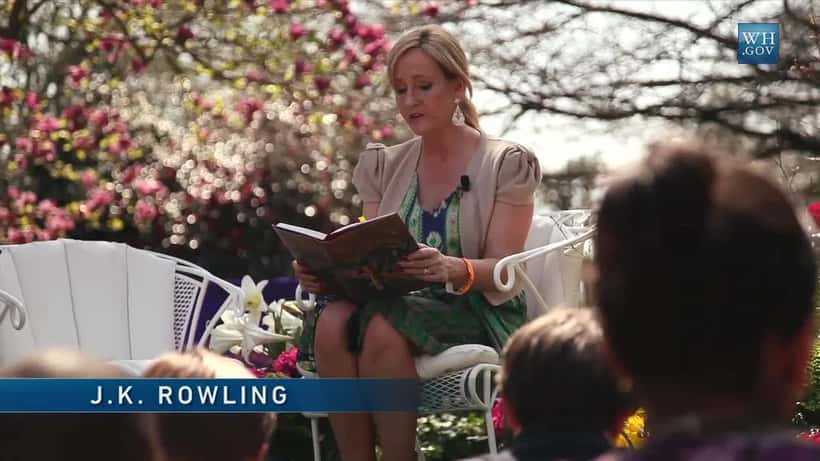
The BBC announced on October 13, 2026 that it is producing a two-part documentary about J.K. Rowling — without a single interview with the author herself. The series, set to air on BBC Two, BBC Scotland, and iPlayer, will examine three decades of her influence: from the creation of Harry Potter to her contested positions on gender identity, Scottish independence, and feminism. The announcement immediately sparked debate not just about Rowling's legacy, but about a quieter legal question: what rights does someone actually have when they become the subject of a documentary they never agreed to?
What the BBC Documentary Will Cover
Announced officially on October 13, 2026, the two-part series is produced by BBC Scotland. According to reporting from Deadline and Variety, Rowling is "aware" of the production but declined to participate. The documentary draws on archival footage, her published statements, and third-party interviews — not a single original on-camera conversation with her.
The first episode covers the creation and extraordinary global rise of Harry Potter, a franchise now estimated to be worth over $25 billion. The second examines the more contested chapters of her public life: her vocal positions on Scottish independence, her feminist commentary, and her years-long dispute with transgender rights advocates that led many to describe her as "cancelled" — despite her continued bestseller status, public platform, and undiminished wealth.
The BBC expects the documentary to air after HBO's Harry Potter reboot series, which premieres in December 2026. The structure — portraying a living person's life and views without their direct participation — is increasingly common in documentary filmmaking. And it raises legal questions that go far beyond one famous author.
The Legal Framework: What U.S. Law Actually Says
When a documentary is made about a living person without their cooperation, three areas of American law become immediately relevant: defamation, the false light doctrine, and the right of publicity.
Defamation protects individuals from false statements of fact that harm their reputation. For public figures like Rowling, the constitutional standard is demanding: they must prove "actual malice" under the New York Times v. Sullivan framework established by the U.S. Supreme Court — meaning the filmmaker either knew a statement was false or acted with reckless disregard for its truth. Private individuals face a meaningfully lower bar.
False light is a privacy tort that applies when someone is portrayed in a way that is misleading even if not technically false. If a documentary uses accurate footage in a context that implies something untrue — say, showing archival footage of someone smiling alongside narration about misconduct — that editorial framing can constitute false light even without an explicit false statement.
Right of publicity protects against commercial use of a person's name, image, or likeness without consent. In a documentary context, this right is typically outweighed by First Amendment protections for journalism and public commentary — but that balance is not always clean, particularly when the subject's image appears in promotional materials or licensed content beyond the documentary itself.
As noted in the Federal Judicial Center's research on media litigation, defamation cases involving media defendants are resolved in favor of the media in the large majority of instances when the subject is a public figure — but the ratio shifts significantly when the subject is a private individual.
The Expert Reaction: Where Documentaries Cross the Legal Line
Media attorneys emphasize a consistent principle: a filmmaker's right to portray a public figure without consent is broad, but it is not unlimited. A documentary legally stays within bounds when it:
- Avoids making false statements of fact — even implied ones through selective editing
- Attributes opinions and interpretations clearly, not as objective truths
- Does not portray the subject in a false light through misleading juxtaposition
- Does not commercially exploit the subject's likeness beyond editorial use (such as using their image for merchandise or sponsorship)
The Rowling documentary navigates this framework carefully. Her public statements are already on the record. The series uses archive materials, not fabrication. But for the millions of Americans who are not public figures, the same framework applies — and the practical stakes are quite different.
When You Are Featured Without Your Say: A Concrete Case
Consider this scenario: you were a mid-level operations manager at a regional healthcare company. Two years after you left, a documentary filmmaker begins producing a film about alleged billing fraud at your former employer. The documentary never interviews you. But it uses footage from a company town hall — where you appear prominently in the audience — alongside narration implying that management was aware of irregularities. No false statement is made about you by name. But your face is on screen for roughly 90 seconds in a scene that contextually implies complicity.
Under current U.S. law, here is the legal map:
If the footage is archival and your appearance is incidental, your false light claim is weak unless the editing is deliberately misleading. The 90-second appearance in a crowd scene likely does not rise to the level of defamatory implication about you specifically.
If narration in the documentary attributes specific knowledge of misconduct to "management" while your image is on screen, a court would examine whether a reasonable viewer would understand that statement to apply to you. If so, you potentially have a defamation or false light claim. Building that case typically requires $15,000 to $40,000 in legal fees for investigation, demand letters, and early-stage litigation. A successful false light verdict in federal court can produce damages ranging from $50,000 to well over $200,000, depending on the evidence of reputational harm and the jurisdiction.
If the documentary is used commercially beyond editorial purposes — your image appears in the streaming platform's promotional campaign, or the producer licenses clips for advertising — your right of publicity is potentially actionable. Damages are typically calculated on the fair market licensing value of your likeness, which for non-public figures is assessed by expert testimony.
The critical if/then: if the documentary makes a factually accurate, clearly attributed portrayal of a public event you were part of, your legal remedies are limited even if you feel deeply misrepresented. If it uses your image to imply wrongdoing not supported by the record, or presents editorial opinion as documented fact, you have grounds for at least a formal demand — and potentially a civil claim.
The Private Individual Distinction: Why It Matters for You
Rowling, as a global public figure, has narrower legal protections against a biographical documentary than a private individual would. The actual malice standard required under New York Times v. Sullivan is rarely met in documentary contexts, because most filmmakers exercise basic editorial care.
For private individuals, the calculus shifts substantially. You are not subject to the actual malice standard — negligence alone may be sufficient to establish liability in your state, depending on local defamation law. Courts have also recognized a stronger privacy interest for private individuals than for public figures who have voluntarily entered public discourse.
This distinction matters practically. A private individual who contacts a media attorney promptly after discovering a documentary's depiction of them can often resolve the situation before it escalates. A well-constructed cease-and-desist letter from an entertainment attorney typically costs $500 to $2,000 — a fraction of the cost of full litigation — and frequently achieves removal or modification of the offending content.
What to Do If You Find Yourself in This Situation
Whether you're an executive who appeared in corporate footage, a community member depicted in a news documentary, or anyone whose image or statements appear without your consent in a media production, the steps are clear:
- Document everything. Screenshot, timestamp, and preserve every scene you find problematic.
- Act promptly. Statutes of limitations for defamation in most U.S. states range from one to three years, starting from publication date — not from when you discovered the content.
- Consult a media or entertainment attorney before making any public statement. Responding publicly before receiving legal counsel can inadvertently strengthen the filmmaker's position or waive certain claims.
- Explore a demand letter first. In many cases, a formal demand achieves modification or removal without the cost and uncertainty of litigation.
The BBC documentary about J.K. Rowling is a timely reminder that in 2026, anyone's life — public or private — can become the subject of a film. The First Amendment gives documentarians broad latitude. But it does not erase your rights. Knowing where that line falls, and when to call a lawyer, is no longer reserved for celebrities.
This article is for informational purposes only and does not constitute legal advice. Consult a qualified attorney for guidance specific to your situation.
