 Richard Thomas
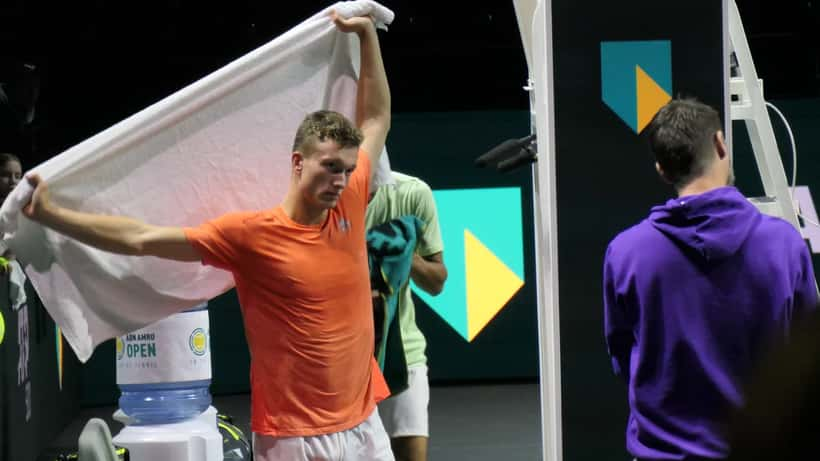
Jiří Lehečka's advance to the third round of the 2026 Rolex Shanghai Masters — part of a breakout season that included a Miami Open final appearance in March and a career-high ranking of No. 12 in May — has reignited a conversation about what actually separates the top 15 players in the world from those stuck outside the top 30. The answer, increasingly, runs through IT infrastructure. And for US sports clubs, college programs, and sports tech startups, that infrastructure gap is a surprisingly expensive problem to ignore.
What Lehečka's Shanghai Campaign Tells Us About Modern Tennis
On October 8, 2026, at the Qi Zhong Tennis Center in Shanghai, the 24-year-old from Prague opened his Shanghai Masters campaign with what Czech sports media described as an "excellent performance," dispatching his opponent with the tactical precision that has defined his year. His technical team is known for building detailed, match-specific game plans rooted in shot-placement data and opponent tendency analysis — using the live tracking output from the ATP Tour's Hawk-Eye system, which captures ball position and velocity thousands of times per second across all tour events.
The ATP Tour has deployed Hawk-Eye Live across its entire Masters 1000 circuit. The system generates granular spatial data — serve placement to within two centimeters, return depth, net clearance, rally ball speed decay — that coaching teams can access post-match or, at higher-tier events, in near-real time between sets. Players ranked in the top 20 increasingly employ dedicated performance analysts who run custom data pipelines against this output.
For Lehečka, the evidence shows in specifics: a first-serve percentage that ranks among the tour's best on hard courts in 2026, and a return game that has measurably tightened since his team began systematic opponent-pattern analysis in late 2024. From a career high of No. 52 in January 2025 to No. 12 by May 2026, the trajectory is unusually steep — and data-informed preparation is a documented factor.
The Trickle-Down Effect: US Sports Organizations Trying to Keep Up
This analytics approach — once limited to elite federations and Grand Slam programs — is now aggressively marketed to US college athletic departments, club academies, and amateur leagues. The tools themselves are accessible: platforms like Playsight, CoachMePlus, Catapult, and Dartfish offer subscription-based analytics packages designed for organizations without pro-level IT teams. The ATP Tour's technology has direct consumer equivalents.
What these platforms rarely advertise is how much depends on the infrastructure behind them. Video-based tracking systems require sustained high-bandwidth connections; wearable sensor integrations demand specific Bluetooth or ANT+ protocol handling; cloud data syncing for coaching dashboards needs carefully configured firewall and QoS settings. And when those components aren't correctly configured, a $15,000-per-year analytics subscription produces nothing more than a screen full of error messages.
The US amateur tennis landscape has hundreds of clubs and college programs that have discovered this the hard way in the past two years — investing in analytics platforms that underperform because no one assessed the underlying network, hardware, or data pipeline needs before launch.
The Concrete Case: A College Club in Ohio That Almost Abandoned Its Analytics Platform
Consider a scenario that IT consultants are increasingly called to address across the US.
A 120-member tennis club affiliated with a Division III college in Columbus, Ohio, invests in a camera-based player tracking package in early 2026, paying a $14,400 annual subscription fee. The head coach wants video-based serve-speed analysis and rally-pattern visualization for the club's eight competitive juniors.
Within six weeks of installation, sessions are dropping mid-match. Data isn't syncing to the coaching dashboard. The tablets used for on-court review are displaying cached data from three days prior instead of live feeds.
An IT consultant brought in after two months of troubleshooting diagnoses three problems within a two-day assessment:
First, the club's 50 Mbps shared connection — used simultaneously for member check-ins, a POS system, and general office use — cannot sustain the bandwidth demand during peak practice hours. The analytics platform requires a dedicated 30 Mbps floor; the club is averaging 8–11 Mbps available during afternoon sessions. Fix: a business-grade fiber upgrade with VLAN segmentation separating analytics traffic. Annual added cost: $2,160.
Second, the Android tablets used for coaching review are running Android 10, which was dropped from the platform's supported SDK in a March 2026 update. The app's real-time sync feature simply does not function on Android 10 or earlier. Fix: two tablet hardware replacements at $580 each. One-time cost: $1,160.
Third, the club's router — a consumer-grade device installed five years ago — has no QoS configuration, meaning video streaming data packets are given no priority over routine web traffic during congested periods. The consultant reconfigures traffic prioritization in under an hour.
Total consulting cost for the diagnostic and remediation session: approximately $1,800 at standard IT consulting rates. Total hardware and connectivity upgrade cost: $3,320. The platform that had been effectively non-functional for two months was fully operational within one week.
If your US club or sports program has invested in an analytics platform and it consistently underperforms — dropped sessions, sync errors, stale data in dashboards — the issue is infrastructure in the majority of cases. An IT consultation of four to eight hours will either confirm this and provide a fix, or rule it out entirely. Against a $10,000–$20,000 annual platform subscription, that diagnostic cost is almost always the right first call.
Three IT Decisions That Sports Organizations Routinely Get Wrong
Beyond diagnostics, IT consultants bring structured decision-making to three choices that sports organizations regularly mishandle.
Platform selection: Vendors have strong incentives to oversell platform capabilities relative to your specific environment. An independent IT consultant — with no commission at stake — evaluates which platform actually integrates with your existing hardware, network, and coaching workflow before you sign a multi-year contract.
Data privacy compliance: US sports organizations collecting biometric data from wearables — heart rate, GPS coordinates, movement velocity — may be operating under state-level biometric privacy laws without knowing it. Illinois's Biometric Information Privacy Act has resulted in significant litigation against sports and wellness companies. California's Consumer Privacy Act includes wearable device data within its scope. Several other states have passed or are advancing similar legislation. The California Attorney General's CCPA guidance provides the most comprehensive publicly available framework for understanding what these obligations mean for data-collecting organizations. An IT consultant helps structure data collection, storage, and deletion practices to comply before a violation becomes a legal liability.
Scalability architecture: A platform that performs adequately for 25 athletes typically requires significant infrastructure changes to function at 150. Organizations that don't plan for this upfront end up paying for a full platform migration — the most expensive IT outcome — instead of a simple capacity upgrade. Getting architecture advice at the start costs a fraction of what a migration costs later.
What Professional IT Consultants Actually Do Differently
The distinction between a software vendor's support team and an independent IT consultant is, in practice, the difference between someone who troubleshoots within their own product and someone who looks at your entire technical environment.
A qualified IT consultant for sports analytics implementations will assess network infrastructure against platform requirements, identify hardware compatibility issues before they cause operational failures, map API connections between your data sources and your dashboard tools, and — critically — advise on what you do not need. A significant share of sports analytics consulting work involves identifying unnecessary or incompatible purchases before an organization makes them.
The ATP Tour's Hawk-Eye system works seamlessly for professional players because the venues it runs in are purpose-built for it, with dedicated infrastructure and professional IT operations teams. Recreating even 20% of that capability at the club level requires a smaller but structurally similar investment in the technical foundation.
Lehečka's third-round berth at Shanghai in 2026 reflects what's possible when the data works the way it's supposed to. For US sports organizations asking whether they can access that kind of precision at their level, the answer is yes — if the IT infrastructure underneath the platform is correctly configured. That's not a job for a vendor helpdesk. That's a job for an IT consultant.
If your organization is planning a sports analytics implementation, or has a platform that isn't performing as expected, an IT specialist can assess your environment and provide a concrete remediation plan. ExpertZoom connects you with independent IT consultants who work with sports organizations, club programs, and athletic departments across the United States.
