 Laura Clark
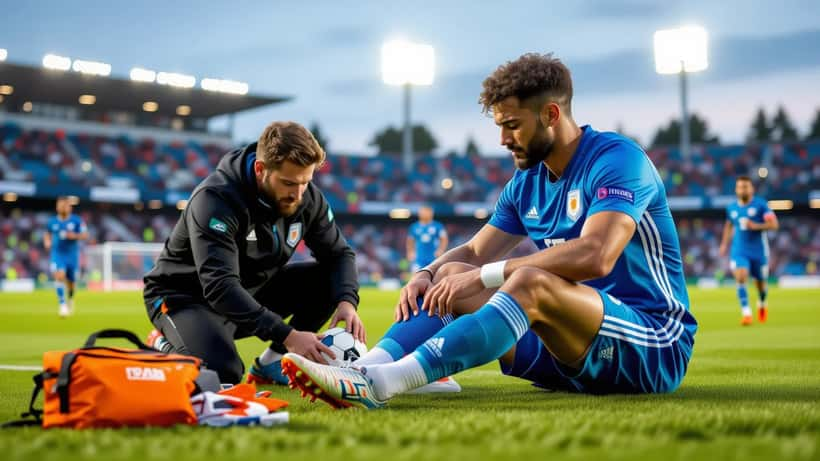
Leon Bailey will miss Jamaica's opening match of the 2026–27 CONCACAF Nations League on September 25, 2026, after picking up an ankle injury during his club campaign with Olympiacos in the Greek Super League. For Reggae Boyz supporters across the United States, it's a tactical blow heading into a high-stakes Group B clash at Independence Park in Kingston against Guatemala. But for the roughly 16 million adult recreational soccer players in the US, Bailey's diagnosis carries a more practical message: knowing when a twisted ankle requires a sports medicine specialist rather than a bag of ice.
The Match: Jamaica vs. Guatemala Opens CONCACAF Nations League Group B
The 2026–27 CONCACAF Nations League kicked off its group stage this week, and Group B is already marked by depleted squads and form questions. Jamaica and Guatemala meet tonight at Independence Park, Kingston, with the match broadcast in the United States at 7:50 PM ET on Fox Sports.
Jamaica's most celebrated wide player is unavailable. Bailey — an explosive attacker known for quick lateral cuts and acceleration — sustained his ankle injury in club play with Olympiacos weeks before the Nations League began. Jamaica's coaching staff chose not to risk him, and the absence reshapes their attacking options against a Guatemala side that has been struggling badly throughout 2026.
Guatemala enters under Luis Fernando Tena having lost all four international friendlies this calendar year — against Canada, Algeria, Czechia, and Ecuador — conceding 14 goals and scoring just one. A 7-0 defeat to Algeria in March 2026 exposed deep defensive vulnerabilities. Midfielder Arquímedes Ordóñez and defenders José Pinto and José Ardón are also missing for Guatemala, adding further injury absences to a squad that badly needs a result.
Those interested in broader context on CONCACAF contenders and the World Cup cycle can read our coverage of who remains in contention in 2026.
Anatomy of a Soccer Ankle Injury: What Sports Medicine Specialists Actually See
Ankle sprains are the most common time-loss injury in soccer, accounting for approximately 20 to 25 percent of all injuries that result in missed playing time, according to data from the National Institute of Arthritis and Musculoskeletal and Skin Diseases (NIAMS). Players in Bailey's role — wide attackers who accelerate, cut, and pivot laterally — carry above-average ankle risk because of the repeated lateral force their technique demands.
Sports medicine physicians classify ankle sprains into three grades that determine the treatment path completely:
Grade 1 sprains involve overstretching the lateral ligaments without tearing them. Typical recovery time is 7 to 14 days with RICE management — rest, ice, compression, elevation.
Grade 2 sprains involve partial ligament tearing. Recovery requires 4 to 6 weeks of structured physical therapy and progressive loading. Return to sport without rehabilitation guidance significantly increases re-injury risk.
Grade 3 sprains involve complete ligament rupture. Surgical consultation is often required, and full return to competitive play typically takes 4 to 6 months, depending on the player's position, age, and surgical findings.
The crucial diagnostic challenge is that Grade 1 and Grade 2 injuries feel nearly identical in the first 24 to 48 hours. Both produce swelling, limited range of motion, and pain on weight-bearing. Without specialist imaging and clinical assessment, a player returning on a Grade 2 injury as if it were Grade 1 faces re-injury odds that are 2 to 5 times higher than the baseline, according to NIAMS guidelines.
Why Bailey's Absence Is the Right Call — Even When It Hurts
For professional clubs and national federations, the decision to hold an injured player out of a competitive match is driven by clinical data — X-rays, MRI findings, load-testing results — rather than the player's stated pain tolerance. This is exactly where self-management by amateur players diverges dangerously from professional protocols.
Jamaica's medical staff made the call that playing Bailey on an incompletely rehabilitated ankle presented too high a risk, both for the specific injury and for the cumulative damage that a re-sprain during an intensive international window could cause. That logic applies at every level of the sport, from professional internationals to Sunday league defenders in suburban Chicago.
Case Scenario: The Weekend Warrior With a Twisted Ankle in Atlanta
Consider the following realistic situation: a 36-year-old left back in an adult soccer league in Atlanta rolls his right ankle during a match on Sunday, September 28, 2026. He finishes the game, ices the ankle that evening, and takes ibuprofen. By Monday afternoon, the swelling has reduced by roughly half. He assumes he has a minor sprain and plans to play again the following weekend.
If the following conditions all apply, he likely has a Grade 1 sprain and conservative management is appropriate:
- Weight-bearing is possible, even if uncomfortable, within 24 hours
- No bruising extends below the ankle onto the sole of the foot
- There is no direct tenderness over the fibula bone itself — only over soft tissue
Expected return to play with RICE: 7 to 12 days.
If, however, any of the following is present, he needs a sports medicine consultation before returning to the pitch:
- Bruising wrapping beneath the ankle to the sole within 6 to 12 hours of the injury (suggests ligament tearing or fracture)
- Point tenderness directly over the lateral malleolus (bony prominence), meeting the Ottawa Ankle Rules criteria for X-ray
- Inability to take four full steps immediately after the injury and again at 72 hours
The cost of a single sports medicine consultation in the United States ranges from approximately $150 to $350 out-of-pocket for an uninsured patient. The cost of a surgical reconstruction for chronic ankle instability — the outcome of repeated Grade 2 sprains left unmanaged — ranges from $8,000 to $20,000 in surgical and rehabilitation fees, not counting lost workdays.
Missing a weekend match to get a proper diagnosis costs an afternoon. Returning on an incompletely healed ankle and tearing the ligament completely can cost a full season.
Guatemala's Injury Roster and the Lesson for Recreational Teams
Guatemala's situation this CONCACAF cycle carries a broader organizational warning. The Chapines are entering Nations League competition with multiple key absences — Ordóñez, Pinto, and Ardón are all unavailable — and the cumulative effect on their 2026 form has been visible: 14 goals conceded across four matches, one scored.
For amateur clubs and recreational teams in the US, the parallel isn't tactical — it's systemic. Teams that lack any return-to-play protocol routinely carry players who are partially recovered from ankle, knee, or hamstring injuries. Those players re-injure at significantly higher rates, and the pattern compounds across a season.
A sports medicine specialist or team physician working with a recreational club can establish simple return-to-play criteria: functional movement benchmarks, strength symmetry tests, and sport-specific loading progressions. These don't require a professional infrastructure. They require one consultation to set the protocol.
When Your Soccer Injury Needs More Than Rest
For recreational players watching tonight's Jamaica–Guatemala match and thinking about their own injury history, the clinical threshold for seeking specialist evaluation is specific:
See a sports medicine physician or orthopedic specialist if:
- You cannot bear full weight 72 hours after the ankle injury
- Bruising extends below the ankle onto the plantar surface of the foot within 12 hours
- There is direct bony tenderness (not just soft tissue swelling) over the fibula or navicular
- A previous sprain on the same ankle never fully recovered before this one occurred
- The ankle re-sprains on a lateral cut within three to six months of the original incident — a strong indicator of chronic instability
Each of these signs corresponds to a specific clinical finding that conservative home management cannot adequately address. A sports medicine specialist can apply the Ottawa Ankle Rules, order imaging where indicated, and design a rehabilitation protocol tailored to the player's age, position, and return-to-sport timeline.
Leon Bailey will likely be back on the pitch before this CONCACAF Nations League group stage concludes. The amateur player who skips the specialist visit and returns on an uncleared ankle may not be.
Medical disclaimer: This article is for informational purposes only and does not constitute medical advice. Consult a qualified healthcare professional for any injury evaluation, diagnosis, or treatment.
