 Emily Wang
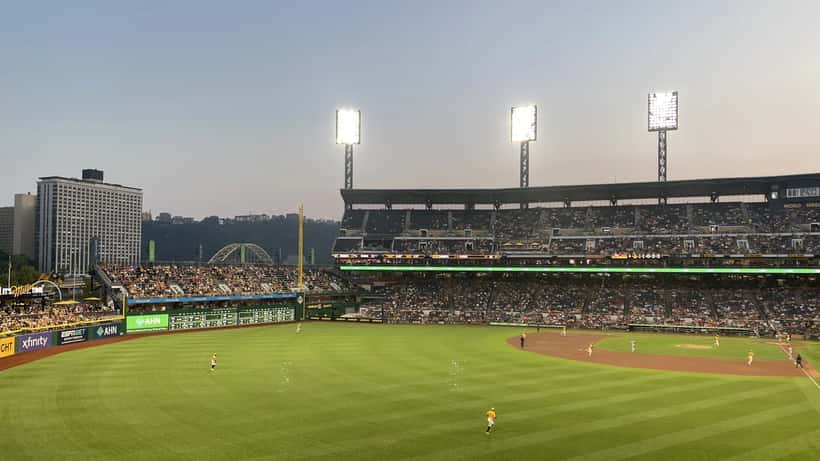
Pittsburgh Pirates outfielder Jake Mangum became a social media sensation on April 19, 2026, when he jogged to the left-field warning track after an inning and tossed a baseball to a young girl wearing his jersey — her brother caught it and handed it over in a moment captured by MLB cameras and widely shared online. It was pure baseball joy. It also raised a question that stadium lawyers think about constantly: who is legally responsible when objects move between the field and the stands?
The Viral Moment and What It Reveals
Mangum, batting .283 through 17 games for the Pirates, made the gesture spontaneously after a fly ball out. The throw was casual, the distance short, and the result heartwarming. But in the world of spectator safety law, that same moment — a ball traveling from field to fan area at speed — is the mechanism behind thousands of injury lawsuits filed across Major League Baseball every year.
The difference between a celebrated story and a legal claim is centimeters and timing. A ball tossed gently to a waiting child is wholesome. A foul ball traveling at 100 mph into an unprotected section of seats is a potential traumatic brain injury. Both happen at the same ballpark. The legal protections available to injured fans are not always what ticket holders expect.
The Baseball Rule: What It Actually Says
For decades, American courts applied what lawyers call the "Baseball Rule" — a doctrine shielding stadium operators from liability for injuries caused by foul balls or thrown balls in areas where protective netting was not required. The theory was simple: spectators assume the risk of balls entering the stands, especially in premium areas close to the field.
That doctrine has been significantly narrowed in recent years. Following a wave of serious injuries — including a two-year-old girl who suffered a skull fracture from a foul ball at a Houston Astros game in 2019 — Major League Baseball required all 30 teams to extend protective netting to the far ends of the dugouts by the 2020 season. Most teams went further. Several now net the entire lower bowl from foul pole to foul pole.
But "net the lower bowl" is not the same as "net everywhere." Upper decks, outfield bleachers, and standing-room areas remain largely unprotected at many stadiums. The CDC's Heads Up concussion awareness program notes that head injuries from impacts — including blunt trauma from fast-moving objects — are among the most commonly underreported sports-related injuries. Spectators outside the extended netting zones still bear significant assumption-of-risk exposure under most state laws, and those same head injury risks apply to fans as much as to players.
When the Baseball Rule Does Not Protect Stadium Owners
Assumption of risk is a defense, not an absolute bar. Courts in multiple states have found stadium operators liable when:
- Protective netting was inadequate for the velocity or trajectory of balls in that section
- Warning signage was absent or illegible — teams are required to notify fans of the foul ball hazard, typically on tickets, signage, and PA announcements
- Sight lines were obstructed, preventing fans from seeing incoming balls that a reasonable person would have avoided
- The injured party was a child or a person with a disability who could not be expected to react to a projectile
A 2023 Texas state court ruling — cited extensively in sports liability legal reviews — found that the "Baseball Rule" cannot be mechanically applied to shield operators who failed to provide minimum reasonable protection in areas where injuries were predictable and frequent.
What to Do if You're Injured at a Sporting Event
If you or a family member is struck by a ball, bat, or other projectile at a stadium or sports arena, the window to protect your legal rights is short:
- Seek medical attention immediately — even if the injury seems minor. Concussions and internal injuries are often underestimated in the adrenaline of a live event.
- Report the incident to stadium security or guest services before leaving. This creates an official incident report that is critical for any future claim.
- Preserve your ticket and any photographs of the section, the netting configuration, and your injury.
- Do not sign any documents offered by stadium personnel on the day of the incident — these may include liability waivers.
- Consult a personal injury attorney who handles premises liability and sports venue cases. Most states have a two- to three-year statute of limitations for these claims.
The Bigger Liability Picture at Sporting Venues
The Mangum story is joyful precisely because it ended well. But the spectator safety framework exists because it does not always end well — an estimated 1,750 fans are injured by foul balls each MLB season, according to data cited in academic sports safety research. Stadiums invest heavily in liability management: the netting extensions, the ticket disclaimers, the PA warnings. That investment signals an awareness that the risk is real and the legal exposure is significant.
Knowing your rights as a spectator does not diminish the experience of a live game. It means that if something goes wrong — as it sometimes does — you are not left navigating an injury, medical bills, and an insurance claim without knowing where you stand.
ExpertZoom connects you with personal injury and premises liability lawyers who handle sporting event cases across the United States.
Disclaimer: This article is for informational purposes only and does not constitute legal advice. Consult a licensed attorney in your jurisdiction for guidance specific to your situation.
