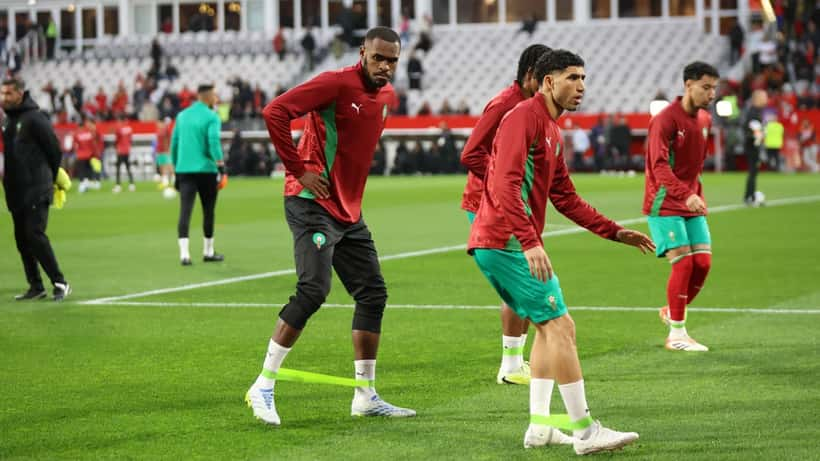
 Carl Graham
At 11:47 p.m. Eastern Time on June 29, 2026, Issa Diop — a 28-year-old defender born in Toulouse, France — headed a cross into the back of the net at SoFi Stadium in Los Angeles, giving Morocco a dramatic 1-1 equalizer against the Netherlands in the FIFA World Cup Round of 32. The goal stunned the Dutch, electrified a majority-Moroccan crowd, and put the Atlas Lions back in contention. But almost no one in the stadium knew the legal journey that had to happen first.
Before Diop could pull on Morocco's red jersey, he had to formally renounce his eligibility for France, prove family ties to Morocco, submit documentary evidence to FIFA, and wait for an international bureaucratic body to approve his request. In short: he needed a lawyer's level of preparation.
From Toulouse to the Atlas Lions
Issa Laye Lucas Jean Diop was born on January 9, 1996, in Toulouse, France. He came through French football's youth system and earned four caps for the France Under-21 side between 2017 and 2019. At club level, his profile rose sharply: West Ham United signed him for a then-club-record £22 million in 2018, and Fulham brought him to Craven Cottage in 2022 on a five-year deal worth £70,000 per week.
Yet for all his Premier League pedigree, France's senior side never called. Coach Didier Deschamps consistently passed on Diop in favor of other center-backs. After years of waiting, and with a World Cup approaching in North America, Diop made a decision that required far more than a phone call to a federation.
His mother is Moroccan; his father is Senegalese. Under FIFA's eligibility rules, those biological ties were the foundation for a switch — but biology alone was not enough.
What FIFA's Nationality Switch Rules Actually Require
Since 2021, FIFA has permitted players to change international allegiance under its Regulations on the Status and Transfer of Players. The process is strict. According to FIFA's eligibility framework, a player seeking a one-time association change must satisfy three conditions simultaneously:
- Hold the nationality of the target country — not just a family connection, but an actual passport
- Not have played in an official "A" international match at senior level for their current association
- Demonstrate a genuine territorial link — a parent or grandparent born on the territory of the new association, or continuous residence of at least two years
Diop met all three. He held French citizenship but had never competed in a competitive senior fixture for France's first team. His mother was born in Morocco. On March 19, 2026, Morocco announced his first call-up. One week later — March 26, 2026 — FIFA formally cleared Diop to wear Morocco's colors, alongside Ajax midfielder Rayane Bounida and seven other players whose cases were processed simultaneously.
Diop made his Morocco debut shortly after and was included in the 26-man World Cup squad on May 26, 2026. Less than six weeks later, he was heading in one of the tournament's most dramatic equalizers.
Cases like his are not unique to football. As documented in the ExpertZoom article on Zion Suzuki, the New Jersey-born goalkeeper who plays for Japan, dual-nationality eligibility questions are increasingly common for athletes — and for ordinary citizens.
The Documents Behind the Dream
What most fans don't realize is that a FIFA nationality switch looks less like a transfer and more like an immigration case. Players must typically submit:
- Birth certificates of the relevant parent or grandparent born on Moroccan territory
- Evidence of the player's own Moroccan nationality — meaning an actual Moroccan passport
- Proof that no competitive senior caps were earned for the original association
- Official confirmation from the original federation releasing the player from eligibility
- A formal application through FIFA's Change of Association platform
For a player like Diop — born in France, raised in French football, holding a Moroccan mother — the paper trail required coordination between French football authorities, the Royal Moroccan Football Federation, FIFA headquarters in Zürich, and multiple government registries across three countries.
Sports lawyers who specialize in international player eligibility routinely manage these processes. A single missing document can stall approval for months — or an entire qualifying campaign.
Dual Citizenship and the Everyday American
Diop's case resonates well beyond the football pitch. An estimated 7 to 9 million Americans live abroad and hold dual or multiple nationalities. Millions more living inside the United States hold citizenship in a second country — from Mexico and the Dominican Republic to India, the Philippines, and Morocco.
The U.S. Department of State's guidance on dual nationality makes clear that the United States does not prohibit dual nationality but does not formally approve it either. The State Department applies a general presumption that an American who acquires foreign citizenship intends to retain U.S. nationality — but the presumption has limits, and certain voluntary acts can trigger a loss-of-citizenship review.
The IRS compounds the complexity: the United States taxes citizens and permanent residents on worldwide income regardless of where they live or what other passports they carry. Dual nationals who fail to file Foreign Bank Account Reports or comply with FATCA requirements can face substantial penalties — a trap that catches thousands of people every year who thought holding two passports was simply a travel convenience.
When Should You Consult a Lawyer?
Issa Diop's situation was managed within the structured ecosystem of professional football, with the Moroccan federation's legal team and FIFA's administrative process guiding every step. For the average person navigating dual citizenship, no such institutional infrastructure exists.
A qualified immigration or nationality lawyer can help you:
- Assess eligibility for citizenship by descent in a second country and gather the required documentation
- Understand the U.S. tax implications of holding two passports, particularly FBAR and FATCA filing obligations
- Protect your existing citizenship when acquiring another nationality, identifying which voluntary acts carry legal risk
- Handle renunciation of a foreign citizenship and its procedural requirements in the relevant country
- Review estate planning when assets or beneficiaries straddle multiple legal systems with conflicting inheritance rules
Disclaimer: This article is for informational purposes only and does not constitute legal advice. Citizenship and nationality law varies significantly by country. Consult a qualified attorney for guidance specific to your situation.
The 91st Minute — and What It Represents
Morocco's equalization on June 29, 2026, was years in the making. It required Issa Diop to identify a legal pathway that existed, gather the evidence to use it, submit to an official process, and wait for clearance from a global regulatory body before a single minute of football could be played.
The same logic applies to dual citizens in the United States weighing whether to claim a second passport, renounce a foreign nationality, or simply understand what holding two citizenships means for their taxes, estate, and rights.
As Diop demonstrated with one 91st-minute header: preparation, documentation, and the right guidance make the difference. If you have questions about dual nationality, international eligibility, or citizenship law, ExpertZoom connects you directly with experienced immigration and nationality lawyers who can assess your situation.
