 Ava Miller
March Madness Is Here: Iowa Women's Basketball and the Health Issues Every Female Athlete Faces
Iowa women's basketball tipped off their first-round NCAA Tournament game today, March 21, 2026, at Carver-Hawkeye Arena against No. 15-seed Fairleigh Dickinson — a sold-out game in a sold-out bracket that has the whole country watching. The No. 2-seeded Hawkeyes (26-6) are one of the tournament favorites, and players like senior Hannah Stuelke and center Ava Heiden are drawing attention from scouts and fans alike.
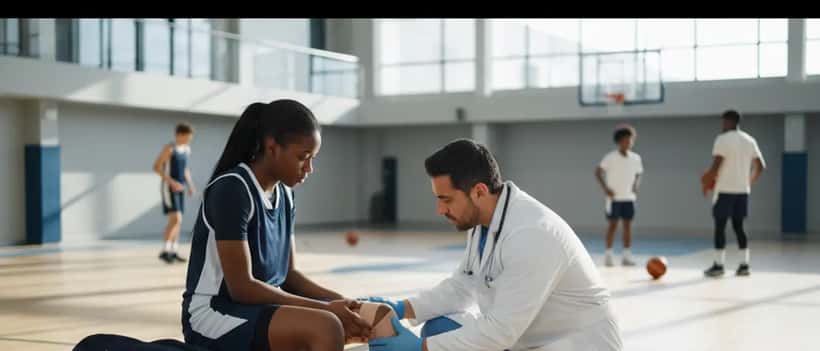
But behind every elite female athlete is a set of health challenges that the sports medicine world is only now beginning to fully address — challenges that matter not just for NCAA stars, but for millions of women who play recreational and high school sports across the United States.
Why Iowa Women's Basketball Is Trending Right Now
The Hawkeyes enter the tournament riding momentum from a Big Ten semifinal victory over No. 8 Michigan (59-42), and despite a difficult championship loss to UCLA, they earned the No. 2 seed in the Sacramento Regional. Potential opponents include No. 3 TCU and the formidable No. 1 seed South Carolina.
The matchup against Fairleigh Dickinson — a 30-4 team with 22 consecutive wins — is far from a guaranteed easy first round. Women's basketball has never attracted this level of mainstream attention, and the 2026 tournament represents a high-water mark for the sport.
That visibility matters for health conversations too. When elite female athletes are in the spotlight, the specific medical challenges they face come into focus.
The ACL Crisis in Women's Basketball
The most urgent issue is one that has been visible all season: ACL injuries. According to research published by the Cleveland Clinic, female athletes sustain ACL tears at a rate 3.5 times higher than male athletes in comparable sports. In basketball specifically — with its demands of jumping, rapid direction changes, and defensive footwork — that disparity is acute.
January 2026 coverage from the Spokesman-Review noted that ACL tears have continued to sideline women's basketball stars at an alarming rate, cutting short seasons and careers. Anatomical differences including wider hip angles, looser ligament laxity, and relatively weaker hip and knee stabiliser muscles all contribute. Biomechanical training can reduce risk, but access to qualified sports medicine practitioners who understand female anatomy is uneven.
A $50 million research initiative announced in early 2026 by a coalition including the Women's Health, Sports & Performance Institute — co-founded by Dr. Kate Ackerman — is specifically targeting injury prevention research for female athletes, a field long understudied compared to male counterparts.
The Female Athlete Triad: What Coaches and Athletes Miss
Beyond ACL injuries, there is a second health pattern that is less visible but equally serious: the Female Athlete Triad, now formally recognised as Relative Energy Deficiency in Sport (RED-S).
The triad encompasses three interconnected problems:
- Low energy availability — when athletes burn more calories than they consume, sometimes due to intentional restriction, sometimes due to simple underestimation of training load
- Menstrual dysfunction — irregular or absent periods, which many athletes and some coaches dismiss as normal or even desirable
- Decreased bone mineral density — weakened bones that increase stress fracture risk
Research from the University of South Dakota published in 2026 found that structured educational interventions on the Female Athlete Triad significantly improve athlete awareness and help-seeking behaviour. The connection is direct: athletes experiencing psychological distress are twice as likely to sustain injuries. Underfuelling leads to overuse injuries — sprains, tendinitis, stress fractures — that sideline athletes who might otherwise be healthy.
Major medical systems including Johns Hopkins, UC San Diego Health, and Cleveland Clinic now offer dedicated women's sports medicine programmes. UChicago Medicine published guidance in February 2026 specifically on what women need to know about sports injuries — covering biomechanical risk factors, hormonal influences on ligament laxity, and the role of specialised care.
When Should Female Athletes See a Sports Medicine Specialist?
For recreational players, high school athletes, and adults who play basketball, soccer, or other court sports, the guidance is clear:
See a specialist promptly if you experience:
- Knee pain with swelling after a jump or directional change — rule out ACL, meniscal, or patellar injury
- Any sensation of the knee "giving way"
- Shin pain that worsens with activity and persists at rest (possible stress fracture)
- Ankle sprains that do not resolve within one to two weeks with standard RICE treatment
- Recurring injuries in the same area
Ask about the Female Athlete Triad if you or your athlete shows:
- Irregular or absent menstrual cycles
- Persistent fatigue disproportionate to training load
- History of stress fractures
- Body image concerns or disordered eating patterns
A sports medicine specialist — not just a general practitioner — will assess female-specific biomechanical risk factors, screen for RED-S, and create a return-to-sport plan based on the demands of your specific activity.
Iowa Women's Basketball Is Showing America What Female Athletes Can Do
The 2026 NCAA Tournament is a showcase for what happens when female athletes receive adequate coaching, support, and medical attention. It also draws attention to the gap that still exists for millions of amateur athletes who do not have team physicians and sports nutritionists on speed dial.
On Expert Zoom, qualified sports medicine specialists and orthopaedic doctors are available for consultations — so you do not have to wait for a problem to become serious before getting expert input.
Medical disclaimer: This article provides general health information and is not a substitute for professional medical advice. Always consult a qualified healthcare provider regarding any injury or health concern.
