 Odette Caplan
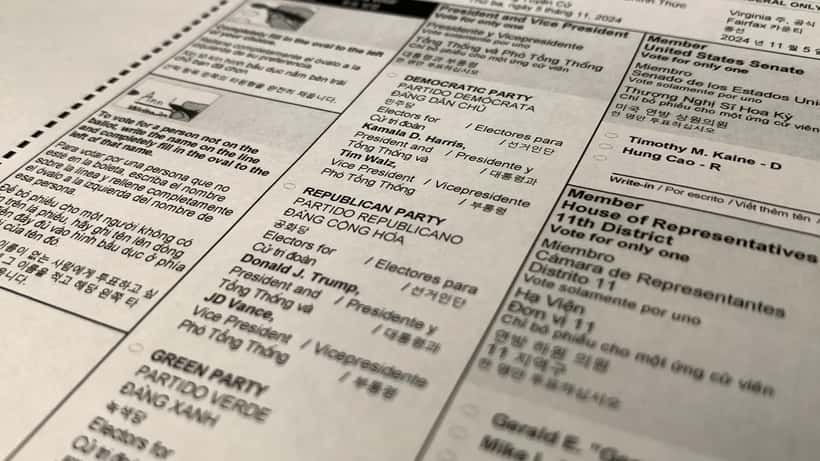
U.S. District Judge Indira Talwani removed her nationwide injunction blocking President Trump's mail-in voting executive order on August 26, 2026, following a Supreme Court ruling that found her earlier block overreached. The decision clears the path for the U.S. Postal Service to enforce new uniform mail-ballot standards for November's midterm elections — with the first absentee ballots scheduled to ship within days.
What Judge Talwani's Injunction Was Blocking
Judge Talwani, an Obama appointee serving on the U.S. District Court in Boston, issued a landmark ruling in June 2026 finding that key provisions of President Trump's executive order on mail-in voting were unconstitutional. Her nationwide injunction barred the Postal Service from implementing two specific rules:
- A requirement that states use a uniform envelope format for all mailed ballots
- A mandate that states provide USPS with a verified list of voters eligible to receive mail ballots
Talwani's reasoning was straightforward: USPS does not have unilateral authority to dictate election procedures to states, which retain primary jurisdiction over how ballots are administered. More than two dozen Democratic-led states signed on to challenges echoing her analysis, and voting rights groups obtained separate injunctions from other courts.
For several months, those injunctions held. Voters, election officials, and nonprofit advocacy organizations operated under the assumption that the 2026 midterm cycle would proceed under pre-existing envelope standards — the same standards that governed mail voting through 2024.
That assumption unraveled fast.
How the Supreme Court Changed Everything
On August 24, 2026, the Supreme Court moved to lift one of the two standing injunctions on Trump's mail-voting order, finding that the states challenging the rule had not yet demonstrated sufficient injury to justify a nationwide block. Two days later, facing a Supreme Court ruling that effectively undercut her legal basis for maintaining the injunction, Judge Talwani complied — removing her own block on August 26.
The SCOTUS decision was narrow but consequential. The Court did not rule on the constitutional merits of Trump's executive order. It ruled only that the lower courts had moved too quickly to grant sweeping nationwide relief before the harm was concrete enough to measure. That distinction matters enormously for anyone navigating the fallout.
According to Votebeat's reporting on the SCOTUS order, the USPS is now authorized to enforce the uniform envelope requirement and the voter eligibility list rule for November 2026. Legal challenges from the 24 states continue in parallel — meaning the situation may shift again before Election Day.
What This Means for Your Legal Rights
The rapid reversal from "injunction in place" to "injunction lifted" in the span of 48 hours illustrates a reality that many voters and organizations are unprepared for: a court ruling is not permanent protection. It is a legal position held at a particular moment, subject to higher court review, and it can change.
For voters, this creates a specific and urgent set of questions:
What if my mail ballot request no longer qualifies under the new USPS rules? Federal law, including the National Voter Registration Act, still provides baseline protections for voter registration and eligibility. A voter's right to cast a ballot is not extinguished by an administrative rule change. The mechanism for asserting that right, however, becomes more complicated — and that is exactly where a lawyer's involvement becomes valuable.
What if my state's list submission to USPS is late or incomplete? States are now required to provide USPS with verified voter eligibility lists. If a state submits that list late, or if a voter's name is omitted due to administrative error, mail ballot requests can be flagged or rejected. This is not necessarily a final determination — it is a procedural obstacle that a voter rights attorney can challenge.
What if I'm a nonprofit that told voters the injunction protected them? Organizations that communicated to their constituents that Talwani's injunction would hold through the election cycle now face a credibility and compliance problem. They need to rapidly update guidance — and potentially assess whether their previous communications created any legal exposure.
Scenario: The Pennsylvania Swing-State Voter
Consider the situation facing a registered voter in suburban Philadelphia who requested a mail-in ballot in July 2026, based on outreach materials from a voter advocacy nonprofit. Those materials correctly stated at the time that Judge Talwani's injunction was in effect, and that the 2026 mail-ballot process would follow existing envelope protocols.
By late August, everything changed. The voter's state must now submit its eligible voter list to USPS under the executive order's requirements. If this submission process has any lag — and state election officials across the country have flagged serious logistical concerns about the compressed timeline — the voter's name may not be verified in USPS's system before the first ballots ship.
Here is the if/then logic that a voter rights lawyer would walk through with that voter:
If the voter's ballot request is flagged or rejected due to a USPS list verification failure, then the voter retains the right to cast a provisional ballot in person at their county polling location on Election Day. Under the Help America Vote Act of 2002, provisional ballots must be offered to any voter who asserts eligibility but cannot be immediately verified. That ballot is then held and counted after election officials reconcile the records — typically within 6 to 7 days of the election under most state statutes.
The practical cost of navigating this path: a consultation with a voter rights attorney (typically $200–$400 for an initial hour at a private firm, or free through organizations like the ACLU or state-level election protection coalitions) can mean the difference between a counted ballot and one that slips through the cracks. For anyone who believes their name was incorrectly excluded from a USPS-approved list, an attorney can file for emergency injunctive relief in federal district court — the same avenue states have been using — to restore access before Election Day.
The window is narrow. If you need to act, you need to act in September, not October.
What the Ongoing State Challenges Mean for You
Twenty-four states continue to litigate their challenges to Trump's mail-voting executive order, as reported by WBUR. Their cases have not been dismissed — the Supreme Court simply found that the nationwide injunctive relief was premature at this stage. As those cases progress and courts receive more concrete evidence of voter harm, new injunctions could be issued at any time.
This creates a fluid legal landscape heading into the midterms. Election law specialists expect multiple rounds of emergency motions between now and early November. The courts that hear those motions will be weighing a fundamental question: at what point does administrative burden become an unlawful interference with the right to vote?
For individual voters, the practical implication is this: check your mail ballot status directly with your county election office — do not assume that a ballot requested weeks ago will automatically arrive or be counted under the new rules. If you receive any notice of a problem with your ballot, contact a voter rights attorney immediately. Do not wait for a second notice or for the issue to resolve itself.
Staying Ahead of Rapid Legal Changes in Election Law
The Talwani saga reflects a broader pattern that has defined American election law in recent years: rulings come fast, reversals come faster, and individual voters often bear the cost of the uncertainty in between. A judge can issue a nationwide block that holds for months, then lift it in compliance with a higher court order within a business day. Voters who based their plans on the block can be left scrambling.
The legal system does provide remedies — but those remedies require someone who knows how to use them. A voter rights attorney understands the procedural options available at each stage: emergency injunctions, provisional ballot rights, post-election challenges, and administrative appeals to state election boards.
If you are a voter, an election worker, or an organization operating in this environment and you are uncertain about your rights under the current state of the law, consulting with a qualified election law attorney is the most direct step you can take to protect your vote.
Election law does not wait. The ballot deadlines do not pause for legal uncertainty. Knowing your options before the problem arrives is always better than seeking help after a ballot has already been rejected.
This article is for informational purposes only and does not constitute legal advice. Election law varies by state and evolves rapidly. Consult a qualified attorney for guidance specific to your jurisdiction and circumstances.
