 Evelyn Carter
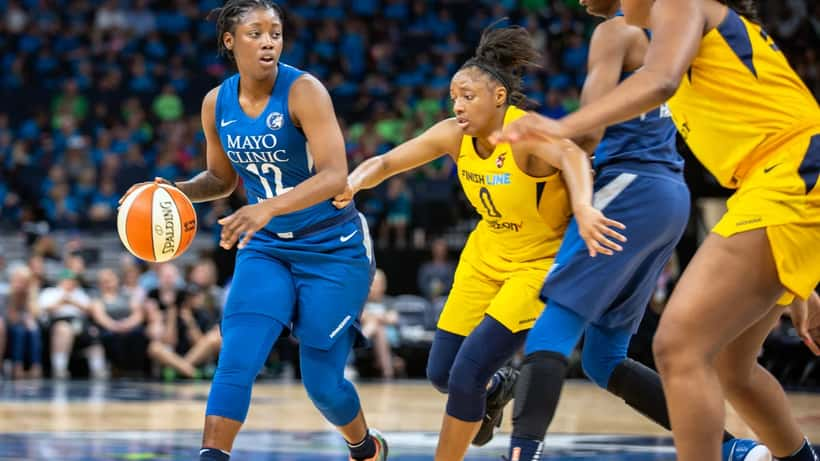
Tonight, the Indiana Fever and Minnesota Lynx tip off at Target Center in Minneapolis at 8 p.m. ET on USA Network — the third and decisive meeting of a 2026 series split one game apiece. Caitlin Clark returns to the floor for Indiana after the Fever's dominant 96-77 victory on September 22. The Lynx look to reclaim home-court momentum behind the backcourt duo that powered their August 2 win: Olivia Miles with 28 points and Courtney Williams with 27. It's the kind of rivalry matchup the WNBA was built on. But behind the spectacle is a 2026 season defined by a league-wide health crisis that most fans haven't noticed — and one that affects every recreational basketball player watching from home.
A Record-Setting Year for Injuries
The 2026 WNBA season has logged 178 documented injuries and 644 games lost through mid-season, tracking on pace to set an all-time league record, according to data compiled by The IX Sports injury tracker. The rate — approximately 55.7 injury incidents per 1,000 athlete-games — stands out even by professional sports standards. In a league where 12 teams share rosters of 12 players each, a single injury cluster can reshape an entire playoff picture.
The dominant injury categories are lower-extremity across the board. Ankle sprains, plantar fascia tears, patellar tendinitis, and stress fractures account for the majority of documented 2026 cases. High-profile players who entered the season managing health concerns included Aliyah Boston of the Indiana Fever, who sustained a right lower-extremity injury during Unrivaled 3-on-3 winter play, and Satou Sabally, whose concussion from the prior WNBA season was compounded by a foot issue being monitored for its impact on lateral movement.
Medical staff across the league attribute the spike to a single systemic driver: compressed recovery windows. Most WNBA athletes compete for 10 to 11 months per year — through their WNBA season, fall and winter international leagues, the Unrivaled winter circuit, and USA Basketball commitments — before reporting to WNBA training camp with minimal rest. The toll is not only muscular. Full athletic recovery demands nervous system restoration, joint stabilization rebuilding, and soft tissue repair. Returning to structured training before these processes complete elevates injury risk at every subsequent point in the season.
That is the physiological context surrounding tonight's Fever-Lynx game. Both teams are fielding rosters managed through a physically demanding 2026 schedule, with medical staffs making real-time calls on availability, load management, and clinical return-to-play clearance.
What Sports Medicine Experts See Off the Court
The injury patterns playing out in the WNBA this season are not exclusive to elite athletes. Sports medicine physicians see the same mechanisms at work across every level of basketball — from Division III college programs to the adult recreational leagues running in gyms across Indianapolis and Minneapolis every weeknight.
The gap is not in the injury itself. It's in the response.
WNBA athletes have immediate access to board-certified orthopedic surgeons, team athletic trainers, and sports medicine specialists. When Miles or Clark tweaks an ankle during warmups, a clinical evaluation happens within minutes. Rehabilitation is structured, progressive, and monitored daily. Return-to-play decisions involve measurable criteria — range of motion, strength ratios, proprioception testing — not optimism.
Most recreational players have none of that infrastructure. The default response to a basketball injury is to wait, tape, and return before the underlying issue has resolved. That gap is precisely where expert consultation provides its greatest value.
The broader WNBA standings race in 2026 has been shaped significantly by these injury management decisions, with teams that invested in preseason sports medicine infrastructure showing measurably better availability rates across the season.
According to the American Academy of Orthopaedic Surgeons, ankle sprains — the most frequent basketball injury at every level of play — require professional evaluation when pain persists beyond 72 hours, when significant swelling or bruising develops, when the athlete cannot bear weight without compensation, or when symptoms return after resuming activity. Missing any of those thresholds is how a Grade 2 sprain escalates into chronic ankle instability — a condition that impairs athletic function long-term and increases re-injury risk by 40–60% per sports orthopedics research.
This article is for general educational purposes. Any sports injury should be evaluated by a qualified healthcare professional before returning to activity.
A Concrete Case: The Cost of Playing Through It
Here is a scenario that mirrors what sports medicine clinics are seeing across the country as the Fever-Lynx rivalry builds its audience.
A 36-year-old recreational basketball player in Minneapolis plays twice a week in an over-35 league. After watching the Fever's September 22 win, she joins her next scheduled game with her usual intensity. Landing from a jump stop, she rolls her left ankle — a lateral sprain with moderate outer-ankle swelling. She's had sprains before. She takes five days off, wraps it, and returns for the following game.
In her first session back, she unconsciously compensates for ankle instability by shifting load to her left knee. Two sessions later, she develops patellar tendinitis in the same leg. Four sessions in, she is now managing two simultaneous injuries.
If she had seen a sports medicine physician within 48 hours of the original sprain: A clinical assessment would have classified the injury as a Grade 2 lateral ankle sprain, prescribed a three-week progressive rehabilitation protocol — range-of-motion work in week one, resistance loading in week two, sport-specific movement drills in week three — and cleared her return with functional bracing. Estimated recovery: 21–28 days.
By waiting and returning without clearance: Her recovery timeline now extends to 60-plus days for both injuries combined. Her 12-month re-injury risk to the same ankle is 40–60% higher than if the sprain had been clinically managed from the start. An initial sports medicine consultation in the $175–300 range has been replaced by multiple appointments, a physical therapy referral, and months of compensated movement patterns that carry their own downstream risks.
The math is straightforward. Early expert intervention is faster, more effective, and ultimately less expensive in every realistic scenario.
When to Stop Managing It Yourself
Tonight's Fever-Lynx game is a real-time demonstration of what elite athletic bodies are capable of when they have professional medical support behind every decision. For the millions of recreational players watching from home, the same principle scales down directly.
If you have been playing through a basketball injury — managing it with rest days, ibuprofen, and tape without seeking clinical evaluation — these are the indicators that it's time to book an appointment:
- Pain persisting beyond 72 hours after an acute injury event, even with rest
- Recurring discomfort in the same joint or tendon across multiple sessions
- Swelling that returns after activity even if it subsides at rest
- Pain in a different joint than the original injury — this is compensatory loading, not coincidence
- Any instability, giving-way, or locking sensation in an ankle or knee
- Numbness or tingling in the foot or lower leg after an acute injury
A sports medicine consultation provides a specific diagnosis, a structured rehabilitation timeline, and evidence-based return-to-sport clearance. That's the same standard of care the Indiana Fever and Minnesota Lynx medical staffs are providing their athletes tonight. Recreational players deserve the same level of expert assessment — and with Expert Zoom's network of sports medicine specialists and orthopedic professionals, that consultation is more accessible than most people realize.
Stop playing through it. Book the appointment. Get back on the court on a timeline grounded in clinical data, not guesswork.
