 Ava Miller
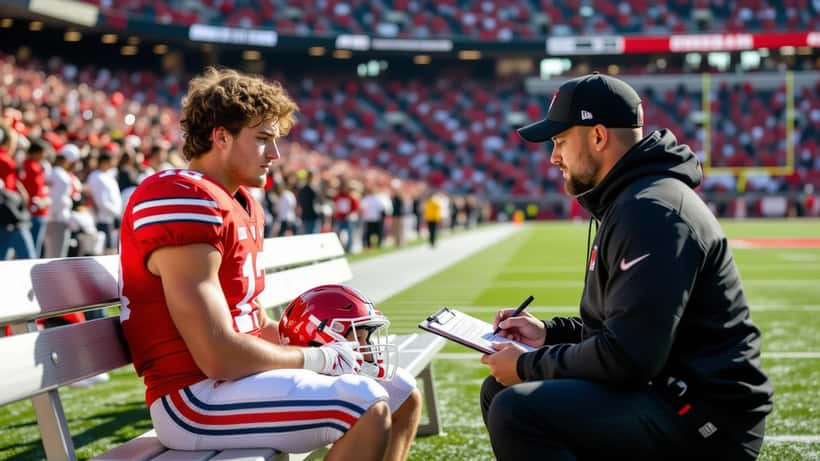
As 100,000 fans pack Ohio Stadium today for the Illinois-Ohio State Big Ten opener, college football's highest-stakes health question plays out on every snap: when a player goes down after a hit, does the NCAA's concussion protocol actually protect them — and when does a family need to step in and consult an independent medical expert?
Illinois vs Ohio State and the Illibuck Trophy: Big Ten Football's Opening Statement
The September 26, 2026 matchup is one of the most anticipated Big Ten openers in years. Illinois travels to Columbus as a decided underdog against #7 Ohio State, a program that hasn't lost to the Fighting Illini since 2007. Both teams arrive at 2-1 overall — Ohio State with blowout wins over Ball State (56-3) and Kent State (59-3) before a gut-punch loss at Texas (24-23), Illinois riding a 48-10 dismantling of Southern Illinois into its first road trip of the season.
The Illibuck, a wooden turtle trophy that has become one of college football's oldest rivalry symbols, changes hands after today's game. But beyond the scoreboard, the game highlights a growing national conversation: with more data on traumatic brain injury emerging every year, what protections do college athletes actually have when it comes to head trauma?
The NCAA approved significant updates to its Concussion Safety Protocol Checklist in June 2026, expanding requirements to cover flag football and stunt alongside contact/collision sports. That means every Division I program hosting today's game — and every school fielding a roster — must now have medical personnel trained in acute concussion diagnosis present at all NCAA competitions.
How the NCAA's 6-Step Protocol Works — and Where the Gaps Are
Under the updated 2026 guidelines, any athlete suspected of sustaining a concussion must be removed from play immediately and evaluated through a six-stage return-to-play process. The stages, in order, are: symptom-limited daily activities; light aerobic exercise; sport-specific exercises; non-contact practice; full-contact practice; and unrestricted return to play. NCAA rules require a minimum of 24 hours at each stage before progression, meaning even a player with mild symptoms cannot return to full-contact practice in fewer than six days.
Sideline evaluations must be completed within 10 to 15 minutes and cover red-flag symptoms, cervical spine clearance, cognitive performance testing, and balance assessment. Every college athlete undergoes baseline testing at the start of each season — cognitive, balance, and symptom evaluations that give team medical staff a benchmark to compare against during in-season assessments. A significant drop from a player's own baseline, not just from population averages, is what triggers removal from play.
According to the NCAA's Concussion Safety and Management program, the protocol is designed to be institution-managed and physician-led. But the protocol has limits. It governs when a player can return to practice — not whether a player with persisting or complex symptoms needs care beyond the team's medical staff.
That gap is where families and athletes themselves often find themselves unprepared.
What Happens After the Protocol: When Independent Expert Consultation Matters
The NCAA protocol addresses acute concussion management effectively. What it does not address is the longer-term picture: athletes with repeated sub-concussive impacts, those with symptoms that don't fully resolve within the protocol's timeline, and players whose cognitive baseline testing shows declines that are within range technically but troubling clinically.
A study published in the Journal of Athletic Training found that approximately 30 percent of college football players who complete return-to-play protocols report lingering symptoms — primarily persistent headache, difficulty concentrating, and sleep disruption — for more than two weeks after clearance. These athletes are technically cleared to play, but they are not asymptomatic.
For these cases, the standard team physician model may not be sufficient. A specialist in sports neurology or a concussion clinic physician can perform advanced cognitive testing, imaging interpretation, and vestibular assessments that go beyond what a sideline protocol captures. This is where consulting an independent healthcare provider becomes not just useful, but often critical for long-term health outcomes.
A Game-Day Scenario: When Protocol Isn't Enough
Consider a concrete situation that plays out in Big Ten games like today's Illinois-Ohio State matchup.
A 20-year-old sophomore linebacker takes a helmet-to-helmet collision in the third quarter. He fails the sideline concussion screen — disoriented, balance disrupted — and is removed from play per protocol. By Sunday, he reports that his headache has resolved and his cognitive testing shows only a 12 percent decline from his preseason baseline, within the threshold his team physician uses for protocol progression.
He begins Stage 2 (light aerobic exercise) on Monday. By Wednesday, his symptoms are gone on paper. He progresses to non-contact practice Thursday, full contact Friday, and is cleared for the following Saturday's game.
But here's the if/then logic families need to understand: if symptoms persist beyond 72 hours after the initial injury, even at low intensity — mild headache, sensitivity to light, difficulty reading for more than 20 minutes — then the athlete's protocol-based clearance timeline does not mean the injury has fully resolved. A 12 percent cognitive decline from baseline sounds small, but in a 20-year-old whose academic performance depends on concentration and memory, that gap can affect grades, exam outcomes, and quality of life in ways a sideline screen cannot detect.
In this scenario, the meaningful threshold isn't a number on a protocol form — it's whether the athlete, 10 days post-injury, can sustain focused cognitive activity for 45 minutes without symptoms. If they cannot, an independent consultation with a sports neurologist or concussion specialist is warranted, regardless of what the team physician's protocol chart shows.
The financial picture matters here too. An outpatient concussion specialist consultation typically runs between $250 and $600 without insurance, and $50 to $150 with a standard college student health plan. Advanced neuropsychological testing, if ordered, adds $300 to $900. For a family weighing that cost against a season of playing through unresolved symptoms, the math generally favors the consultation — especially given that research from the Boston University CTE Center has linked repeated concussive and sub-concussive events in college athletes to elevated risk of long-term neurodegenerative conditions.
What Families Should Watch for After a Game Like Today's
For families of college athletes — not just at Ohio State and Illinois, but at programs across the country competing this weekend — here are the signals that suggest the NCAA protocol alone may not be enough:
Symptom persistence beyond 14 days. Post-concussion syndrome, defined as symptoms lasting more than 14 days in adults, affects an estimated 10 to 15 percent of concussed athletes. Team protocols are not designed to manage this condition; a neurologist or concussion clinic is.
Academic performance changes. A player who was pulling a 3.2 GPA before a head injury and finds themselves struggling to retain information two weeks post-clearance should not assume this is stress or normal adjustment. Cognitive sequelae from concussion can persist even after symptom questionnaires show resolution.
Second impact in the same season. Ohio State and Illinois players who have already been through protocol once this year face elevated risk. Second-impact syndrome — a rare but life-threatening condition triggered when a second concussion occurs before full recovery from a first — is a recognized medical emergency. Athletes who have already been through protocol should be evaluated independently before returning to full-contact practice after any subsequent head impact.
For athletes navigating these situations, independent healthcare consultation can make a critical difference. As covered in the case of Chris Henry Jr.'s knee injury, college athletes often discover their rights to independent medical evaluation only after an injury has already shaped their season.
Note: This article provides general health and safety information and should not be construed as medical advice. Athletes experiencing head trauma or concussion symptoms should consult a qualified healthcare provider.
The Bottom Line for Today's Game
Illinois vs. Ohio State at Ohio Stadium is a landmark Big Ten matchup — a rivalry trophy on the line, a program ranked #7 in the country, and an underdog Fighting Illini squad that last won in Columbus nearly two decades ago. For the athletes on that field today, the NCAA's updated 2026 concussion protocol provides a meaningful baseline of protection.
But the protocol is a floor, not a ceiling. For athletes and families who want to make sure they're making fully informed decisions about return-to-play — especially when symptoms are borderline or history suggests elevated risk — an independent medical consultation isn't an overreaction. It's the same level of due diligence that any serious health decision deserves.
The Illibuck trophy will find a new home tonight. Long-term brain health doesn't belong on a rivalry trophy shelf.
