 Carl Graham
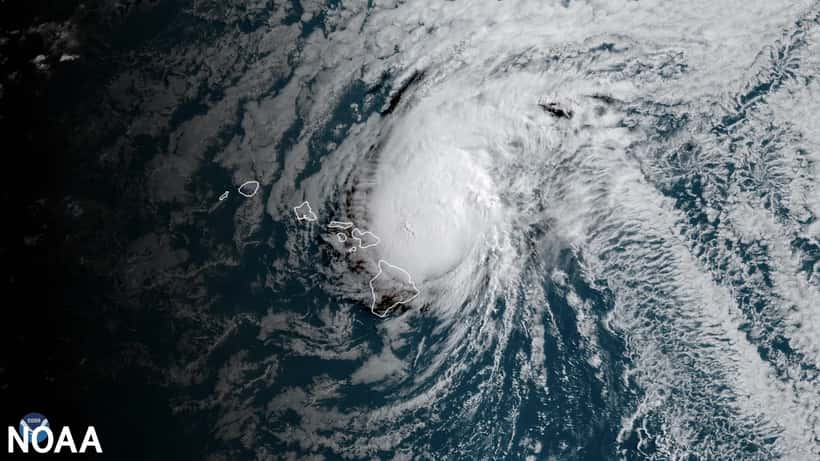
Tropical Storm Nolo is closing in on Hawaii's Big Island with an intensity that meteorologists say could make it the strongest hurricane to hit the island in over six decades. But while emergency managers are urging evacuations in low-lying coastal areas, a quieter crisis is already forming: thousands of Hawaii homeowners are about to discover that their insurance policies cover far less than they assumed — and the difference between a full recovery and financial devastation may come down to four words: wind damage versus flood.
What Hurricane Nolo Is Bringing to Hawaii
Tropical Storm Nolo strengthened rapidly across the Central Pacific on September 23, 2026, with the National Hurricane Center projecting it will reach Category 3 status — sustained winds above 111 mph — just as it approaches the Big Island. According to AccuWeather, the storm is expected to dump between 15 and 20 inches of rain across the island overall, with eastern slopes facing catastrophic totals of 24 to 36 inches that could trigger life-threatening flash flooding and landslides.
This is Hawaii's fourth named tropical system of the 2026 season, an unprecedented run that has exposed significant gaps in residential insurance coverage across the state. The previous systems this year — including Lala, Moke, and Polo — left dozens of homeowners in protracted disputes with their insurers over which type of damage their policies actually covered.
Emergency managers are urging Big Island residents in evacuation zones A and B to leave immediately. For those who stay, and for all property owners statewide, the storm's arrival raises an urgent financial question that most won't think to ask until it's too late: does your homeowners insurance cover what you think it does?
What an Insurance Attorney Wants You to Know Right Now
The most common and costly mistake Hawaii homeowners make after a hurricane is assuming that the damage they see is automatically covered by their policy. It often isn't — and the reason comes down to a fundamental divide built into nearly every American homeowners insurance policy.
Standard homeowners insurance in Hawaii, as in every U.S. state, covers wind damage but explicitly excludes flood damage. That distinction sounds straightforward. In practice, when a Category 3 hurricane makes landfall, wind and water arrive simultaneously and from multiple directions — and insurers frequently dispute which force caused which damage, a dispute that almost invariably favors the insurance company.
Storm surge — the wall of ocean water pushed ashore by a hurricane's winds — is legally classified as flooding, not wind damage. The same applies to rainfall runoff that pools and enters a home from the ground level. Unless a homeowner carries a separate National Flood Insurance Program (NFIP) policy administered by FEMA, or a private flood insurance policy, those losses are simply uncompensated.
According to FEMA data, only approximately 12 percent of Hawaii homeowners currently maintain NFIP flood coverage — leaving the overwhelming majority financially exposed if Nolo delivers the flooding meteorologists are forecasting.
The Wind/Flood Dispute: A Legal Problem, Not Just an Insurance Problem
When Nolo makes landfall, homes in coastal and low-elevation areas of the Big Island and Maui are likely to sustain damage from multiple simultaneous forces: wind-driven rain penetrating through compromised roofs, flying debris, storm surge, overflowing streams, and landslides. Each of these forces may be treated differently under a policy — or excluded entirely.
Insurance companies routinely assign damage to flood (an excluded peril) even when wind was clearly also a contributing factor. This practice is enabled by an obscure clause buried in many homeowners policies called an anti-concurrent causation provision. This language allows an insurer to deny an entire claim if any excluded peril — like flooding — contributed to the loss, even if significant covered wind damage also occurred.
The result: homeowners with extensive damage receive partial or zero payouts while their insurer argues that flood tainted the entire claim.
An insurance attorney can challenge this classification, particularly when:
- Physical evidence — impact patterns, structural failure direction, debris distribution — suggests wind was the primary cause of entry and damage
- The insurer's adjuster conducted a limited or inadequate on-site inspection
- The policy's anti-concurrent causation language is ambiguous or inconsistent with Hawaii state insurance regulations
- The insurer failed to respond within Hawaii's statutory claims-handling timeframe
Without legal representation, most homeowners accept the insurer's initial determination and walk away from tens of thousands of dollars they were actually entitled to recover.
A Concrete Scenario: The $47,000 Gap
Consider a Big Island homeowner whose property is insured for $380,000 in dwelling coverage. They pay their homeowners premium faithfully each year but opted not to purchase a separate NFIP flood policy — which costs between $700 and $2,400 annually in Hawaii, depending on the property's flood zone designation.
When Hurricane Nolo strikes:
- Wind tears off a portion of the roof, allowing rain to enter the home for approximately 12 hours before the storm passes: $22,000 in structural damage and interior losses
- Storm surge enters the ground-floor rooms from outside, ruining flooring, drywall, and appliances to a height of 18 inches: $47,000 in additional damage
The homeowner expects their policy to respond fully. Their insurer sends a claims adjuster who notes that the property sustained both wind damage and flood damage. Because the policy contains an anti-concurrent causation clause, the insurer argues that flood — an excluded peril — was a contributing cause of all interior damage, including the rain infiltration through the breached roof, and denies the full interior claim.
The homeowner receives an offer of approximately $6,800 after the 4% hurricane deductible ($15,200 on a $380K dwelling) is applied to the roof repair alone. The $47,000 flood loss is uncompensated. The wind-driven rain interior damage is denied under the concurrent causation exclusion.
The if/then rule: If your property sustains simultaneous wind and flood damage and your insurer denies any portion citing a flood exclusion, you likely have legal grounds to challenge that determination — particularly if you can document that wind breached your home's envelope before water entered.
An insurance attorney, working on contingency (no upfront cost), reviews the adjuster's report, retains a forensic structural engineer, and argues successfully that the interior damage was primarily caused by wind-driven rain entering through the breached roof — not by flood water originating from outside. The insurer settles for an additional $34,000, a recovery the homeowner would never have achieved without representation.
What to Do Before and After Nolo Hits
Before landfall, if you still have time:
Document everything now. Walk through every room and the exterior of your property with video, narrating the current condition of the roof, windows, foundation, and any vulnerable areas. Time-stamped photos taken before the storm are critical evidence if an insurer later claims damage was pre-existing or caused by deferred maintenance rather than the storm.
Locate your policy and identify three key provisions: (1) the hurricane or wind deductible percentage, (2) any anti-concurrent causation language, and (3) whether you have a separate flood endorsement or rider. Hurricane deductibles in Hawaii typically run 2–5% of the dwelling coverage amount — on a $380,000 home, that means $7,600 to $19,000 comes out of your pocket before the policy pays a single dollar.
After the storm:
File your claim immediately. Hawaii Revised Statutes § 431:10-242 requires insurers to acknowledge a claim within 10 working days and complete an investigation within 30 days of receiving proof of loss. If your insurer delays, misclassifies damage, or offers a settlement that doesn't reflect the actual scope of loss, contact an insurance attorney before signing anything.
Do not cash any settlement check that includes release language without attorney review. Endorsing a partial settlement can legally bar you from pursuing the balance of your claim. This is one of the most common ways that hurricane victims inadvertently forfeit compensation they are owed.
Flood Insurance: The Gap That Cannot Be Filled After the Storm
The NFIP offers building coverage of up to $250,000 for the structure and up to $100,000 for personal property. Private flood insurance policies can provide higher limits. Both types carry a mandatory 30-day waiting period before coverage becomes effective — meaning anyone without flood insurance today cannot add it before Nolo arrives.
For the 2027 hurricane season, FEMA strongly recommends that all Hawaii property owners in designated flood zones A or V, and properties within close proximity to coastlines, obtain and maintain NFIP coverage regardless of mortgage lender requirements.
The Bottom Line for Big Island Residents
Hurricane Nolo is forecast to deliver the most significant hurricane impact to Hawaii's Big Island in decades. The damage it produces will test homeowners insurance policies, state claims-handling regulations, and the financial resilience of thousands of families across the state.
The homeowners who recover fastest are not necessarily those with the most coverage — they are the ones who understand their policies, document their losses carefully, and know when to call a lawyer rather than accept an insurer's first answer.
If your property sustains damage from Hurricane Nolo, do not sign any release or partial settlement without first consulting an insurance attorney. The wind/flood boundary dispute is not a technicality — it is the central issue in the majority of denied hurricane claims in the United States, and it is entirely contestable with proper legal representation.
An expert at ExpertZoom can connect you immediately with licensed insurance attorneys in Hawaii and across the U.S. who specialize in hurricane damage claims, wind/flood coverage disputes, and bad-faith insurance denials.
