 William Reed
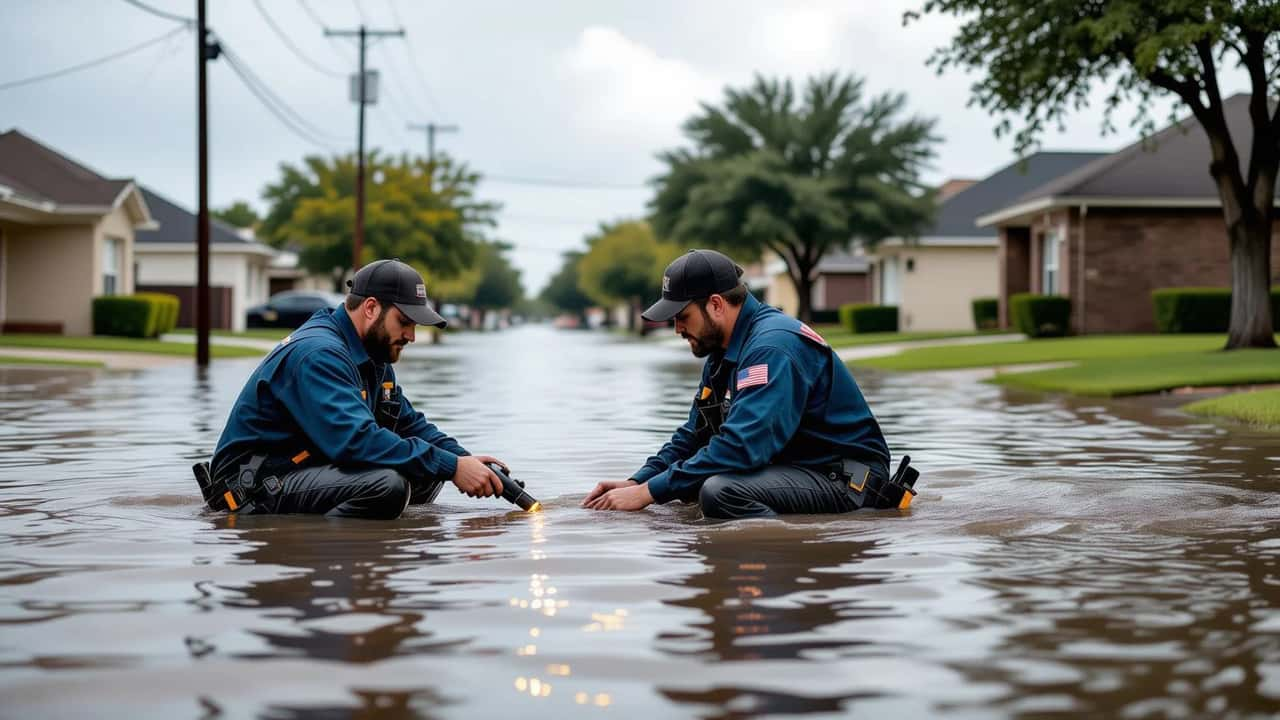
Recurring storms have turned Houston roads into rivers again this summer, with heavy rainfall stranding vehicles across north Houston near the North Freeway feeder road and along Buffalo Bayou, according to ABC13 Houston. When floodwaters recede and you're standing next to your car, one instinct kicks in immediately: reach for the keys. That instinct, mechanics warn, is the most expensive mistake you can make.
What Actually Happens to a Car Engine During a Flood?
When water rises above a vehicle's air intake — typically located near hood height or beneath the front bumper depending on the model — it can enter the engine's combustion chambers. An engine compresses air before igniting fuel; water, unlike air, is incompressible.
The result is what mechanics call hydrolock: pistons moving at thousands of rotations per minute slam into a pocket of water they cannot compress. In severe cases, connecting rods bend, pistons crack, and the engine block itself can fracture. Hydrolocked engine repair or replacement costs typically range from $4,000 to $12,000 depending on the make, model, and whether the block sustained structural damage.
Modern vehicles carry a second vulnerability that older cars lacked: electronic control units (ECUs), onboard sensor networks, and wiring harnesses routed through the lower sections of the body. Even partial submersion that never reaches the engine can short-circuit control modules, disabling transmission controls, antilock brakes, and airbag systems. In newer vehicles with 50 or more interconnected modules, a single submerged junction box can trigger fault codes across the entire electrical architecture — errors that don't always appear immediately, but surface weeks later.
At What Water Depth Should Houston Drivers Be Concerned?
The National Weather Service Houston/Galveston office notes that just 12 inches of moving water can carry a small vehicle. For mechanical damage, however, the risk tiers are depth-specific:
- Below the door sill (under 8 inches): Minimal mechanical risk for most vehicles. The primary concerns are brake rotor warping and moisture intrusion into wheel bearings. A mechanic inspection is still advisable before returning to highway speeds.
- Into the door panels (8–18 inches): Interior water damage is likely. Electrical components under the seats and inside door panels — wiring, sensors, power window motors — face serious corrosion risk. At Houston's August humidity levels, mold can establish in wet carpet and seat foam within 24 to 48 hours.
- Above the dashboard (18 inches or higher): Engine damage, ECU submersion, and total-loss outcomes become realistic. Do not attempt to start the vehicle under any circumstances.
Should You Turn the Key? Mechanics Say Absolutely Not
No — and this guidance holds even if the car appears completely undamaged on the exterior.
Starting a hydrolocked engine forces the starter motor to turn bent or seized internal components, converting what might have been a $3,500 electrical repair into a $12,000 engine replacement. Even if the engine turns over without an obvious symptom on the first attempt, water trapped in the combustion chambers burns off unevenly, potentially warping cylinder heads in the hours that follow. A car that starts once after a flood and seems fine can seize permanently on the second start.
The correct immediate steps after flood exposure are:
- Do not try to start the engine. This is the non-negotiable first rule.
- Disconnect the battery at the negative terminal to stop electrical current from reaching submerged or moisture-exposed modules.
- Open all doors and windows to begin drying the interior — Houston's summer humidity accelerates mold growth in wet upholstery and carpet.
- Document the waterline on your vehicle and the surrounding flood conditions with photographs before touching anything else. This documentation is the foundation of your insurance claim.
- Contact a mechanic or tow service within 24 hours. Every hour of delay increases the risk of rust and corrosion forming in fuel lines, brake lines, and electrical connectors that would otherwise be repairable.
For context on what happens when an insurance adjuster disputes the repair scope after a Houston flood event, the flood insurance claim denial rights that apply in Texas are worth understanding before the adjuster arrives — not after.
When Does a Flooded Car in Houston Become a Total Loss?
This is where specific numbers change the outcome — and where professional documentation from a qualified mechanic can mean the difference between a full insurance payout and an inadequate partial settlement.
Texas uses a 100% total loss threshold, meaning an insurer is only legally required to declare a total loss when estimated repair costs equal or exceed 100% of the vehicle's actual cash value (ACV). This is more owner-favorable than most U.S. states, which apply thresholds of 70–75%. However, most Texas insurers apply internal practices closer to 70% because of the diminished resale value that follows a salvage title issuance.
Consider this concrete scenario: A 2022 Toyota Camry, ACV of $18,000, caught in a north Houston flooding event when the driver attempted to cross 14 inches of standing water on a feeder road. Water entered through the air intake. A full mechanic assessment yields the following damage breakdown:
| Damage Category | Estimated Repair Cost |
|---|---|
| Engine replacement (hydrolocked block) | $8,500 |
| ECU and control module replacement | $2,200 |
| Wiring harness repair | $3,100 |
| Interior mold remediation | $2,800 |
| Total estimated repair | $16,600 |
Under Texas law, $16,600 against an $18,000 ACV (92%) does not trigger a mandatory total loss declaration. The insurer can require the vehicle to be repaired.
If, however, the repaired vehicle receives a salvage title — which it will, given the scope of damage — then its market resale value typically drops by 30–50%, landing between $9,000 and $12,600. Accepting a repair settlement rather than pursuing a total-loss payout could cost the owner $5,400 to $9,000 in future resale losses.
If the mechanic's assessment comes back under $5,000 — meaning only peripheral electrical components were affected and both the engine and ECU scan clean — then the vehicle is very likely repairable without a salvage title, and proceeding with repair is the economically sound decision. The entire outcome hinges on what the mechanic documents during the first inspection.
What to Do in the First 48 Hours
The recovery window for flood-damaged vehicles is narrow, and Houston's humidity compresses it further.
Within 6 hours: Remove standing water from the interior using wet-vac equipment if available. Pull floor mats and rear seat cushions to expose the subfloor and drain channels to air circulation.
Within 24 hours: Have the vehicle inspected by a certified mechanic performing a proper flood-damage assessment — not simply towed to a dealership lot to sit. The assessment should include pulling spark plugs to check for water in the cylinders, draining the oil to check for emulsification (milky or tan-colored oil indicates water contamination), and running a full OBD-II diagnostic scan for submersion-related fault codes that may not trigger dashboard warning lights for days.
Within 48 hours: File a written comprehensive insurance claim with all photographic documentation. According to the Texas Department of Insurance, standard comprehensive auto policies cover flood damage as a non-collision weather event — but documentation requirements and claim windows vary by insurer. The National Weather Service Houston/Galveston office also provides updated flash flood awareness resources that outline official water-depth safety thresholds useful for documenting the conditions your vehicle was exposed to.
Drivers whose vehicles were caught in the Houston severe storm events that have already produced hail and flood claims in 2026 should be aware that the documentation gathered in the first 48 hours is the evidence an insurance claim is built on — and the standard a mechanic's written assessment must meet.
The One Assessment That Changes Everything
The difference between a $3,500 restoration and a $16,600 repair bill — or between a clean title and a salvage title — often comes down to who assesses the car first, and whether that assessment is thorough enough to document every affected system for the insurance adjuster.
A mechanic who handles flood-damaged vehicles regularly knows which components to prioritize, in what order, and how to produce written documentation that gives an adjuster no room to undervalue the claim. For Houston drivers, getting that consultation within the first 24 hours of a flood event is not a precaution — it is the decision that determines how much the storm actually costs.
This article provides general informational guidance. For advice specific to your vehicle and insurance policy, consult a certified mechanic and your insurer directly.
