 Ava Miller
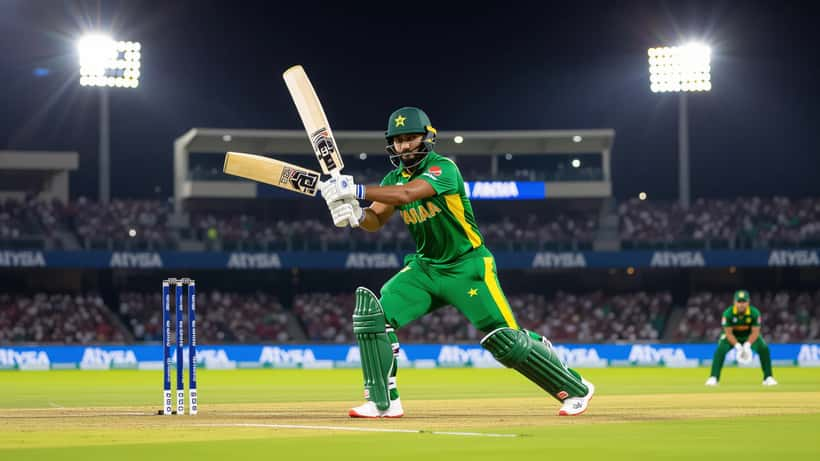
Pakistan's Hasan Nawaz stunned cricket fans worldwide on October 3, 2026, smashing a belligerent half-century from just 28 balls in the Asian Games gold medal final against India in Nagoya, Japan. With five sixes — including two in the pivotal 13th over — Nawaz single-handedly brought Pakistan back into a match that looked to be slipping away. It was the kind of innings that gets replayed for years. But beyond the highlight reel, Nawaz's performance raises a question that matters far beyond elite sport: what actually separates athletes who thrive under maximum pressure from those who fall apart?
The Asian Games Final: Cricket's Most Charged Stage
The Asian Games 2026, hosted in Japan, attracted 45 nations competing across more than 40 sports disciplines from late September through October 3. The men's T20 cricket competition was widely considered the headline event — particularly once India and Pakistan both advanced to the gold medal final, producing the most anticipated match of the tournament.
Pakistan's squad, captained by Sahibzada Farhan, was designed for the explosive demands of the T20 format. When the team found itself under pressure during the chase of India's total, Nawaz walked to the crease and transformed the contest. His fifty came in 28 balls — a strike rate of 178 — with five sixes and the composure of someone who appeared to be batting in a net session rather than competing for an Asian Games gold medal in front of a packed stadium.
Earlier in the 2026 PSL season, Nawaz had already shown what he is capable of under pressure, scoring 76 off 43 balls in the PSL X final — the highest score in PSL final history. A pattern was beginning to emerge: this is an athlete who gets better, not worse, when the stakes are highest.
The Science of Pressure Performance
Sports scientists and psychologists have studied high-stakes performance for decades, and the findings consistently challenge the popular assumption that great clutch performers simply "don't feel nerves." In reality, virtually all elite athletes experience elevated physiological arousal — increased heart rate, heightened alertness, amplified adrenaline — in major competition moments. The difference lies not in the absence of that arousal, but in how it is interpreted and channeled.
According to the American Psychological Association, performance anxiety is among the most prevalent mental health challenges facing competitive athletes. Research published in the Journal of Sport and Exercise Psychology estimates that between 30% and 45% of competitive athletes at collegiate or professional level experience performance anxiety symptoms that measurably impair results at some point in their careers.
The athletes who tend to excel in moments like Nawaz's innings have typically developed what sports psychologists call "process focus" — the ability to keep attention directed toward execution rather than outcome. Each of Nawaz's strokes in that 13th over was pre-planned, committed, and free of hesitation. That is not an accident of personality. It is the product of a mental game that has been systematically developed, often with professional guidance.
Sports psychology has moved from the margins of athletic training to the center of it. According to the Association for Applied Sport Psychology (AASP), the number of athletes consulting Certified Mental Performance Consultants (CMPC) increased by over 60% between 2018 and 2024 across North American professional sports leagues. The question is no longer whether the mental game matters — it is whether athletes are receiving structured, professional help to develop it.
A Concrete Case: The Gap Between Practice and Match Day
Consider a realistic scenario drawn from club cricket in the United States. A 24-year-old semi-professional batter — call him Marcus — plays for a competitive T20 league in the Northeast. In practice over the past season, his average strike rate measured 138. In his last five high-visibility matches (regional finals, televised games, selection trials), his strike rate dropped to 81. He missed three scoring opportunities in the critical middle overs in each of those games. His coach sees no technical regression. His fitness is unchanged.
What Marcus is experiencing has a name: competitive performance anxiety with a match-context trigger. It is measurable, identifiable, and — crucially — treatable. A sports psychologist consulting with Marcus would begin with a structured performance profile assessment, identify the specific trigger patterns (the crowd, the selection stakes, the visibility of being watched), and then build a pre-performance routine targeting his optimal arousal zone.
The investment is concrete: a structured 8-session program with a Certified Mental Performance Consultant in the US typically costs between $150 and $250 per session — total investment of $1,200 to $2,000. For a player eyeing a professional franchise contract worth $40,000 to $80,000 per season, the return on that investment is unambiguous. And research supports it: a 2023 meta-analysis of 34 randomized controlled studies found that structured mental performance interventions produced an average 28% improvement in competitive performance consistency within 12 weeks.
If Marcus attends 8 sessions over three months — roughly one per week — and his competitive strike rate recovers from 81 toward 120 (still well below his practice average), he goes from being a liability in selection trials to being a player who performs when it matters. The math, and the evidence, are clear.
This dynamic is not exclusive to cricketers. A junior tennis player facing a college scholarship match, a high school swimmer at a qualifying meet, a competitive powerlifter at their first nationally ranked competition — all of them face the same neurological challenge. The gap between what they can do and what they do under scrutiny is the target that sports psychology exists to close.
When to Seek Help — and What to Look For
The most costly mistake competitive athletes make is treating mental performance support as a last resort. Sports psychologists are consistent on this point: the most effective interventions happen proactively, before a performance problem becomes a pattern, not after repeated failures have embedded negative neural associations.
Practical indicators that a consultation would be valuable include: a persistent drop of 15% or more between practice metrics and competition metrics; physical symptoms before high-stakes events (nausea, tremors, racing heart) that are disproportionate to the actual stakes; recurring negative self-talk during play that the athlete cannot easily interrupt; or a specific context — such as being watched by scouts, playing against a historically difficult opponent, or competing in a format with heightened visibility — that reliably produces underperformance.
These are not signs of psychological weakness. They are signs of an athlete whose physical training has outpaced their mental training. The National Institute of Mental Health classifies performance-related anxiety as a recognized and highly treatable condition, noting that structured behavioral interventions produce durable improvement in the large majority of cases.
In the United States, sports psychologists may be licensed mental health practitioners with sport-specific specialization, or AASP-certified CMPCs with advanced training in applied performance psychology. Not all practitioners are equally suited to all sports — finding one with experience in your specific discipline and competitive context makes a meaningful difference.
What Nawaz's Innings Shows Every Athlete
Hasan Nawaz walked to the crease in the most pressure-filled moment of the 2026 cricket calendar and responded with one of the fastest half-centuries the Asian Games has ever seen. That kind of performance does not emerge purely from talent. It emerges from preparation — physical, technical, and mental — combined with a set of skills that convert pressure into fuel rather than paralysis.
For every athlete watching those five sixes leave the stadium in Nagoya, the takeaway should be specific: the gap between your practice self and your competition self is closeable. It requires the right kind of work with the right kind of guide.
ExpertZoom connects athletes at every level with certified sports psychologists and mental performance consultants matched to their sport, their schedule, and their specific performance gaps. A discovery consultation takes 20 minutes and costs nothing. The work that follows can change what you are capable of on the days that matter most.
If Nawaz's innings inspired you — and it should — the most useful response is not to admire it from the outside. It is to start building the mental infrastructure that makes your own version of it possible.
Disclaimer: This article discusses sports psychology and mental performance support for informational purposes only. It does not constitute medical or clinical advice. If you are experiencing significant anxiety, depression, or other mental health concerns, please consult a licensed mental health professional.
