 Marcus Samuel
Glacier National Park Bear Attack 2026: What Wildlife Experts Want Every Hiker and Pet Owner to Know
A missing hiker at Glacier National Park in Montana was found dead on May 7, 2026, in what authorities believe was a fatal bear attack. The incident has triggered a wave of searches for information about bear behavior, bear identification, and safety in bear country — including searches for "glacier bear," the rare blue-furred subspecies of black bear native to southeast Alaska that shares its name with the famous Montana park. As searches spike and hikers reconsider their summer plans, wildlife veterinarians and animal behavior specialists have clear guidance for anyone who lives, hikes, or keeps pets in bear country.
What Happened at Glacier National Park — and What "Glacier Bear" Actually Means
The Glacier National Park fatality is not related to the glacier bear subspecies (Ursus americanus emmonsii), which is a rare, silver-blue-furred black bear found only in the coastal areas of southeast Alaska and a small portion of British Columbia. Glacier National Park in Montana is home to both American black bears and grizzly bears (Ursus arctos horribilis), and the bear responsible for the May 7 attack has not been publicly identified as either species as of this writing.
The National Park Service's bear safety resources note that both black bears and grizzly bears are present in Glacier National Park, and understanding the difference is critical to a hiker's response in an encounter — because the correct action depends entirely on which species you are facing.
Black Bear vs. Grizzly: The Tactical Difference That Can Save Your Life
Wildlife veterinarians and animal behavior specialists consistently emphasize that confusing a black bear with a grizzly in an encounter is one of the most dangerous mistakes a hiker can make, because the recommended responses are nearly opposite.
Grizzly bear encounter: Do not run. Make yourself appear large. Back away slowly. If contact is made, play dead: lie flat on your stomach, clasp your hands behind your neck, spread your elbows and legs wide to make it harder for the bear to flip you. Remain still until the bear leaves the area. Fighting back against a grizzly in a predatory attack — which is rarer but does occur — requires full resistance, targeting the eyes and snout.
Black bear encounter: Do not play dead. Stand your ground, make loud noise, throw objects if available, and fight back if contact is made. Black bears that attack humans are more often predatory than defensive, and passive response can be fatal.
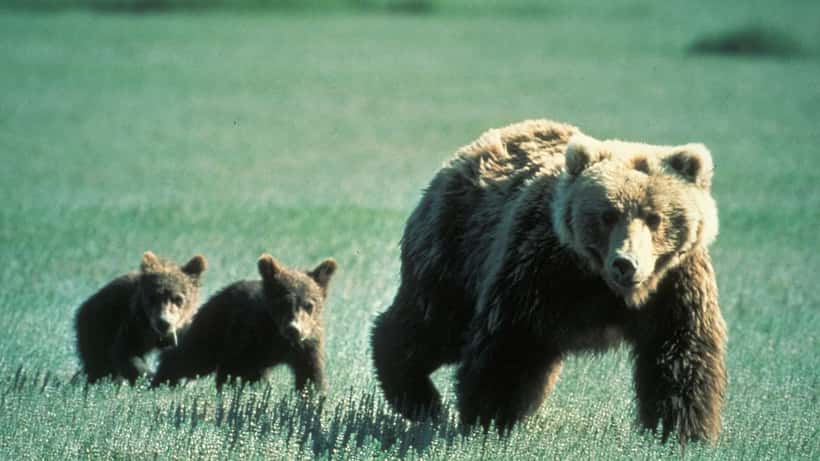
Distinguishing grizzlies from black bears in the field: Grizzlies have a distinctive shoulder hump of muscle (visible as the highest point of the back), a dished facial profile (concave between eyes and snout), and shorter, rounded ears. Black bears lack the shoulder hump, have a straight facial profile from ear to snout, and have taller, more pointed ears. Body color is not a reliable indicator — both species range from black to cinnamon to blond.
The Rare Glacier Bear: What Wildlife Vets Say About Alaska's Blue Bear
The true glacier bear, endemic to southeast Alaska, is one of North America's rarest and least-studied large mammals. According to the National Park Service's research on the glacier bear, little is definitively known about the total population, precise range, or the genetic mechanisms behind the bear's distinctive silver-blue coloration. The subspecies inhabits Glacier Bay National Park and portions of the Tongass National Forest in a region of temperate rainforest and receding glaciers.
Wildlife veterinarians and conservation biologists who study the glacier bear note a concerning long-term threat: as Alaska's glaciers retreat due to climate change, the geographical isolation that has maintained the glacier bear's distinct gene pool is breaking down. As black bears from adjacent populations move into formerly glaciated terrain, crossbreeding with glacier bears may gradually dilute the subspecies' unique genetic traits. This makes the glacier bear a species of conservation interest even before formal threatened or endangered classification.
What to Do If You Encounter a Bear While Hiking With Your Dog
Pet owners represent a unique risk category in bear country. Wildlife veterinarians consistently advise that dogs should always be leashed in national parks and bear-country trails. An unleashed dog that encounters a bear will frequently run back to its owner — leading the bear directly to the human.
If a bear approaches while you have a dog:
- Hold the leash firmly and do not let the dog run free
- Back away slowly while keeping the bear in sight
- Never get between a bear and a cub — sow bears with cubs are among the most dangerous encounters in national parks
- Carry bear spray and know how to use it: it is effective at close range (15-30 feet) when deployed as a cloud between you and the bear
If your dog has been in contact with a bear or wildlife — even briefly — a veterinarian should examine the animal within 24 hours. Bears carry parasites including Baylisascaris (a roundworm with serious neurological consequences if transmitted to humans), and bite or scratch wounds in animals require prompt assessment for infection and potential rabies exposure documentation.
When to Contact a Wildlife Specialist or Animal Control
Wildlife veterinarians and state wildlife agencies request immediate contact in three scenarios: a bear that appears injured, disoriented, or unusually habituated to humans (approaching without apparent fear); a bear that has entered a residential structure or vehicle; or any bear-human contact involving injury. Injured or habituated wildlife require professional assessment — attempting to care for or relocate a bear without authorization is illegal in most states and poses serious danger.
For hikers and outdoor enthusiasts planning summer trips to national parks, a consultation with an outfitter experienced in wilderness first aid — or an emergency physician with wilderness medicine training — before a backcountry trip can cover bear encounter protocols, wound management for animal bites, and the appropriate use of bear spray. ExpertZoom connects you with veterinarians, wildlife specialists, and health professionals who can help you and your pets stay safe in bear country this summer.
The bear attack at Glacier National Park on May 7, 2026 is a reminder that America's national parks are wild places. Preparation and knowledge — including understanding the difference between a glacier bear and a grizzly — are the most reliable tools you have.
