 William Reed
Gas Hits $4.52 a Gallon in May 2026: Your Mechanic's Guide to Premium vs. Regular and Real Fuel Savings
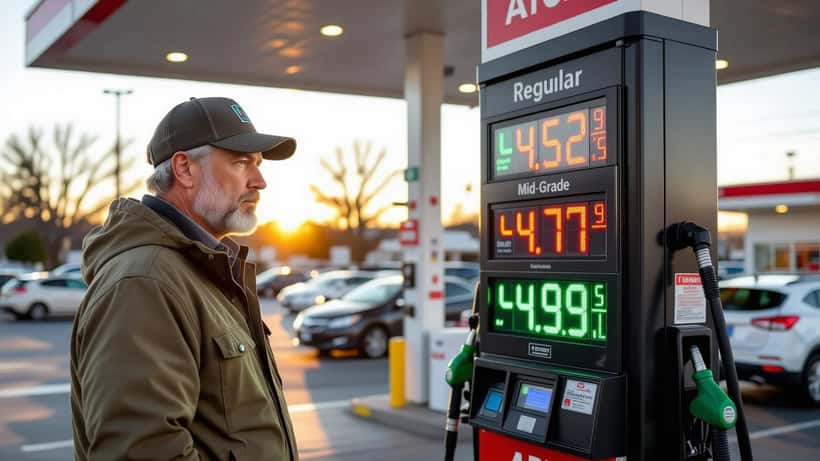
"Gas near me" is among the most frequently searched phrases in America in May 2026, and for good reason. The national average price for regular gasoline reached $4.52 per gallon as of May 7, 2026 — an increase of approximately 53% since late February, when escalating tensions over the Strait of Hormuz began pushing fuel prices upward. With prices this high, millions of drivers are making fuel decisions they've never had to make before: which grade to buy, which station offers the best price, and whether their vehicle's fuel habits are costing them money they don't need to spend.
Mechanics across the country are fielding a consistent set of questions right now. Here is what they want every driver to understand before filling up.
Why Gas Prices Jumped 53% Since February
The price spike is not a domestic production issue. The U.S. Energy Information Administration tracks weekly retail gasoline prices, and the data shows a sharp upward climb beginning in late February 2026, when the Iran conflict escalated and tanker traffic through the Strait of Hormuz — a critical chokepoint for global oil supply — was disrupted. The Strait of Hormuz handles approximately 20% of global petroleum product flows, and any sustained disruption affects global crude oil pricing, which feeds directly into the cost of refined gasoline at the pump.
For the average American driver who commutes 30 miles per day in a vehicle getting 28 mpg, the jump from $2.96 to $4.52 per gallon adds approximately $100 per month in fuel costs. That's the backdrop against which the premium vs. regular debate matters most. As explored in the analysis of rising gas prices and wealth management strategies, the geopolitical context is not going away quickly — making fuel efficiency decisions a financial priority.
Premium vs. Regular: The Rule Every Driver Gets Wrong
The most common fuel mistake mechanics see in 2026 is paying for premium when it provides zero benefit — and, far less commonly, running regular in an engine that requires premium.
What octane actually means: The octane rating (87 for regular, 89 for mid-grade, 91-93 for premium) measures a fuel's resistance to "knocking" — premature detonation in the cylinder before the spark plug fires. High-compression engines require higher-octane fuel to prevent this destructive knocking. Lower-compression engines do not benefit from higher octane.
When premium is required (not just recommended): If your owner's manual says "premium required," use it. Full stop. Modern turbocharged engines, many performance-oriented V8s, and luxury vehicle engines often have compression ratios and boost pressures that demand higher-octane fuel. Running regular in a premium-required engine does not just reduce performance — it can cause long-term damage to pistons, valves, and the cylinder head as the ECU tries to compensate for knock by retarding ignition timing.
When premium is "recommended" but not required: Many vehicles have engines that perform optimally on premium but are engineered to run safely on regular. The ECU will automatically adjust timing. You may lose 2-5% of peak horsepower and a small amount of fuel economy, but you will not damage the engine. At $4.52 per gallon, running regular in a "premium recommended" vehicle is a legitimate choice that your mechanic will not fault.
When premium is a complete waste: If your vehicle specifies regular gasoline (87 octane), spending an extra 40-60 cents per gallon on premium provides zero measurable benefit. Your engine's compression ratio and fuel mapping are designed for regular fuel, and premium will not improve mileage, performance, or engine longevity.
Five Fuel System Issues That Are Costing You Money Right Now
At $4.52 per gallon, even small inefficiencies in your fuel system become expensive. According to the U.S. Energy Information Administration, American drivers consumed an average of 368 gallons of gasoline per vehicle per year in 2024 — meaning that a 5% fuel economy loss from a degraded fuel system costs roughly $83 annually at current prices.
1. Dirty fuel injectors. Injectors that are partially clogged or fouled with carbon deposits deliver uneven fuel spray, reducing combustion efficiency. Fuel injector cleaning — either via additive or professional ultrasonic cleaning — can restore 2-4% fuel economy in high-mileage vehicles.
2. Worn oxygen sensors. The O2 sensor tells your ECU how to balance the air-fuel mixture. A failing oxygen sensor frequently causes the engine to run rich (too much fuel), wasting gas and triggering the check engine light. Replacement is typically under $200 including labor.
3. Degraded mass airflow sensor. This sensor measures the air entering the engine to calculate the correct fuel injection. A dirty or failing MAF sensor causes poor fuel economy, rough idle, and hesitation on acceleration. Cleaning with MAF sensor cleaner is a $10 fix; replacement costs $100-250.
4. Underinflated tires. Every 1 PSI of underinflation reduces fuel economy by approximately 0.2%. In a vehicle that's 8 PSI underinflated across four tires (common after a cold winter), that's 1.6% efficiency loss — adding up to roughly $13 per year at current prices. Check tire pressure monthly when gas is this expensive.
5. Ignition timing and spark plugs. Worn spark plugs cause incomplete combustion, misfires, and measurably worse fuel economy. Replacing spark plugs at the manufacturer's recommended interval (typically 30,000 to 100,000 miles depending on plug type) is one of the most cost-effective maintenance items at high fuel prices.
When to See a Mechanic About Your Fuel Economy
If your vehicle's real-world fuel economy has dropped more than 10% from the manufacturer's rating without a change in driving conditions, driving style, or the season, schedule a diagnostic appointment. Modern OBD-II diagnostics can identify fuel system faults, sensor failures, and combustion issues that a driver would not otherwise detect until they've already lost hundreds of dollars in wasted fuel.
With gas near $4.52 nationally in May 2026, preventive fuel system maintenance pays for itself faster than at any point in recent memory. A $150 inspection that restores 5% fuel economy in a vehicle that burns 50 gallons per month saves $10 per month — breaking even in 15 months. If the fix is a $50 sensor replacement that restores 10% efficiency, payback is faster still.
ExpertZoom connects you with qualified mechanics and automotive technicians who can assess your vehicle's fuel system, recommend the correct octane for your engine, and identify the specific repairs that will reduce your fuel costs at the pump. When gas is this expensive, your car's mechanical efficiency is not a luxury consideration — it's a financial one.
