 Elizabeth Chen
Gabriel Bonfim steps into the Meta Apex octagon tonight, June 6, 2026, as the #11-ranked welterweight challenging former champion Belal Muhammad in the UFC Fight Night main event. Bonfim, a 28-year-old Brazilian on a four-fight win streak, gets his second five-round headlining bout in seven months. Muhammad, ranked #5, is fighting to break a two-fight skid after losing the title to Jack Della Maddalena and dropping a decision to Ian Garry. The prelims start at 5 PM ET, the main card at 8 PM ET on Paramount+.
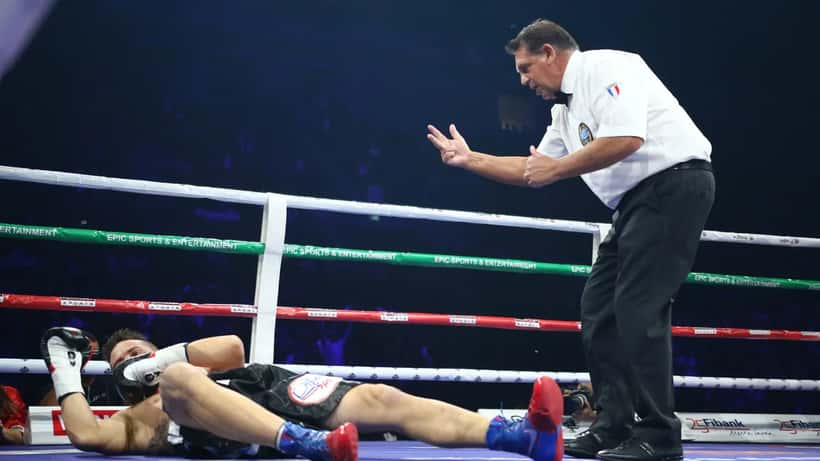
The fight will produce a winner, a knockout reel, and a handful of medical conversations the public never sees. Five-round welterweight bouts at the elite level routinely produce 200 to 400 head impacts across the night, depending on style, distance management and finish rate. The cumulative neurological cost is the part of professional MMA that has only become measurable in the last decade, and the protocols developed at the sport's top level are now filtering down to amateur fighters, combat sports academies, and any contact-sport athlete worried about the long arc of head trauma.
What changed in MMA brain medicine
The single largest shift in the last five years is the move from concussion as an event to subconcussive impact as a cumulative dose. A landmark 2019 study from the Cleveland Clinic's Professional Fighters Brain Health Study tracked active MMA fighters and boxers over multiple years and found that fight frequency, sparring volume and years of professional combat correlated with measurable changes in brain volume and processing speed, even in fighters who had never been diagnosed with a concussion.
The clinical implication is that the absence of a knockout does not mean the absence of brain stress. A welterweight who absorbs 250 jabs across five rounds is taking a quantifiable neurological load, and the body of that load — repeated over 10 years of professional fighting and the amateur career that precedes it — is what produces the late-career cognitive symptoms that have surfaced in retired boxers and fighters.
Bonfim, at 28, is in the window where most professional fighters' brain health trajectory is set. His preparation for the Muhammad fight includes the standard performance optimization — strength, cardio, fight IQ — and increasingly includes a layer of neurological monitoring that did not exist for fighters a generation ago. The fighters who manage that monitoring well tend to retire on schedule with intact processing speed. The ones who do not tend to fight three or four years too long.
Why amateur fighters and contact-sport athletes should care
The medical lessons from the professional combat sports community apply directly to anyone training in mixed martial arts, boxing, Muay Thai, jiu-jitsu, or any contact sport with repeated head impacts. The risk does not require a UFC contract. It accumulates from sparring volume, head-impact frequency, and the years over which the exposure happens. A 35-year-old amateur who spars hard four times a week for 10 years is, in cumulative terms, in the same conversation as a professional fighter with a 20-bout record.
A sports neurologist or concussion-trained physician working with an amateur athlete will build a monitoring plan around four pillars. First, a baseline neurocognitive test — ImPACT, CNS Vital Signs, or a comparable validated tool — establishing the athlete's individual processing speed, working memory and reaction time when uninjured. Second, an annual reassessment to detect drift early, when intervention is still meaningful. Third, an explicit sparring volume budget, typically capped at well under half of what most academies run by default. Fourth, a return-to-train protocol after any suspected concussion that requires symptom-free baseline performance before contact resumes.
The Centers for Disease Control and Prevention publishes the HEADS UP traumatic brain injury resources at cdc.gov/headsup covering the public-health framework for concussion management across youth, amateur and professional sports. It is the most accessible US public resource on the science and the operational protocols recreational fighters should be running.
What the Muhammad-Bonfim corners are actually monitoring
For tonight's main event specifically, both corners will be running real-time monitoring beyond what the audience sees. Cornermen trained in modern fight medicine watch for delayed verbal responses, blank stares between rounds, balance shifts that signal vestibular involvement, and the specific gaze patterns associated with subdural pressure changes. The decision to stop the fight or to push for a corner stoppage rests on those signals more than on visible damage.
The UFC's medical protocols have also tightened since 2020. Mandatory pre-fight MRI for headlining bouts, post-fight neurological exams, and a 30-to-180-day suspension following any knockout loss. Bonfim's path to this main event included full medical clearance and the residual concussion protocol from his previous fights. The infrastructure that protects elite fighters is real. The infrastructure that protects amateurs is largely whatever the individual academy chooses to enforce, which is why working with an outside sports-medicine physician is the highest-return investment a serious amateur can make.
What to do before your next sparring session
For amateur fighters and serious contact-sport practitioners, the actionable checklist is short. Book a baseline neurocognitive evaluation with a sports neurologist or concussion-trained sports medicine physician. Have the report sent to your primary care physician and keep a personal copy. Discuss with your coach a sparring volume budget that reflects current medical evidence rather than gym tradition. Insist on a defined return-to-train protocol after any head impact that produces symptoms, no matter how minor. Reassess annually.
The cost of the initial evaluation runs $300 to $600 in most US metros. The annual reassessment is similar. The cost of late-career cognitive symptoms is not measured in dollars at all. Athletes who run the monitoring loop early tend to retire with the choice of how and when. Athletes who skip it tend to learn the lesson too late to act on it.
The takeaway
Tonight's Muhammad-Bonfim main event will produce a winner, a finish, and a series of clinical conversations the public never sees. The systems protecting Bonfim and Muhammad are real and increasingly sophisticated. The same systems are available, in scaled-down form, to any amateur fighter willing to invest in a relationship with a sports neurologist or concussion-trained physician before the cumulative dose becomes a clinical problem.
If you train in any combat sport at amateur or recreational level and have not had a baseline neurocognitive evaluation, that appointment is the single highest-return health investment you can make this quarter. The cost is modest. The data it produces is the foundation for every training decision that follows. The fighters at tonight's main event are running the protocol. The amateur community has every reason to follow.
