 Charles Jackson
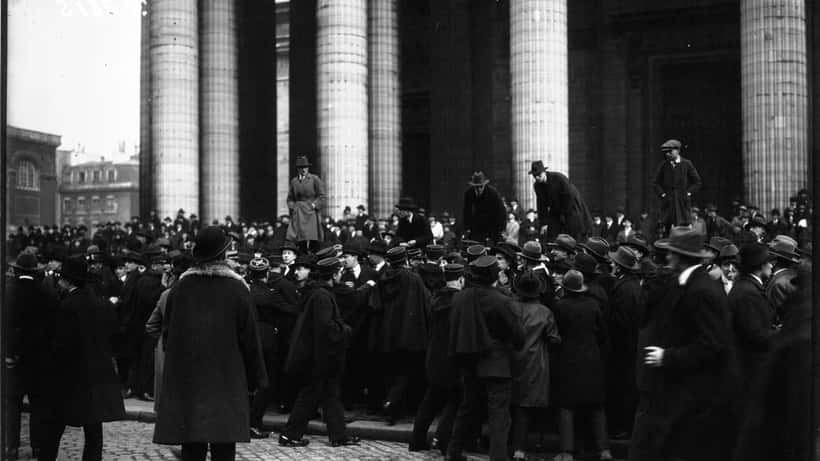
A wave of student unrest has swept across France this week, with high schoolers blocking school entrances, setting fires, and clashing with riot police in scenes that have shaken the government of Prime Minister Lecornu. By October 1, 2026, authorities had made hundreds of arrests — including minors as young as 15 — as protests spread from Paris suburbs to more than 30 university campuses nationwide. For the approximately 60,000 American students enrolled in French universities and exchange programs each academic year, the crisis is not just a news story: it is a live legal risk that most are completely unprepared for.
What Is Happening in France Right Now
The protests ignited in Paris-region lycées in late September 2026, driven by student rage over crumbling classrooms, chronic teacher shortages, and a higher education funding freeze that has left universities running at capacity. Secondary and high school student organizations are demanding greater resources, more replacement teachers, and a fundamental rethinking of how France funds public education as the Macron government struggles to contain a historic budget deficit.
The movement spread fast. Within days, university students had joined the blockades, and Prime Minister Lecornu convened an emergency cabinet meeting on October 2 to address what has become the most significant bout of student unrest France has seen in years. French police deployed water cannons at several locations, and at least two Paris-area schools reported arson attempts. According to Euronews reporting from October 1, 2026, the demonstrations have "snowballed" in a matter of days, drawing comparisons to the Yellow Vest protests of 2018.
For American families, the timing is particularly fraught: October is mid-semester for most US exchange students in France, meaning tens of thousands of Americans are currently on the ground in the middle of this upheaval.
Why US Students Face Unique Legal Exposure
Under French law, being present at an unlawful assembly that turns violent can itself carry criminal liability — even for those who did not actively participate in property destruction or confrontations with police. Article 431-4 of the French Penal Code defines participation in a violent "attroupement" (unlawful assembly) as a criminal offense carrying up to one year in prison and a €15,000 fine. Police in France can arrest anyone in the vicinity of a dispersal order, and they are not required to prove individual violent acts in the initial detention phase.
This creates a trap that catches foreign students off guard. An American student accustomed to US First Amendment protections may not realize that the legal framework governing protest rights in France is fundamentally different. France does not have an equivalent of the Miranda warning: under the garde à vue (police custody) system, a detainee can be held for up to 24 hours without charge — extendable to 48 hours with prosecutor approval. During that window, a detainee has the right to consult a lawyer for 30 minutes at the outset, but the attorney cannot be present for the actual questioning.
Critically, the right to notify a consulate is real — but it is not automatic. Under the Vienna Convention on Consular Relations (Article 36), which France has ratified, foreign nationals must proactively request that their consulate be notified. French police are not obligated to remind detainees of this right. If a detained American student does not explicitly ask — in French or English — for US consular notification, hours or even days can pass before the Embassy learns they are in custody.
A Concrete Case: What Happens If Your Child Is Detained
Imagine a 20-year-old American junior from the University of Michigan, enrolled in a semester program at Sciences Po Paris, who joins what looks like a peaceful student march on October 4, 2026. The crowd grows. A small group smashes a café window; police issue a dispersal order over a loudspeaker that she barely hears through the noise. In the sweep that follows, she is detained along with 55 others.
If she does nothing: The clock starts on a 24-hour garde à vue. Without consular notification, her family in Michigan may not know she has been arrested for 12 to 24 hours. Without a lawyer, she may answer police questions in a way that creates written evidence used against her in a later proceeding. Even if she is released without charge, the arrest itself can appear on certain French judicial records for up to three years.
If she acts correctly within the first 10 minutes: She states clearly, "Je demande à ce que le consulat américain soit informé, et je souhaite parler à un avocat." (I request notification of the American consulate, and I wish to speak with a lawyer.) Under French law, police must honor both requests. A court-appointed attorney arrives for a 30-minute consultation — enough time to advise her to say nothing further. The consulate is notified and contacts her study-abroad program's emergency coordinator. Her program's university partner, Sciences Po, sends a liaison within six hours.
The financial difference between these two scenarios is real: a simple first-offense protest case in France with professional legal representation averages €2,000–€3,500 in attorney fees. A case that drags on because of initial unadvised admissions can cost €8,000 or more. Most US study-abroad insurance policies — including the standard J-1 visa coverage — explicitly exclude criminal defense costs.
What the US Embassy Can and Cannot Do
The US Embassy in Paris operates a 24-hour emergency line for American citizens in distress abroad. Consular officers can visit detained Americans, provide a vetted list of local bilingual attorneys, contact family members back home, and monitor whether the French judicial process is meeting international standards of fairness under the Vienna Convention. According to the State Department's official guidance on arrests abroad, consular staff can also attend trial proceedings as observers.
What they cannot do is equally important to understand: the Embassy cannot pay legal fees, post bail, demand release, or intervene in the French criminal process. Their role is advisory and humanitarian — not juridical.
France's official legal aid system (aide juridictionnelle) is available to foreign nationals present legally on French territory, including students on valid student visas. Eligibility depends on household income; for a US student without French income, the threshold is generally straightforward to meet. The application is filed through the Tribunal Judiciaire, and if approved, it covers attorney fees for the proceedings — though it does not cover fines or pre-trial costs.
What to Do Right Now If You Have a Student in France
Legal experts recommend three immediate actions for any family with a student currently in France.
First, enroll in the State Department's Smart Traveler Enrollment Program (STEP) at step.state.gov — it takes under five minutes, is free, and means the Embassy can locate and contact your student quickly in an emergency. Second, identify a bilingual French-English attorney in the city where your student is studying before any crisis arises; the US Embassy Paris maintains a regularly updated attorney list by region on its website. Third, review the study-abroad program contract your student signed: many programs require notification of a foreign arrest within 24 to 48 hours and carry automatic suspension clauses that activate before any conviction.
If an arrest has already occurred, call the Embassy emergency line immediately. Advise your student — if you can reach them — to request consular notification and a lawyer before answering any questions. And for guidance on the intersection of international legal exposure, student rights, and civil liability from civil unrest, connecting with a lawyer who understands cross-border situations can make the difference between a dismissed case and a record that follows your child home.
YMYL disclaimer: This article provides general educational information only and does not constitute legal advice. Legal procedures in France change frequently and vary by jurisdiction. Consult a licensed attorney in France and/or the United States for advice specific to your situation.
For context on how recent civil unrest in France has created legal complications even for residents and tourists, see this overview of Paris riot legal consequences for 2026.
